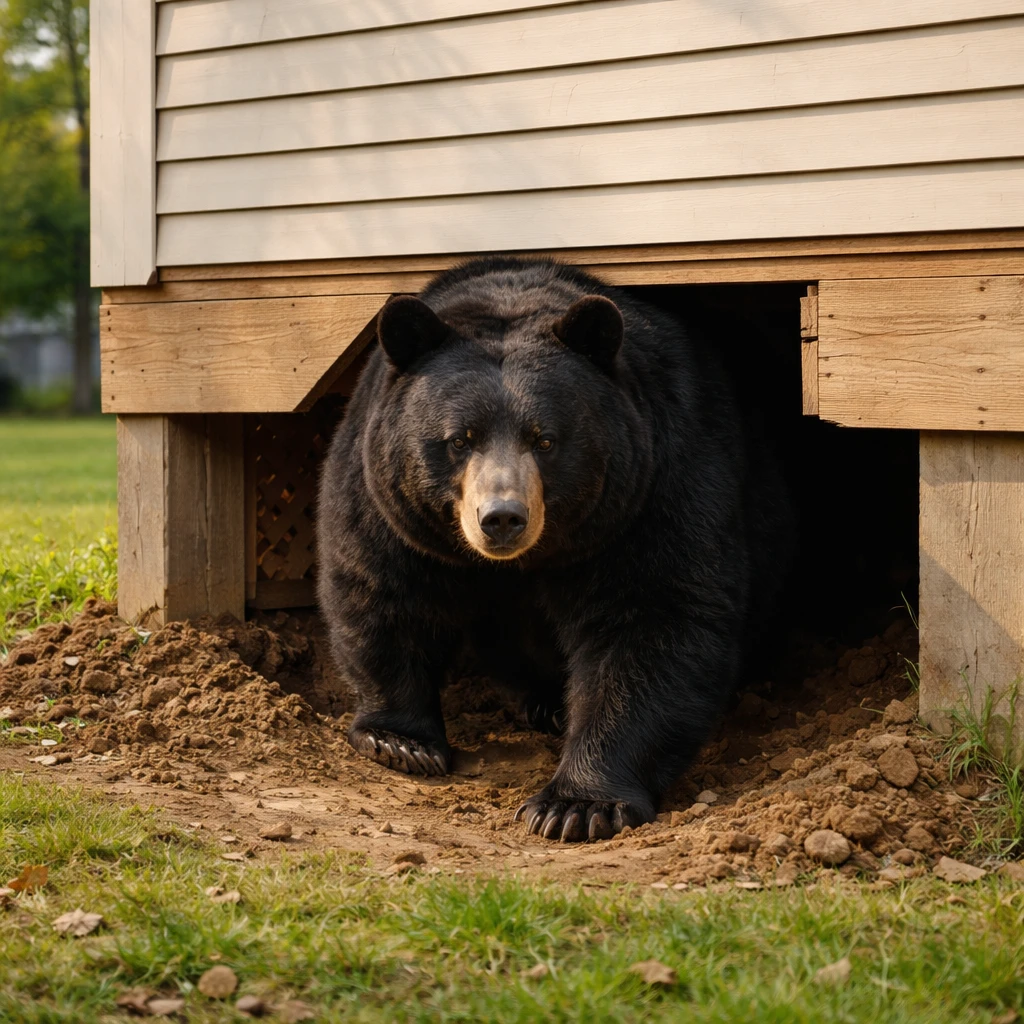

In Altadena, California, a man named Ken Johnson has been contending with an unusual and challenging situation: a 550-pound male black bear taking refuge beneath his home. The bear, affectionately nicknamed Yellow 2120, has been inhabiting the crawl space for more than a month, creating ongoing disturbances for Johnson and prompting repeated interventions by wildlife authorities.
On December 9, biologists from the California Department of Fish and Wildlife deployed a trap on Johnson's property aimed at capturing Yellow 2120. The bear earned its nickname based on previous tracking efforts and was known to have previously been trapped and relocated near Altadena. Wildlife officials employed a baiting strategy that included caramel- and cherry-flavored treats, as well as noisemakers designed to flush the bear out from its hiding place.
However, these efforts did not go as planned. On December 16, the trap ensnared a different bear altogether. This unintended capture led to the tagged bear being released back into a nearby wilderness habitat. Johnson observed, through his surveillance cameras, that Yellow 2120 had not vacated the crawl space, underscoring the failure of the trapping operation to secure the targeted animal.
Johnson described his unease living in his home under the shadow of the bear’s presence. "I just don't feel completely at home in my own house, as long as he's under there," he said. His discomfort is compounded by the damage the bear has caused. Yellow 2120 has disturbed a gas line running beneath the house, a hazard that has forced Johnson to forgo hot water and endure additional inconveniences.
In attempts to evict the bear, Johnson has tried an array of homemade deterrents, including a burglar alarm that produces clattering sounds, audio recordings of barking dogs, and strategically positioned speakers emitting noise through vents. None of these measures have been sufficient to persuade Yellow 2120 to leave the crawl space.
Recognizing that the bear, having been previously trapped and relocated, would likely avoid baited traps, the Department of Fish and Wildlife eventually removed the trap in favor of other strategies. Nevertheless, the bear’s persistence highlights the complexities of human-wildlife coexistence in the foothills of the San Gabriel Mountains, where proximity to wild habitats often results in such challenging encounters.
Johnson conveyed the stress of the ongoing situation, stating, "It's really awful. I could hear him moving around. It was like a house of horrors." His experience paints a vivid picture of the tension wildlife encounters can cause in residential areas close to natural bear populations.
This ongoing incident echoes broader themes in wildlife management and public safety. It reflects the difficult balance officials must maintain when addressing wildlife intrusions in inhabited areas. Comparable cases, such as the euthanasia of "Peanut," a squirrel famous on social media from New York, show how enforcing wildlife regulations can generate significant emotional responses and public scrutiny.
In that example, Peanut was removed from a private home following complaints about illegal possession and the presence of another wild animal. Despite efforts to transfer the squirrel to a licensed rehabilitator, it was ultimately euthanized in accordance with state rabies protocols. This prior case underscores the complexities authorities face when ruling on wildlife matters that intersect with human habitation and safety concerns.
Overall, Johnson's situation with Yellow 2120 underscores the ongoing challenges presented by wildlife inhabitation near urban areas. It reveals how residents and officials must navigate delicate interactions, balancing ecological considerations with human welfare amidst the backdrop of an unpredictable natural presence.