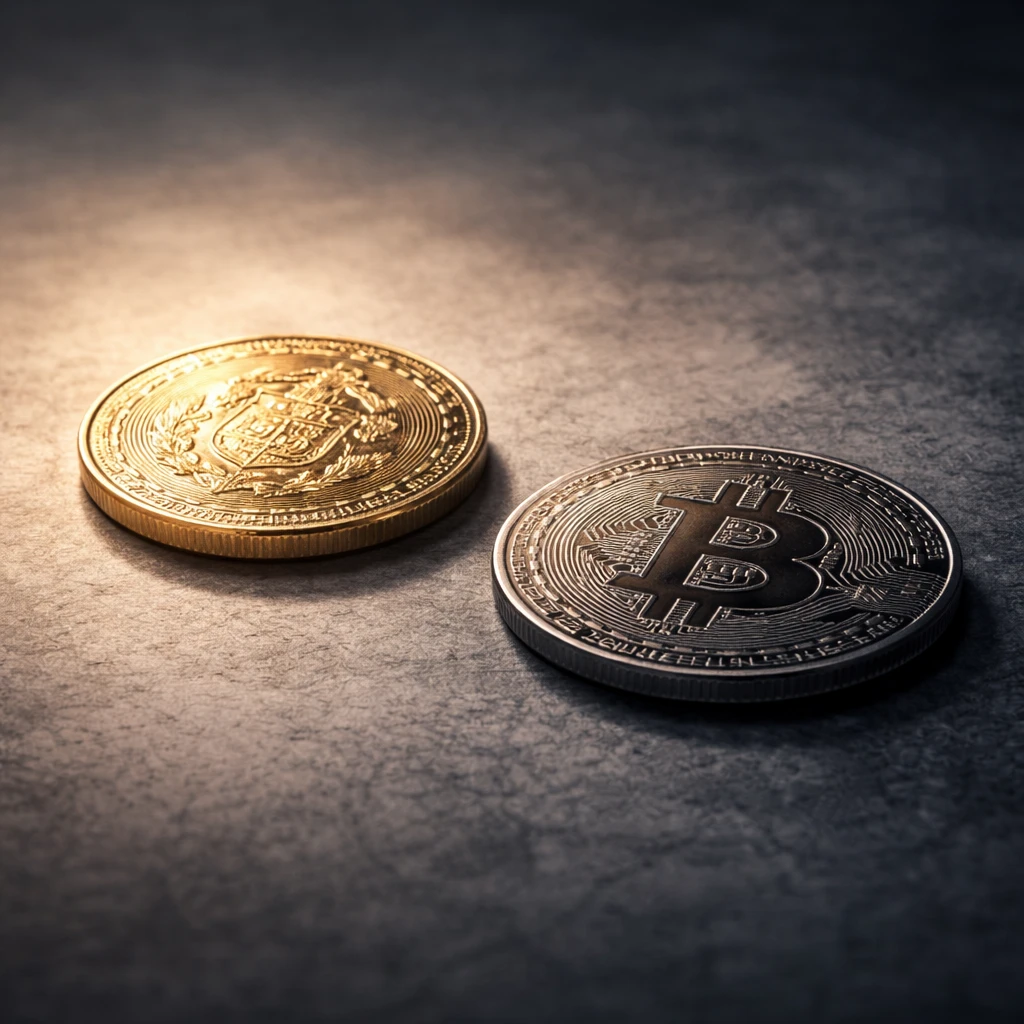

Bitcoin, the leading cryptocurrency by market recognition and capitalization, has entered a notable period of decline, sending waves of concern through the crypto community and broader financial markets. Since reaching its zenith in October, the digital asset has depreciated by approximately 44%, slipping below the $70,000 threshold on a recent Thursday—marking its lowest valuation in nearly 15 months.
While bitcoin's price fluctuations have historically demonstrated marked volatility, making significant swings relatively commonplace, the current decline is particularly puzzling given the prevailing conditions. Typically, bitcoin proponents position the cryptocurrency as "digital gold," a modern safe haven that investors might turn to when traditional markets face uncertainty or turmoil. Therefore, under the present geopolitical and economic environment, one might anticipate bitcoin to appreciate or at least hold steady as investors seek shelter.
The context indeed seems ripe for such a safe haven to shine. Political tensions are intensifying globally, with President Donald Trump escalating threats against Iran and responding robustly to the ousting of Venezuela’s leader. Relations with traditional allies are also under strain, notably with disputes involving Europe, Canada, and debates over Greenland’s sovereignty. Further complicating the situation are looming tariff increases targeting South Korea. These developments have collectively raised geopolitical anxieties.
On the technological and market fronts, advancements in artificial intelligence have injected further unease into stock investor sentiment. For instance, the introduction of Anthropic’s AI, Claude, which now undertakes tasks traditionally performed by law firms, has led to steep declines in software share prices. Investor sentiment gauges underscore this apprehension; CNN’s Fear and Greed Index remains entrenched in the "fear" zone, while the VIX volatility index (the market's “fear gauge”) briefly climbed to levels not seen since a November episode of turbulent economic data releases and concerns triggered by Nvidia's earnings report. Those Wall Street jitters had caused liquidations and corrections, and now the market seems similarly unsettled.
This pervasive fear has fueled a monumental surge in gold prices, propelling them well beyond $5,500 per troy ounce—a record level. As a tangible and scarce asset traditionally viewed as the quintessential safe haven, gold’s ascendance illustrates a clear investor preference for well-understood stores of value amid turmoil. Remarkably, the notion of physical gold's appeal even extends to its capacity to be personally secured in private spaces during extreme scenarios, providing additional peace of mind that digital assets cannot fully replicate.
In stark contrast, bitcoin has not mirrored gold’s rally. Instead, it has lost roughly 20% of its value in the current calendar year, despite the confluence of insecurity that might have benefited a safe haven investment. This divergence has led some market commentators to consider whether the cryptocurrency’s previously perceived robustness is waning.
Among the voices weighing in on the situation is Michael Burry, widely recognized from "The Big Short" fame, who recently suggested via his Substack newsletter that the turmoil and heightened volatility in gold and silver markets may be attributed to bitcoin bulls liquidating their metal holdings in a bid to offset losses in the cryptocurrency market. Such strategic sell-offs could indicate a loss of confidence that is impacting multiple asset classes simultaneously.
It is also noteworthy that bitcoin’s latest downturn effectively wiped out the gains resulting from what was colloquially termed the "Trump bump." This euphoric phase followed the November 2024 election, wherein investors greeted Donald Trump’s victory with enthusiasm for cryptocurrencies. Earlier, Trump had been seen as skeptical of digital currencies, but his pivot to support them, especially by promoting deregulation intended to alleviate constraints on crypto-related businesses, initially energized the market.
However, the recent crypto winter suggests skepticism now prevails over bitcoin's role as a reliable store of value akin to digital gold. Rather than serving as a refuge during periods of market stress, bitcoin appears to be swept up in the broader "risk-off" sentiment dominating investor decisions. The contrast in performance between gold, up by approximately 24% since October, and bitcoin’s 44% decline underscores that investors treat these assets very differently in times of uncertainty.
Complicating matters, Treasury Secretary Scott Bessent recently testified before the House Financial Services Committee that the Treasury Department lacks authority to intervene in or stabilize cryptocurrency markets. Such statements could discourage hopes that governmental support might provide a backstop for crypto markets experiencing severe downturns.
Despite these challenges, historical patterns provide a tempered sense of optimism. Past episodes of bitcoin depreciation—including crashes in 2014 after the Mt. Gox exchange hack, a 74% plunge in 2018 amidst concerns of an initial coin offering bubble bursting, and subsequent falls in 2021 and 2022 triggered by regulatory pressures and high-profile scandals such as the FTX collapse—have all been followed by significant recoveries. In each instance, bitcoin rebounded fully within roughly 18 months. This cyclical resilience suggests current troubles, while significant, may ultimately represent another chapter in bitcoin’s volatile trajectory.