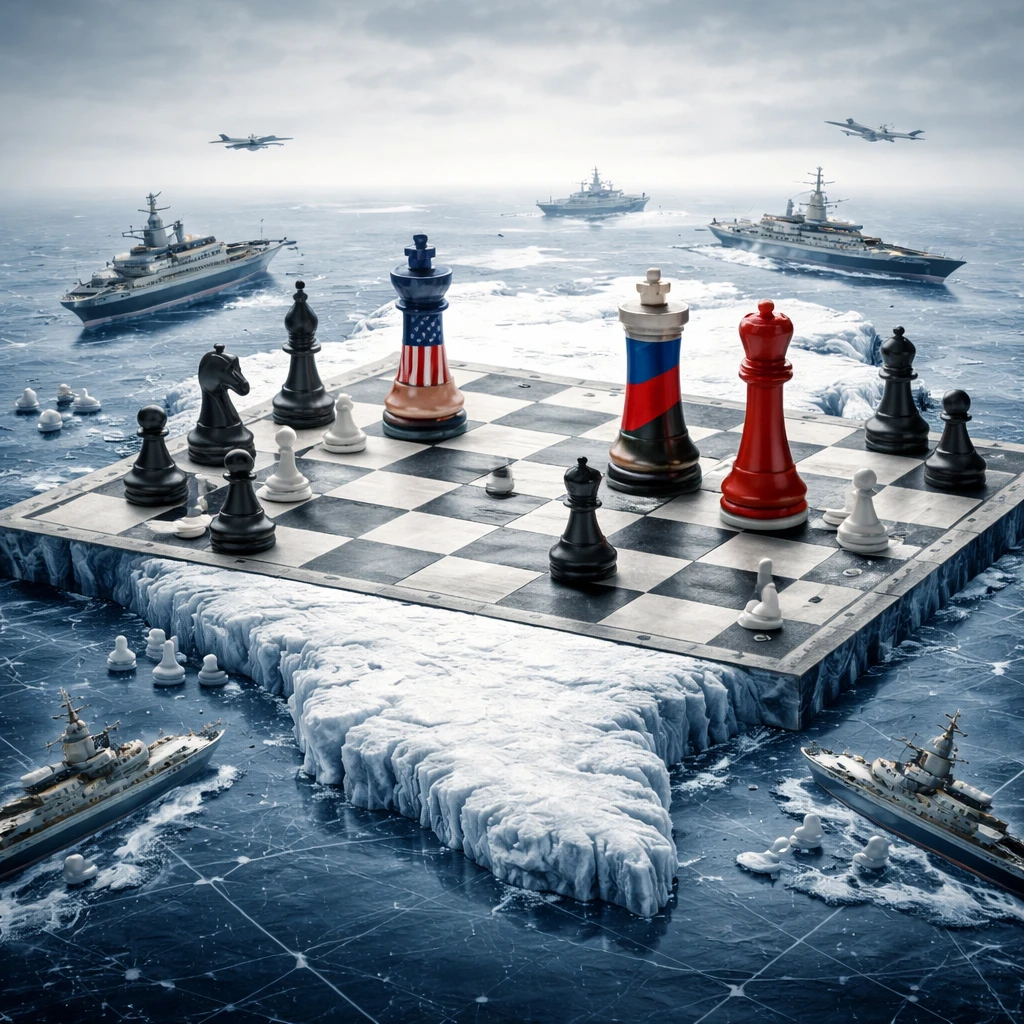

In a recent statement, John Bolton, who formerly served as the United States national security adviser, expressed serious concerns regarding the consequences of the White House's ongoing efforts to acquire Greenland. Bolton cautioned that the American public may not fully comprehend the extent of harm that such an aggressive policy could inflict on national security interests.
Bolton articulated his position in a post on X, where he underscored the tension the policy introduces between the US relationship with NATO and its ambitions in the Arctic region. He characterized the administration’s tactic as a "two-for-one" scenario, implying that attempting to secure Greenland could come at the cost of undermining NATO, a longstanding and critical transatlantic alliance.
Supporting his assertions, Bolton shared excerpts from a recent interview with CNN's Jim Sciutto, highlighting the president’s apparent indifference toward NATO and describing the ongoing efforts to acquire Greenland as a source of unease among allied nations. Bolton warned that should the US choose a path involving military intervention, it would instigate a "political earthquake" domestically, sparking dissent not only in the public sphere but also within the Republican Party itself.
President Trump has publicly framed the acquisition of Greenland — an autonomous territory of Denmark, which is a NATO member — as a strategic imperative for bolstering US security in the Arctic zone. The administration indicated earlier this month that it is exploring all options, including the potential deployment of military forces to secure the island, although diplomatic engagement remains the declared preference.
Trade tactics have compounded tensions as well. The administration has threatened to implement escalating tariffs starting February 1 against several European nations and territories, including Denmark, Sweden, France, Germany, the Netherlands, Finland, the United Kingdom, and Norway. This approach aims to pressure these allies into facilitating the purchase of Greenland, a territory with a population of approximately 57,000 people.
This aggressive trade strategy has been met with firm opposition from European leaders and a notable backlash from members within the Republican Party. Notably, Michael McCaul, Chair of the House Foreign Affairs Committee, warned that any military action on Greenland could be interpreted as hostility toward NATO itself, raising the stakes of the policy significantly. Other Republicans criticize this tariff escalation, warning it could be detrimental to American interests and inadvertently empower geopolitical rivals.
The political and diplomatic strain coincides with upcoming major international engagements, including President Trump's forthcoming attendance at the World Economic Forum in Davos, and emergency sessions among European Union leaders to consider retaliatory responses. One proposed countermeasure involves the creation of an "anti-coercion" instrument designed to regulate US access to European markets in response to such aggressive US policies.