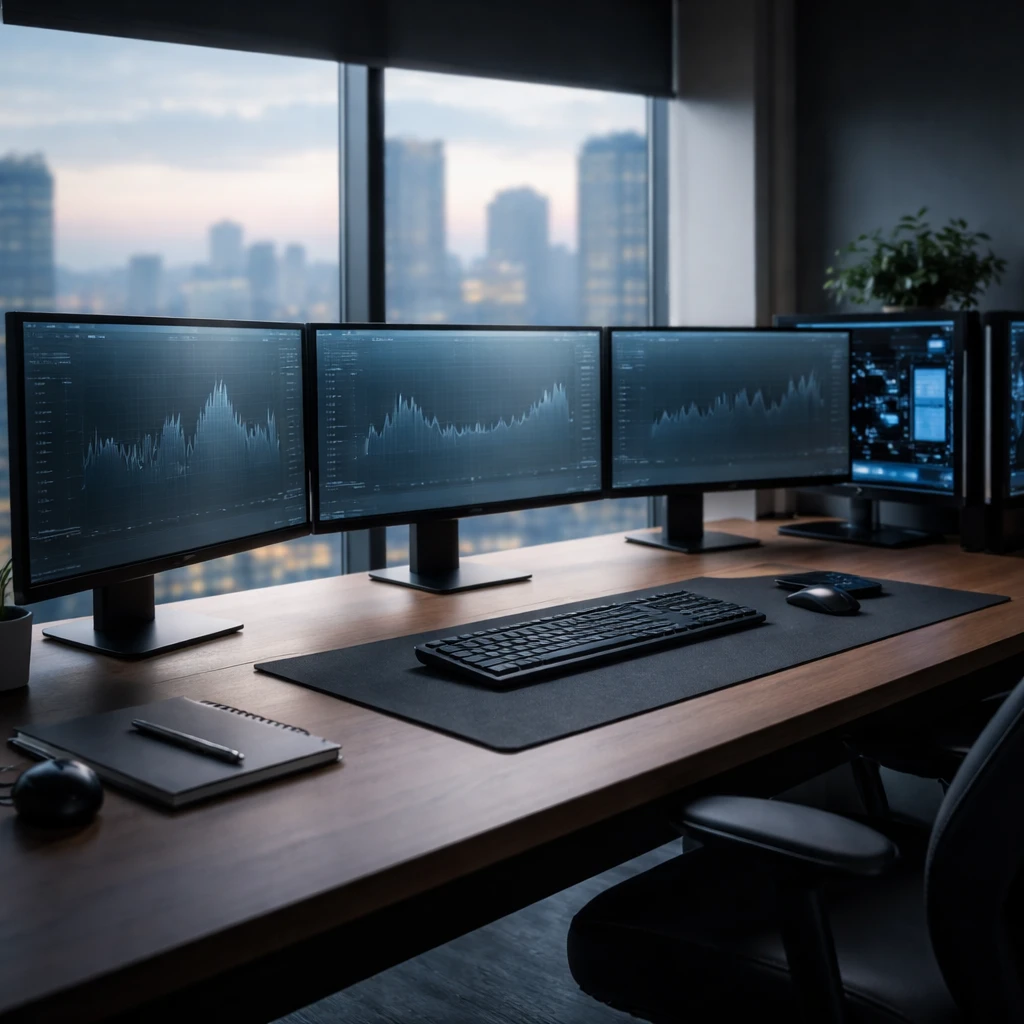

Successful stock trading relies not only on knowledge and strategy but also on a dependable trading infrastructure. Without a well-constructed environment that supports your trading workflow, even the best strategies can suffer execution errors, increased risk, and inconsistent results. This guide covers how to build and maintain a comprehensive trading infrastructure tailored to your needs that enables disciplined decision-making, reduces operational errors, and improves overall trade execution quality.
1. Understanding What Trading Infrastructure Entails
Trading infrastructure refers to the combination of hardware, software, data sources, connectivity, routine processes, and contingency measures that collectively facilitate your stock market trading activities. It is the backbone supporting every aspect of your trade from market analysis and signal generation to order placement and risk management.
Key components include:
- Hardware: Computers, monitors, internet routers, backup power, and peripherals
- Software: Trading platforms, charting tools, news feeds, risk management applications
- Data sources: Market data feeds, fundamental data, economic calendars
- Connectivity: Reliable internet with backup options
- Processes: Trade planning routines, execution protocols, record-keeping
- Contingency planning: Preparedness for technical failures and market disruptions
2. Building Your Trading Hardware Setup
Your hardware setup must support uninterrupted, efficient market access and analysis.
Checklist for essential hardware:
- High-performance computer or laptop capable of running multiple applications and charts simultaneously
- Multiple monitors for displaying charts, order entries, news, and market data concurrently
- Uninterruptible Power Supply (UPS) to maintain power temporarily during outages
- Reliable wired internet connection with backup options like mobile hotspot or secondary ISP
- Quality peripherals: mouse, keyboard, and possibly dedicated trading keypad for quick commands
Example: Jane, an active swing trader, uses two large monitors to keep her charts on one screen while executing trades and monitoring news on the other. She has a UPS to prevent system shutdowns during brief power outages and a 4G mobile hotspot ready if her primary internet fails.
3. Choosing the Right Software Tools
Your software suite should cover charting, order execution, data analysis, and trading journal functions.
Components to consider:
- Trading platform: User-friendly, offers direct market access, supports multiple order types, and reliable order execution
- Charting tools: Fast, customizable charts with technical indicators, alerts, and drawing tools
- News and market data feeds: Real-time data and news to keep you informed of market-moving events
- Risk management applications: Position sizing calculators, stop loss trackers, and trade management utilities
- Trade journal software: For recording trades, analyzing performance, and tracking psychological states
Example: John uses a reputable brokerage platform with integrated charting and order execution capabilities, supplements it with a real-time newsfeed subscription, and maintains a detailed trade journal in spreadsheet software that automatically updates via API from his platform.
4. Establishing Reliable Data and Connectivity Sources
Access to accurate, timely data is critical. Delays or outages can lead to missed entries or exits, slippage, and unexpected losses.
Steps to ensure reliable data:
- Subscribe to real-time market data providers relevant to your trading universe
- Verify latency and data accuracy before committing
- Set up multiple internet connections (primary and backup)
- Use wired Ethernet over Wi-Fi where possible to reduce interruptions
- Keep software and firmware updated to maintain security and performance
5. Designing Effective Trading Processes and Workflows
A robust infrastructure also involves well-defined daily routines and execution protocols.
Pre-market preparation:
- Review economic calendar for scheduled event risks
- Analyze watchlist based on overnight news and price moves
- Set clear entry, exit, and stop-loss levels for planned trades
During-market execution:
- Confirm order parameters before submission
- Use order types appropriately to control execution prices
- Monitor active trades for risk management and adjustment needs
Post-market review:
- Update trade journal with outcomes and observations
- Analyze performance against plan to identify improvements
- Backup data files and ensure system security
6. Implementing Contingency Plans and Backup Systems
Preparedness for unexpected disruptions can protect your capital and confidence.
What to include in contingency planning:
- Backup hardware ready for immediate use
- Alternate internet sources to switch during outages
- Clear steps for manual trade execution if automated systems fail
- Emergency contact procedures with your broker
- Regular testing of backup systems for readiness
7. Worked Example: Setting Up a Personal Trading Infrastructure
Meet Lucas, a part-time day trader who wants to optimize his trading infrastructure.
- Hardware: He configures a desktop PC with 3 monitors for price charts, orders, and news dashboards. He adds a UPS and confirms his home internet speed and stability.
- Software: Lucas selects a brokerage platform with a well-reviewed execution system and integrates a third-party charting tool. He subscribes to a professional newsfeed and sets up a spreadsheet-based trade journal template.
- Connectivity: He organizes a mobile hotspot data plan as a backup connection and tests switching between systems.
- Processes: He drafts a daily checklist from pre-market prep through post-market review, focusing on order double-checking and risk adherence.
- Contingency: He prepares a USB drive with essential trading applications and instructions, stores it offsite, and rehearses emergency trade execution protocols.
Lucas’s approach balances performance with risk management, significantly reducing the chance of disruptions undermining his trades.
8. Common Mistakes to Avoid
- Neglecting backup systems: Lack of redundancy in internet or power can result in missed trades or forced bad exits.
- Overcomplicating software setup: Using too many tools or poorly integrated platforms may slow decisions and cause confusion.
- Ignoring process discipline: Skipping pre-trade checks or post-trade record-keeping undermines risk control and learning.
- Failing to update technology: Outdated hardware and software increase risk of crashes and security vulnerabilities.
- Underestimating contingency needs: Unpreparedness for tech failure or market disruptions can be costly and stressful.
9. Practice Plan (7 Days)
- Day 1: Inventory your current hardware and software; note strengths and weaknesses.
- Day 2: Research and select a reliable real-time data provider suitable for your trading style.
- Day 3: Draft a daily trading checklist covering pre-market, execution, and post-market routines.
- Day 4: Test your internet connections; set up a backup and practice switching between them.
- Day 5: Update all software and firmware; uninstall unused or outdated tools.
- Day 6: Create a contingency plan for technical failures and document trade execution procedures.
- Day 7: Set up or improve your trading journal template and input all trades from the past week for review.
Key Points
- Robust trading infrastructure includes hardware, software, data, connectivity, processes, and contingency plans.
- Reliable and redundant systems reduce execution risk and support disciplined trading.
- Structured routines and backup plans improve consistency, risk management, and emotional control.
Risks
- Hardware or internet failure can cause missed or delayed trades, increasing risk exposure.
- Using multiple uncoordinated software tools may lead to errors or slower decision-making.
- Overlooking process discipline and contingency readiness can compound losses and emotional stress during disruptions.
Disclosure: This article is for educational purposes only and does not constitute financial advice. Trading involves risk and you should perform your own due diligence before making any trading decisions.