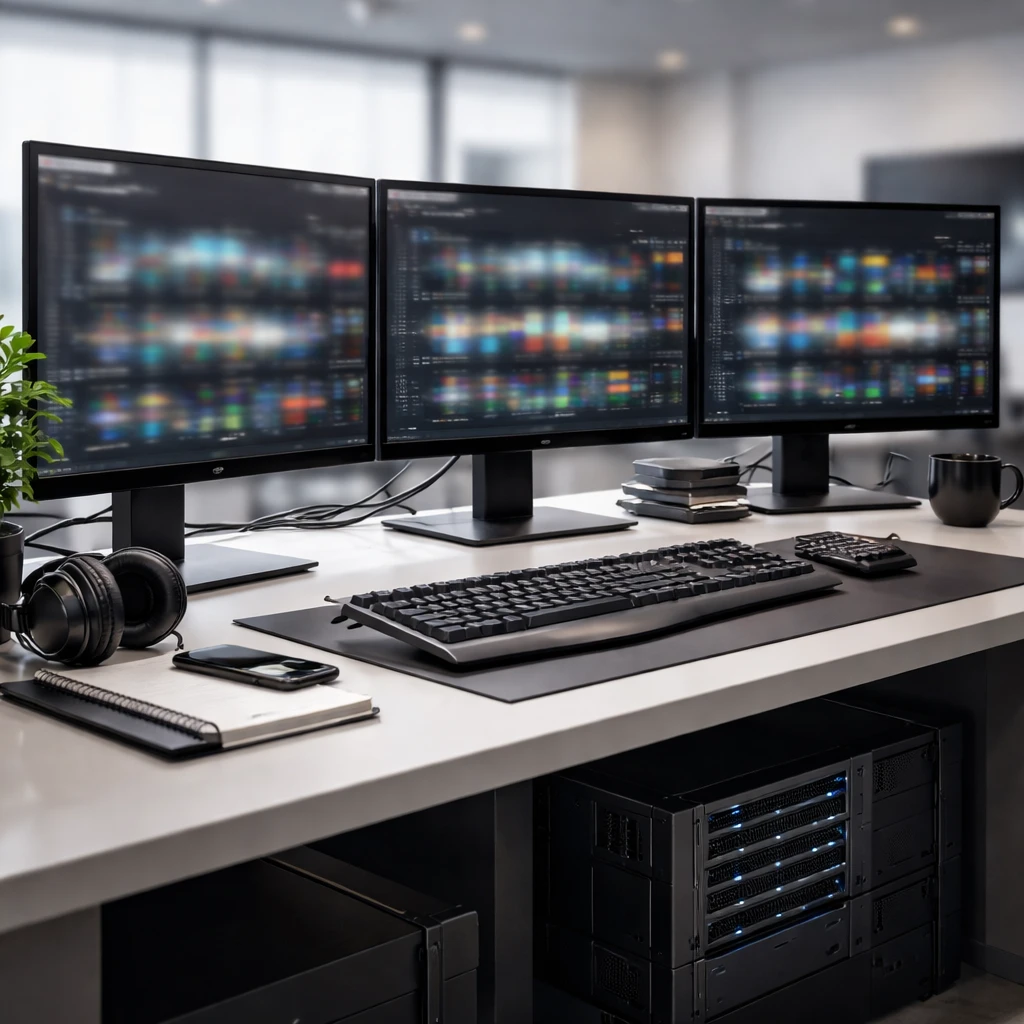

Building a reliable and efficient stock trading infrastructure is a critical step for anyone pursuing consistent success in the markets. Many traders focus heavily on strategy development but underestimate how their underlying systems and routines affect execution quality, risk management, and discipline. A well-designed infrastructure supports focused decision-making, minimizes operational errors, and provides the foundation for executing your trading plan effectively.
What Is a Trading Infrastructure?
Trading infrastructure refers to the combined set of tools, technologies, processes, and routines that support your stock trading activities. It includes everything from your computer and trading platform software to data subscriptions, order execution workflows, backup plans, and daily trading routines. Essentially, it is the system that enables you to implement your trading strategy consistently and safely.
Key Components of a Robust Trading Infrastructure
- Hardware: Reliable computer(s), monitors, internet connection, and peripherals.
- Software and Platforms: Trading platforms, charting software, brokerage interfaces, and order entry tools.
- Data Feeds: Real-time price data, Level 2 market data, news feeds, and other required market information sources.
- Order Execution Workflow: The process and tools for placing, modifying, and exiting trades efficiently and accurately.
- Record-Keeping and Journaling: Systems and habits for logging trades, notes, and performance metrics.
- Risk Management Processes: Integrated tools or steps to monitor position sizing, stop loss placement, and risk exposure.
- Contingency Planning: Backup systems, alternative access methods, and protocols for technical or market disruptions.
- Routine Checklists: Structured pre-trade, intra-trade, and post-trade checklists to enhance discipline.
Step-by-Step Framework to Build and Optimize Your Trading Infrastructure
- Assess Your Trading Needs and Strategy: Consider your trading style, frequency, instruments traded, and risk tolerance to identify necessary infrastructure requirements.
- Select Reliable Hardware: Choose a computer with sufficient speed and memory, multiple monitors for charting and data, and a stable, fast internet connection with backup if possible.
- Choose Appropriate Trading Platforms and Software: Evaluate platform capabilities for order execution speed, interface usability, and compatibility with your broker and data feeds.
- Subscribe to Necessary Data Feeds: Acquire real-time market data essential for your trading, ensuring timely and accurate information.
- Establish Order Execution Procedures: Develop clear workflows for entering, modifying, and exiting trades using platform tools and order types tailored to your strategy.
- Create and Maintain Trading Journals and Logs: Set up systems to record each trade's details, rationale, and outcomes to facilitate review and learning.
- Implement Risk Management Tools: Integrate position sizing calculators, alerts, and monitoring systems to keep risk within your comfort zone.
- Develop Contingency Plans: Prepare for unexpected technical issues, connectivity outages, or market surges with backup devices, secondary platforms, or alternative communication methods.
- Design and Use Routine Checklists: Craft checklists for preparation, execution, and review to foster consistency and reduce errors.
- Regularly Review and Optimize: Schedule periodic infrastructure audits to upgrade technology, streamline workflows, and adjust setups according to evolving needs.
Checklist: Essential Trading Infrastructure Setup
- Reliable PC with at least dual monitors
- High-speed and stable internet connection, with backup options
- Trading platform compatible with your strategy and broker
- Subscription to real-time market data feeds suitable for your instruments
- Clear documented workflows for trade execution and order management
- Trade journal system (digital or physical) for detailed record-keeping
- Position sizing and risk monitoring tools
- Backup systems and contingency plans for technical failures
- Daily pre-trade and post-trade checklist for disciplined routines
Worked Example: Building a Day Trading Infrastructure
Let’s say Jane is an aspiring day trader focusing on equities. Here is how she might build her infrastructure:
- Her trading style requires fast execution and multiple data sources.
- She invests in a high-performance PC with three monitors: one for charts, one for order entry and Level 2 data, and another for news and research.
- Jane selects a trading platform known for rapid order entry and precise order types (e.g., limit, stop-limit).
- She subscribes to an ultra low-latency real-time data feed to ensure she sees accurate quotes and depth of market.
- Jane documents her order execution steps clearly, including a habit of double-checking orders before transmission.
- She sets up a digital trade journal template to record entry and exit reasons, target levels, and outcomes immediately after each trade.
- Jane uses position sizing calculators integrated with her platform to limit risk to 1% of her capital per trade.
- She has a secondary laptop with a mobile internet hotspot as a contingency if her main system fails.
- Every morning before market open, Jane runs through her pre-trade checklist verifying software updates, data feed status, and risk parameters.
Common Mistakes to Avoid
- Neglecting backups: Not having contingency systems leads to missed trades or panic during outages.
- Inadequate hardware: Using outdated or slow devices that lag during critical execution moments.
- Overcomplicating systems: Adding too many platforms or tools that slow decision-making and increase errors.
- Poor data quality: Relying on delayed or inaccurate data feeds that force late or incorrect trading actions.
- Skipping routine checklists: Trading without structured preparation and review leads to inconsistent execution.
- Ignoring risk management integration: Failing to embed risk controls within the infrastructure increases exposure and losses.
Practice Plan (7 Days)
- Day 1: List your trading goals and style to identify infrastructure needs.
- Day 2: Audit your current hardware and internet; note strengths and areas for improvement.
- Day 3: Research and choose one or two trading platforms that suit your style; test demos.
- Day 4: Identify and subscribe to appropriate real-time data feeds; verify feed quality.
- Day 5: Map out your order execution workflow, including order types and verification steps.
- Day 6: Create a trade logging template (digital or paper) and practice entering trade information.
- Day 7: Develop a simple pre-trade checklist including system checks and risk parameters; commit to using it daily.
Key Points
- Trading infrastructure encompasses hardware, software, data, workflows, and routines that support your strategy execution.
- Building a reliable infrastructure involves systematic selection of components, clear processes, and contingency planning.
- Regularly review and improve your setup to maintain discipline, reduce errors, and enhance trade execution quality.
Risks and Pitfalls
- Technical failures or poor execution systems can cause missed or erroneous trades, affecting performance and capital.
- Overcomplex infrastructures can overwhelm decision-making and introduce operational errors.
- Neglecting risk management integration within infrastructure increases chances of excessive losses.
Disclosure: This article is for educational purposes only and does not constitute financial advice or a recommendation to buy or sell securities. Trading involves risk and may not be suitable for all investors. Always do your own research and consider consulting a professional advisor before making trading decisions.