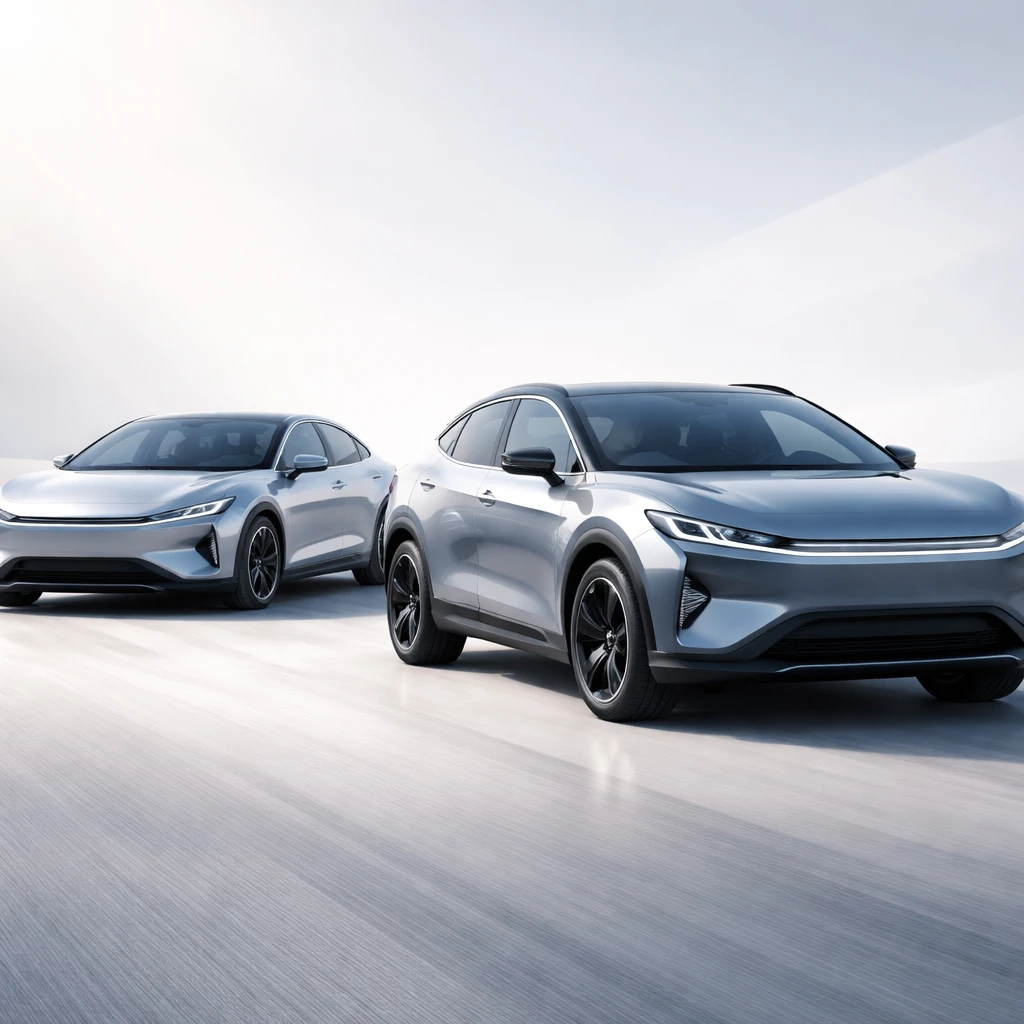

In a significant reshuffling of the electric vehicle market hierarchy, BYD, the China-based automotive giant, has emerged as the world's foremost electric vehicle seller in 2025, surpassing Tesla, the American industry pioneer. The turn of events marks a considerable transformation since 2011 when Elon Musk, Tesla's CEO, dismissed BYD as a competitor. Over a decade later, BYD has not only closed the gap but exceeded Tesla's global EV sales figures, underscoring the intensifying competition in the automotive technology arena.
BYD announced on Thursday that its electric vehicle sales reached 2.26 million units in 2025, reflecting a substantial 28% increase compared to 2024 sales volumes. In contrast, Tesla's sales declined for the second consecutive year, with deliveries dropping 8.6% to 1.6 million in 2025—the steepest annual downturn the company has ever recorded. This development might seem unexpected, especially considering that BYD's EV models are not sold in the United States, a key market where Tesla maintains a strong presence and where China stands as Tesla's second-largest market.
Looking closer at the quarterly performance, Tesla's fourth-quarter deliveries amounted to approximately 418,000 vehicles, representing a 15.6% decrease compared to the same period in the prior year, and a sharper fall from the third quarter's record-breaking sales. The third quarter's robust sales spike was largely driven by American consumers attempting to benefit from the impending expiration of a $7,500 federal tax credit on October 1. Tesla, however, does not break down its sales figures by region, offering only global sales data; yet, company reports indicate that the U.S. market accounts for nearly half of its total revenue. Similar reflections of weak US electric vehicle sales were anticipated from other automakers' reports for the last quarter of 2025.
Tesla's trajectory had previously shown remarkable growth, at times increasing deliveries by nearly 50% annually. However, 2024 saw the company’s first annual sales decline, albeit modest, of about 1%. The year 2025 intensified these challenges, with a marked drop in sales during the first half, a consequence in part of heightened competition from both emerging EV manufacturers such as BYD and established global automotive firms. Furthermore, Tesla encountered resistance in key markets like the U.S. and Europe related to the political activities of CEO Elon Musk. His leadership role with the Trump administration's Department of Government Efficiency led to protests at Tesla showrooms and some instances of vandalism in these regions early in the year, which may have dampened buyer enthusiasm.
Despite these headwinds, sales momentum surged in the third quarter as consumers sought to capitalize on tax incentives before their expiration. Nevertheless, this phenomenon likely caused some buyers to accelerate their purchases, reducing demand in subsequent months. In response to the tax credit loss and competitive pressures, Tesla introduced cheaper Model 3 and Model Y variants, priced about $5,000 lower than their premium counterparts. These more affordable models, however, offer reduced driving range per charge and omit several features, factors that potentially limit their appeal to certain segments of customers.
On the other side of the spectrum, BYD’s ascendancy has not come without challenges. The company has been contending with fierce competition and ongoing price wars within China, the world's largest automobile market and BYD's primary revenue source. This highly competitive environment has forced the Shenzhen-based manufacturer to pursue international expansion. Nevertheless, BYD’s low-price approach has met scrutiny abroad, resulting in new tariffs in some foreign markets.
Evaluating BYD’s broader vehicle sales, which include both EVs and hybrids, growth has moderated to its slowest pace in half a decade. The company sold over 4.6 million vehicles last year, a figure highlighting the difficulties it faces domestically amid the crowded landscape featuring approximately 150 car brands and more than 50 electric vehicle manufacturers. Market share data from the China Passenger Car Association indicates BYD’s proportion of the domestic market fell from a peak of 35% in 2023 to 29% in the first eleven months of 2025. During that period, BYD experienced a 5% decline in sales, whereas competitors like Geely, China’s second-largest EV manufacturer, recorded growth nearing 90%. Other rising challengers include Leapmotor and Xiaomi, the latter of which only launched its inaugural EV in 2024.
At a December investor meeting, Wang Chuanfu, BYD’s founder and CEO, attributed the sales slowdown to erosion in BYD’s technological advantage and insufficient product differentiation. He also indicated plans to introduce new technologies soon, suggesting an effort to regain competitive ground. Financially, BYD encountered profit decreases in both the second and third quarters of 2025, further underscoring the pressures it faces.
Meanwhile, Tesla shares experienced a 1.2% increase in early Friday trading after closing 2025 up 18.6% for the year. This uptick reflects investor optimism rooted less in current sales performance and more in Musk’s strategic initiatives, including ambitions to deploy a robotaxi fleet and develop a substantial lineup of humanoid robots. These projects remain in early stages; the robotaxi service is operational in only two metropolitan areas—Austin, Texas, and San Francisco—far short of Musk’s initial prediction that it would cover half of the U.S. population by the end of the year.
In sum, the electric vehicle sector is witnessing a noteworthy power shift as BYD surpasses Tesla on global sales. Both companies confront considerable challenges amid rapidly evolving market conditions, regulatory environments, and consumer preferences. This pivot could signal further transformation as legacy manufacturers and new entrants vie for dominance in the burgeoning EV market.