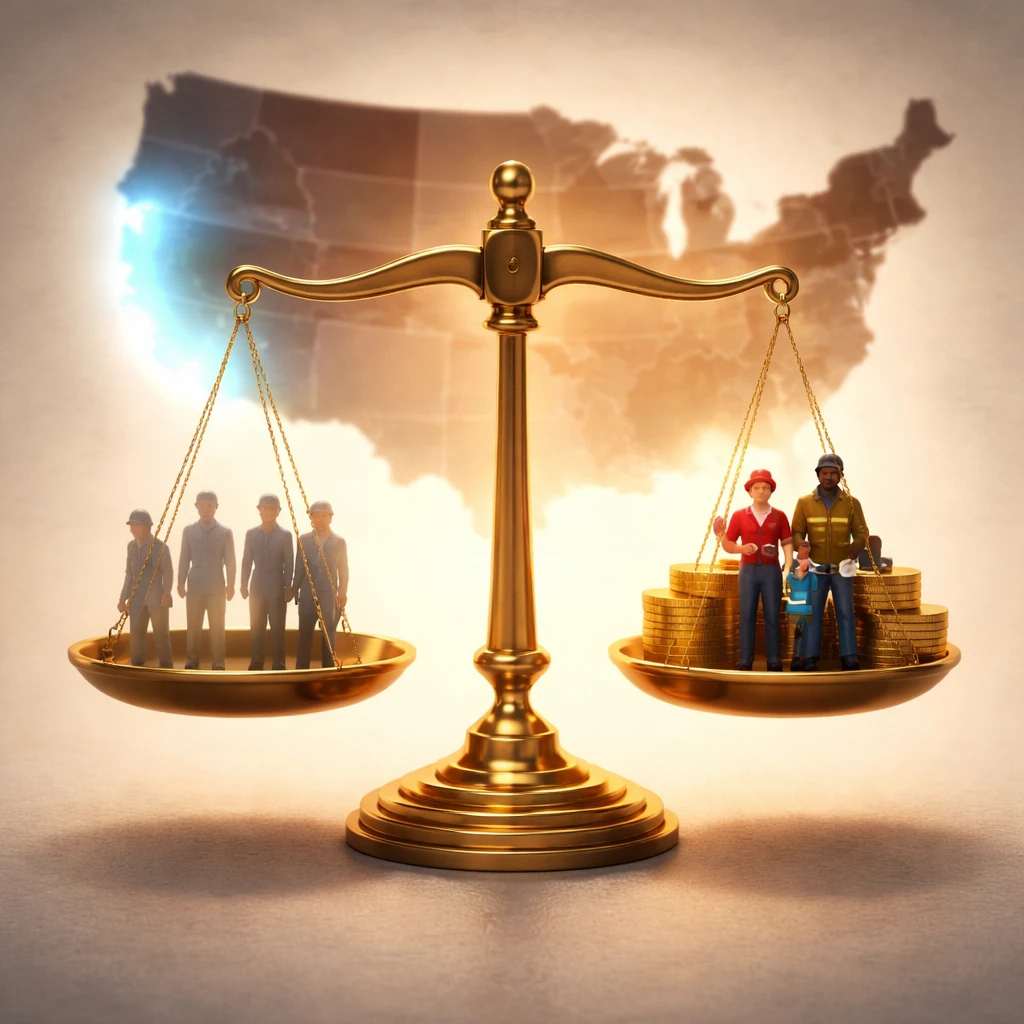

California Governor Gavin Newsom has placed the spotlight on his administration’s deliberate approach to minimum wage reform, particularly the significant wage increases for workers in sectors such as fast food and healthcare. During his State of the State speech, Newsom underscored California's leadership in setting higher pay floors for certain industries, while openly criticizing states that have retained the federal minimum wage of $7.25 per hour without adjustment for nearly two decades.
On the social media platform X, Newsom expressed pride over recent legislative developments that elevated the minimum wage to $20 per hour for fast-food employees and introduced a phased increase to $25 per hour for healthcare workers. This progressive agenda marks a marked divergence from the status quo in 17 states, largely governed by Republicans, where workers continue to earn the unchanged federal minimum wage.
Expanding on these points in Sacramento, Newsom addressed lawmakers with a pointed comparison. He called attention to workers in Alabama, South Carolina, Tennessee, and other 14 states who earn minimum wage at $7.25 per hour, questioning their ability to cover essential expenses such as rent, family needs, and education. His remarks emphasized the challenges sustained by low waged workers operating under stagnant wage standards.
California's existing statewide minimum wage stands at $16.90 per hour, but under laws enacted in 2023, certain sectors benefit from elevated wage requirements. For example, fast-food workers at large chain outlets receive wages beginning at $20 per hour. Similarly, healthcare workers are positioned on a trajectory toward a $25 per hour wage, with many medical facilities already meeting or exceeding these benchmarks.
In his address, Newsom painted California as a counterbalance to policies associated with President Donald Trump’s administration. He positioned the state as an economic powerhouse in multiple sectors—including manufacturing, technology, education, and agriculture—while maintaining a robust commitment to advancing worker protections and wages.
However, this advocacy for increased labor costs unfolds amid a tightening fiscal environment. After a stretch marked by budget surpluses, California now confronts an anticipated $18 billion deficit in the upcoming fiscal year. Moreover, the state's Legislative Analyst's Office warns that if current spending trends continue to outpace revenue growth, structural budgetary gaps could expand to around $35 billion annually by the latter part of the decade.
Governor Newsom, who is regarded as a likely presidential contender for 2028, plans to introduce a budget that attempts to reconcile the emerging fiscal shortfall with the state's progressive objectives. This proposed budget seeks to close the financial deficit while bolstering the social policies that have characterized his administration’s agenda.
While labor advocates have commended Newsom’s balanced approach toward fiscal management and worker welfare, business interests and some commentators have expressed concerns. Critics argue that the elevated minimum wage in fast food and the broader labor policies add to operating costs and place additional pressures on employers, potentially influencing economic competitiveness.
Overall, Governor Newsom’s embrace of progressive minimum wage standards reflects a deliberate effort to enhance the living standards of key worker groups. California’s differentiation from states maintaining the federal minimum wage highlights the ideological and economic divides influencing contemporary labor policy debates across the United States.