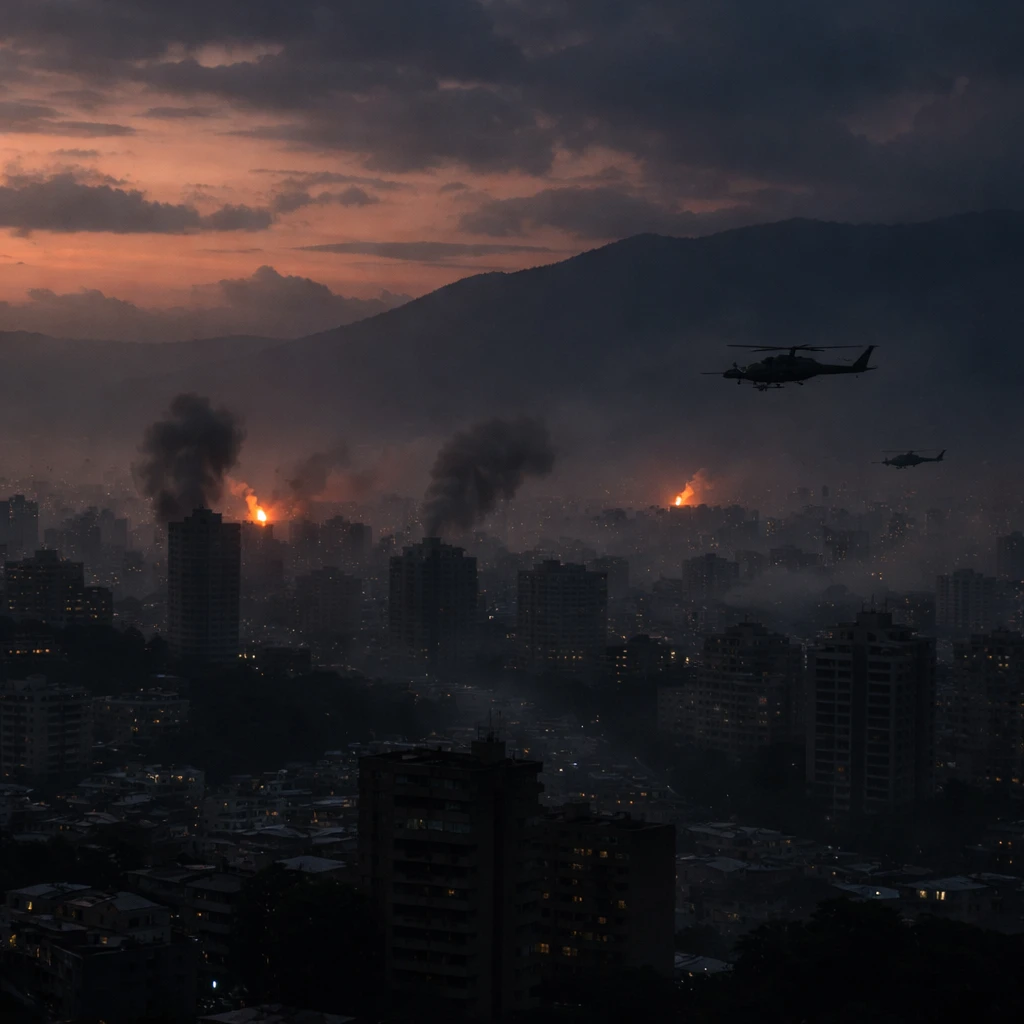

In the early hours of Saturday morning, Caracas, the capital of Venezuela, was jolted by at least seven explosions accompanied by the presence of low-flying aircraft. These events reportedly occurred around 2 a.m. local time, causing significant unrest within the city. In response, the Venezuelan government issued a formal statement condemning the actions and attributing the attacks to the United States military. The government denounced the incidents in strong terms, characterizing them as a severe act of military aggression committed by the current administration in Washington against Venezuelan territory. This assertion was communicated publicly, emphasizing rejection and denunciation before the international community.
The backdrop to these explosions involves recent United States military operations in the Caribbean region, specifically aimed at vessels alleged to be involved in drug smuggling. These operations have intensified in recent days, reflecting a broader US strategy to combat narcotics trafficking originating from or passing through Venezuela. Concurrently, Venezuelan President Nicolás Maduro has signaled openness to discussions with the United States regarding a bilateral agreement to tackle drug trafficking. This juxtaposition of military actions alongside diplomatic overtures adds complexity to the current environment.
Further escalating the situation, President Maduro has previously accused the United States of pursuing a strategy designed to destabilize his government and forcibly change the administration. He has alleged that Washington's ultimate objective is access to Venezuela's substantial oil reserves, pursued through prolonged pressure campaigns. Since August, the US has been actively conducting operations in the Caribbean Sea, including a recent drone strike targeting a location associated with a Venezuelan drug cartel. These activities align with broader US measures such as the seizure of sanctioned oil tankers and imposing blockades on others, aiming to exert maximum economic pressure on the Maduro regime.
The Venezuelan Ambassador to the United Nations has publicly criticized these US actions, calling them "the greatest extortion known in our history," notably highlighting the significance of confiscating two Venezuelan oil tankers. Meanwhile, internal reports have suggested that then-President Donald Trump's administration intensified efforts to force Maduro’s removal from power. These moves reportedly led to increased diplomatic engagements by other countries, including Belarus and Russia, with Venezuela, raising concerns over the potential for Maduro to flee amid mounting pressure.
These developments form part of a larger landscape of rising tension and confrontation between Venezuela and the United States, marked by military, economic, and diplomatic maneuvers. The recent explosions in Caracas serve as the latest flashpoint in this volatile relationship, underscoring unresolved conflicts and the fragility of regional stability in the context of narcotics-related security concerns and geopolitical rivalries.
The backdrop to these explosions involves recent United States military operations in the Caribbean region, specifically aimed at vessels alleged to be involved in drug smuggling. These operations have intensified in recent days, reflecting a broader US strategy to combat narcotics trafficking originating from or passing through Venezuela. Concurrently, Venezuelan President Nicolás Maduro has signaled openness to discussions with the United States regarding a bilateral agreement to tackle drug trafficking. This juxtaposition of military actions alongside diplomatic overtures adds complexity to the current environment.
Further escalating the situation, President Maduro has previously accused the United States of pursuing a strategy designed to destabilize his government and forcibly change the administration. He has alleged that Washington's ultimate objective is access to Venezuela's substantial oil reserves, pursued through prolonged pressure campaigns. Since August, the US has been actively conducting operations in the Caribbean Sea, including a recent drone strike targeting a location associated with a Venezuelan drug cartel. These activities align with broader US measures such as the seizure of sanctioned oil tankers and imposing blockades on others, aiming to exert maximum economic pressure on the Maduro regime.
The Venezuelan Ambassador to the United Nations has publicly criticized these US actions, calling them "the greatest extortion known in our history," notably highlighting the significance of confiscating two Venezuelan oil tankers. Meanwhile, internal reports have suggested that then-President Donald Trump's administration intensified efforts to force Maduro’s removal from power. These moves reportedly led to increased diplomatic engagements by other countries, including Belarus and Russia, with Venezuela, raising concerns over the potential for Maduro to flee amid mounting pressure.
These developments form part of a larger landscape of rising tension and confrontation between Venezuela and the United States, marked by military, economic, and diplomatic maneuvers. The recent explosions in Caracas serve as the latest flashpoint in this volatile relationship, underscoring unresolved conflicts and the fragility of regional stability in the context of narcotics-related security concerns and geopolitical rivalries.