
President Donald Trump recently voiced his confidence in American energy corporations to spearhead the revitalisation of Venezuela's severely degraded oil sector. Venezuela is known to hold the largest proven oil reserves globally, making its energy resources potentially very lucrative. However, experts from the energy sector caution that the risks associated with rebuilding Venezuela's industry may outweigh the prospective benefits for US oil giants.
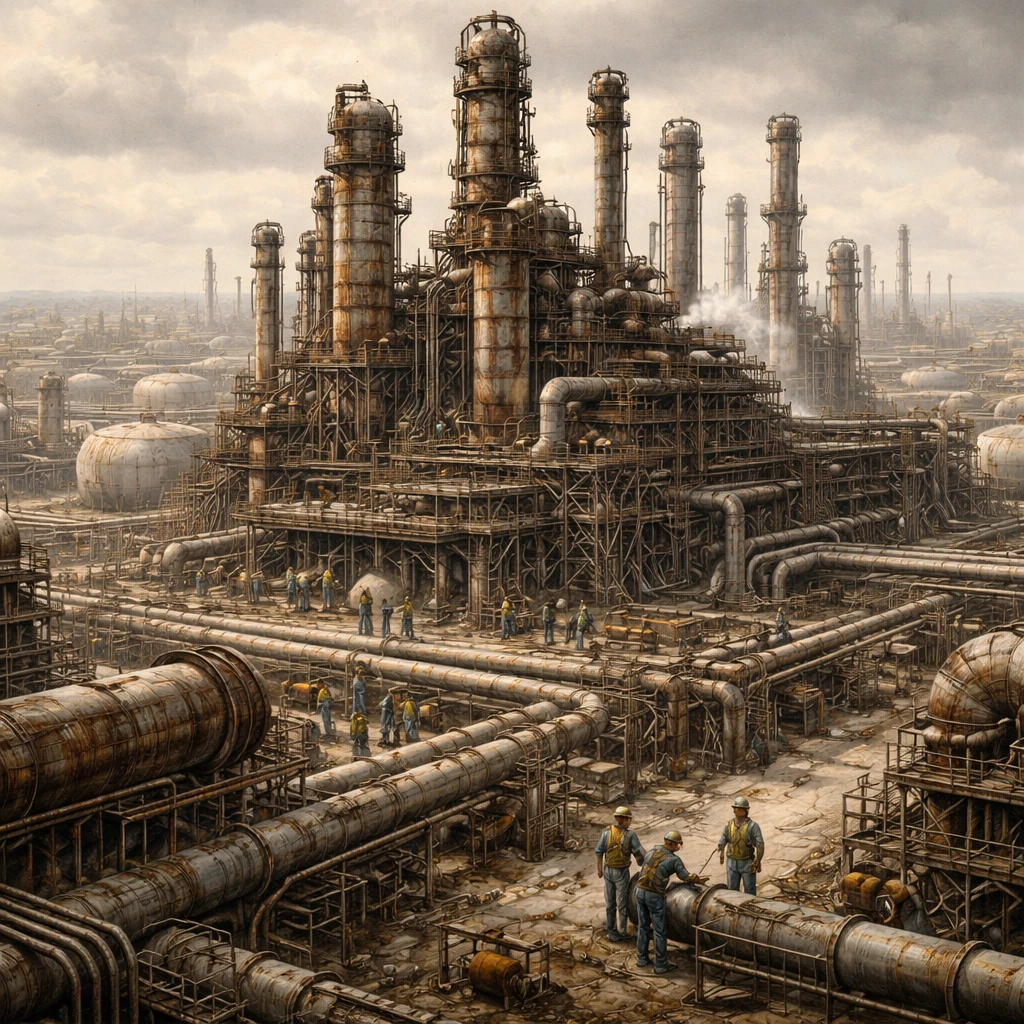
Depleting more oil reserves in Venezuela would necessitate reconstructing its heavily damaged oil infrastructure. According to President Trump, accomplishing this would involve spending billions of dollars—a significant capital commitment. Meanwhile, the current market prices for crude oil do not clearly support such sizable investments, rendering the financial decision complex. Additionally, the type of crude oil produced in Venezuela is notably heavy and viscous, requiring expensive refining processes. This factor further complicates the economic attractiveness of operating in the region.
Moreover, Venezuela faces political turmoil after the displacement of its previous authoritarian leader. This instability introduces further uncertainty, making it difficult for corporate leaders and energy sector planners to envisage a straightforward path forward. Clayton Seigle, a senior fellow at the Center for Strategic and International Studies, highlighted that the unresolved political situation overshadows potential investment opportunities, leaving more questions than answers about the country's future.
Events escalated recently when special US forces carried out a substantial operation, resulting in the capture of Venezuelan President Nicolás Maduro and his wife, Cilia Flores, who were transported to New York to face charges including narco-terrorism conspiracy, cocaine importation conspiracy, and weapons offenses. President Trump announced that the United States would control Venezuela until stable leadership is established.
Meanwhile, Venezuela's Supreme Court appointed Delcy Rodriguez as interim president. Rodriguez also oversees Petróleos de Venezuela, SA (PDVSA), the state-run oil company pivotal to the country's energy production. President Trump expressed that US oil firms would help Venezuela reclaim its position as a major oil producer globally. He stated, "We’re going to have our very large United States oil companies, the biggest anywhere in the world, go in, spend billions of dollars, fix the badly broken infrastructure, the oil infrastructure, and start making money for the country." This statement signals ambitions for significant US corporate involvement in reviving Venezuela's oil capacity.
Historical Context of US-Venezuela Oil Relations
Foreign oil companies, including American firms, have been active in Venezuela's oil sector for over a century. The country’s close geographical proximity to the United States made it strategically important for American energy interests. Venezuela's crude, characterised by its affordability and thickness, was well-suited for US refineries, many of which were designed specifically to process this grade of crude oil.
In the 1990s, Venezuela introduced policies aimed at attracting further investment into the oil sector, boosting its appeal for foreign investors. However, the ascension of Hugo Chávez to the presidency in 1999 altered the landscape dramatically. Chávez took direct control of PDVSA, the state oil company, and under his leadership, the oil infrastructure was neglected, deteriorating significantly. This decline in upkeep led to a reduction in possible oil production, with Venezuela’s crude output dropping by more than one-third over the past twenty-five years.
President Trump criticised this period by asserting, "We built Venezuela oil industry with American talent, drive and skill, and the socialist regime stole it from us."
Chevron’s Enduring Presence Amid Sanctions
Chevron remains the sole American oil company currently operating in Venezuela. The company has maintained a presence intermittently over the past decade, aided by a combination of US sanctions and waivers allowing limited operations. Approximately 25% of Venezuela’s oil, produced under Chevron's operations, is exported to the United States.
According to Clayton Seigle, Chevron’s century-long involvement has provided the company with a deep understanding and robust position in Venezuela’s oil sector. "Chevron has been operating there for literally 100 years, and they’ve seen it all, and they have stuck through thick and thin to have a really advantageous position now," he noted.
Michael Klare, a senior visiting fellow at the American Arms Association, emphasised the competitive advantage Chevron’s extensive infrastructure and experience confer. He explained that any new entrant or returning company would require years to build similar capabilities, contending that "You just can’t walk into Venezuela and pump oil. It’s an exceedingly difficult and complex process that Chevron has, over the years, excelled at, but very few companies have that technology at hand." This highlights the difficulty of entering or expanding operations within Venezuela’s challenging energy environment.
Following the recent political upheaval, a Chevron representative stated the company will "continue to operate in full compliance with all relevant laws and regulations," underscoring Chevron's intent to maintain its operational stance amidst uncertain conditions.
Summary
The significant oil reserves in Venezuela present an alluring opportunity for US companies, but reconstruction efforts demand substantial investment amid uncertain political and economic conditions. The particular difficulties in refining Venezuela’s heavy crude and the entrenched presence of Chevron further complicate market entry for new players. Political instability following the recent leadership changes continues to cloud the prospects for a stable energy sector revival.