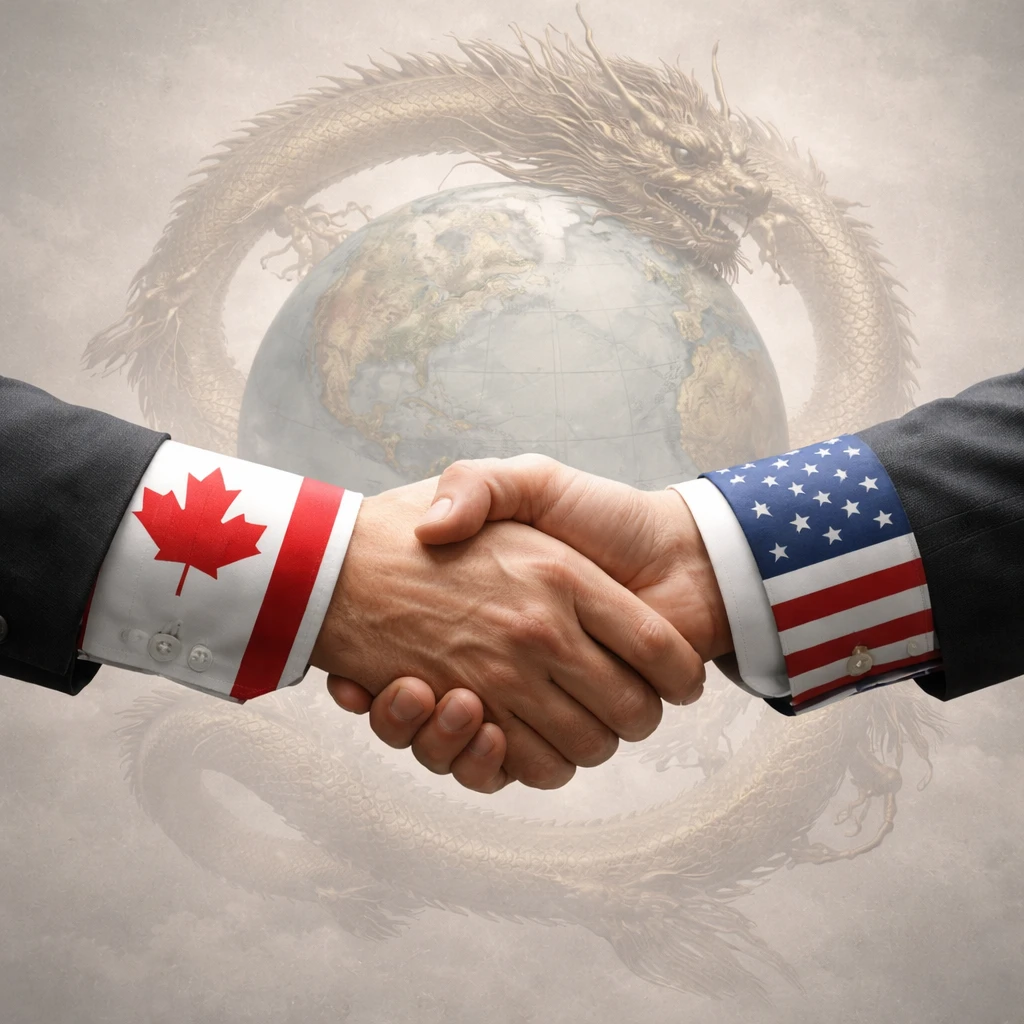

Michael Pillsbury, senior fellow specializing in China strategy at the Heritage Foundation, issued a stark warning regarding Canada’s recent trade agreement with China and the decision by Canadian Prime Minister Mark Carney to bypass direct involvement with U.S. leadership. Speaking on Fox Business’ "The Claman Countdown," Pillsbury characterized Canada’s maneuver as "playing with fire," given the complexity and risks associated with China’s trade practices and the United States’ trade policies under President Donald Trump.
Pillsbury pointed out that while President Trump has publicly expressed approval of the Canada-China deal, this endorsement carries a nuanced implication. He noted that Trump is acutely aware of China's historical record of not fully honoring or implementing trade commitments, suggesting that this apparent acceptance may hide deeper strategic considerations. Pillsbury emphasized that Canada’s economic relationship with the United States is substantial, with approximately 75% of Canadian exports destined for the U.S. market. Therefore, he argued that it would be in Canada’s best interest to collaborate closely with its American ally rather than risk antagonizing the U.S. by engaging independently with China.
According to Pillsbury, China strategically benefits when the U.S. is embroiled in discord with its allied nations. This dynamic could potentially undermine North America's cohesive trade policy and economic influence. He urged Prime Minister Carney to reconsider the trade deal with China, warning that failure to realign with U.S. interests might provoke harsh repercussions from the Trump administration in the future, describing the potential outcome as being “punished severely.”
When discussing President Trump’s approach to trade, Pillsbury described the administration’s tariff policies—particularly Trump’s coercive tariff strategy starting from 1987—as a method of political leverage rather than purely economic policy. He expressed an expectation that tangible outcomes stemming from these strategies would become apparent after a year or two of continued implementation.
The trade relationship between the U.S. and Canada has been under increasing strain during Trump’s tenure, marked by contentious negotiations and tariff threats targeting steel, aluminum, and other important Canadian imports. These tensions have led to reciprocal threats of retaliatory measures from Canada, although these were eventually softened to maintain a working relationship.
Despite multiple months of talks and high-level meetings, Canada and the U.S. have not yet secured a new trade agreement. Meanwhile, recent comments from U.S. Trade Representative Jamieson Greer have suggested that the Trump administration could potentially consider withdrawing from the United States-Mexico-Canada Agreement (USMCA) as early as 2026.
Economist Justin Wolfers has criticized the Trump administration for misunderstanding the fundamental nature of trade, emphasizing that the issue is less about competition and more about cooperation between nations. Wolfers warned that the aggressive trade posture of the U.S., including tariff threats directed at its allies, may have influenced Canada’s decision to deepen economic ties with China, underscoring the complexities of global trade alignments.
While these developments unfold, market observers continue to watch the evolving dynamics in North American trade relationships and their impact on global commerce.