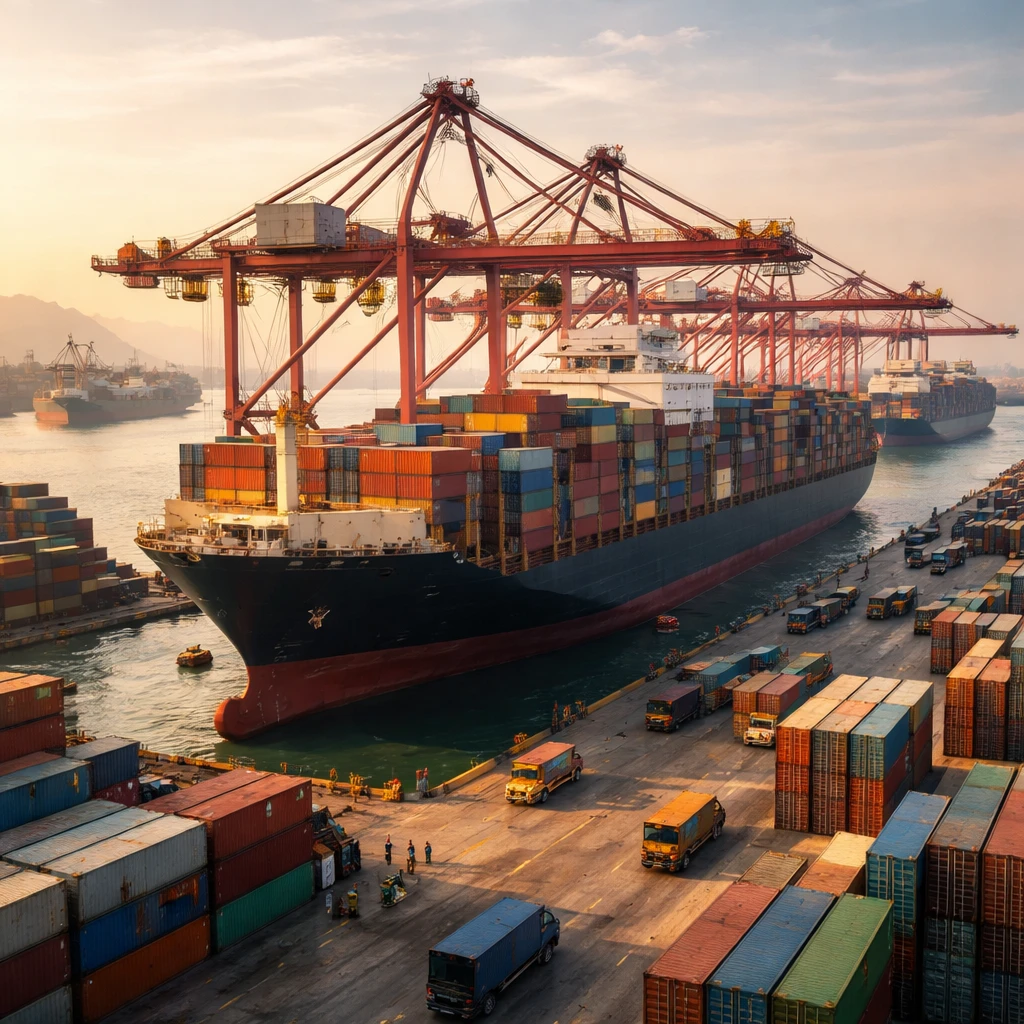

China’s foreign trade performance in 2025 reached new heights, with the nation posting the largest trade surplus ever recorded globally, data from the General Administration of Customs revealed on Wednesday. The trade surplus summed to an unprecedented $1.2 trillion, reflecting a 20% increase over 2024. Total foreign trade in goods amounted to $6.48 trillion as China maintained a growth trend for the ninth consecutive year.
Wang Jun, deputy administrator of China’s customs bureau, highlighted the country's determination to advance amid a “complex and challenging external environment” during a recent press briefing. Wang underscored that sectors focused on high-technology products contributed significantly to export growth, registering a 13% year-on-year increase. This category encompasses advanced machinery such as high-end machine tools and industrial robots.
Moreover, strides were made in emerging energy and technology sectors, with exports of electric vehicles, lithium batteries, and photovoltaic goods like solar panels surging by 27%. These figures illustrate China’s pivot towards innovation-driven exports, reflecting broader industrial shifts within its manufacturing base.
The persistent growth in exports occurred despite sharp reductions in trade with the United States. Throughout 2025, both superpowers engaged in escalating trade tariffs, yet instead of seeing diminished export volumes, China expanded its market presence in other regions globally. This strategy built on earlier adjustments companies made in response to the initial trade conflicts launched under former US President Donald Trump.
However, the expanded reach of Chinese products has elicited backlash from multiple trading partners, prompting concerns over what they perceive as unfair trade policies and market distortions due to a flood of imports from China. These tensions form part of the broader geopolitical challenges China faces as it balances export-led growth with international trade relations.
The resilience and strength exhibited in export activity during 2025 bolstered Beijing’s negotiating position in prolonged trade discussions with the US. These talks culminated in a landmark meeting between US President Donald Trump and Chinese leader Xi Jinping in October, resulting in a trade truce that capped tariffs on Chinese goods at 20%. Earlier in the year, tariffs had escalated dramatically, at times reaching as high as 145%.
Logistical hubs such as the Yantian port in Shenzhen continued to see heavy container traffic, supporting sustained trade flows amid the easing tensions. Despite this temporary détente, new challenges emerged when President Trump announced plans to impose a 25% tariff on nations doing business with Iran, potentially impacting China due to its economic ties with Tehran.
Data from the first eleven months of 2025 indicates that China’s trade volume with the US decreased by 16.9%, underscoring a strategic pivot for both countries. US exporters anticipate ongoing efforts to reduce reliance on Chinese manufacturing and to repatriate industrial production, a policy direction emphasized by the Trump administration.
Looking ahead, analysts question whether China can sustain its export growth given rising protectionist measures worldwide aimed at mitigating the impact of Chinese industrial overcapacity. Simultaneously, domestic economic challenges persist, notably the protracted property sector crisis that continues to weigh on broader economic performance.
To address these internal constraints, Chinese authorities have sought to stimulate domestic consumption and advance a growth model that balances robust internal demand with global export competitiveness. This dual approach aims to secure long-term economic sustainability amid evolving international trade dynamics and domestic structural adjustments.
Employees in manufacturing hubs such as Ningbo continue to support the production pipeline, highlighting the integral role of industrial capacity in underpinning the export expansion. However, balancing external trade growth with internal economic stability remains a complex challenge for policymakers.
The 2025 trade figures underscore China’s focused efforts to diversify export markets away from overreliance on the US and to harness growth sectors, particularly in advanced technologies and renewable energy products. While these advances have fortified China’s position as the world’s leading exporter, they also bring to light the multifaceted risks and diplomatic tensions inherent in the current global trade landscape.