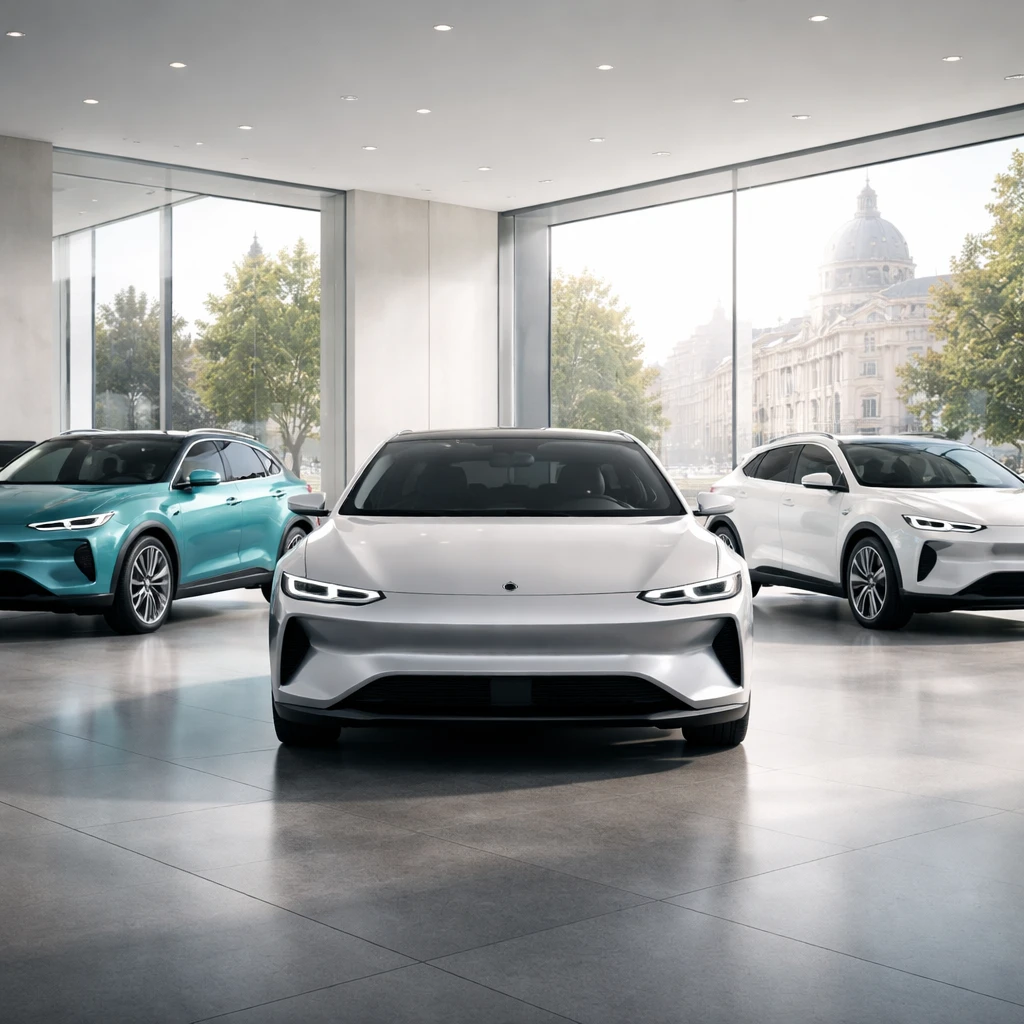

Chinese electric vehicle manufacturers have markedly increased their presence in the European automotive market, with November data showing these companies captured a historic 12.8% share of EV sales across Europe. This milestone reflects a strategic and accelerating expansion by Chinese brands into a region traditionally dominated by established Western and American EV producers.
The market research firm Dataforce provided the sales data underlying these findings, analyzing registrations throughout the European Union, European Free Trade Association countries, and the United Kingdom. The figures illustrate substantial momentum for Chinese manufacturers, with leading brands such as BYD Co. Ltd., Leapmotor—which benefits from backing by Stellantis NV—and Chery Automobile, recognized as China's largest automotive exporter, fueling this growth.
Particularly noteworthy is the performance of BYD, whose European sales surged by nearly 222% in November. This acceleration contrasts starkly with Tesla Inc., an influential player in the EV segment, which reported a 23% decline in U.S. sales over the same period. BYD's expanding market share underscores the company's rapid gains in foothold and consumer acceptance within Europe's competitive automotive landscape.
In addition to electric vehicles, Chinese manufacturers have achieved a market share exceeding 13% in hybrid vehicles, indicating a broader influence across alternative fuel vehicle segments in the region. This dual-pronged presence across both fully electric and hybrid categories suggests a comprehensive approach to capturing European consumers and meeting diverse market demands.
Looking ahead, BYD is preparing to introduce its Kei car model to the European market, pending regulatory approval for the E-Car segment. The Kei car category refers to a class of small vehicles, which are popular in some regions for their efficiency and compact size. BYD’s intention to enter this category reflects strategic diversification in product offerings tailored to specific market niches within Europe.
Chinese automotive exports have also demonstrated significant growth. In December, exports surpassed 199,000 vehicles, representing an 87% year-over-year increase overall. Exports specifically destined for European countries climbed 63% to nearly 43,000 units. These figures signify not only increased production capacity but also enhanced competitiveness and demand for Chinese vehicles abroad.
Complementing BYD's expansion, Xpeng Inc., another prominent Chinese EV manufacturer, is actively entering new international markets. The company has initiated sales and operations in Estonia, Lithuania, and Latvia within Europe, as well as Cambodia in Asia, signaling a deliberate and multi-regional growth strategy. This geographic diversification suggests a longer-term plan to establish a sustained presence in various global markets.
The recent data and developments highlight a dynamic shift in the European EV landscape, with Chinese automakers emerging as formidable contenders. Market participants, investors, and regulators will be closely monitoring how these trends evolve amid competitive pressures and regulatory frameworks across different regions.