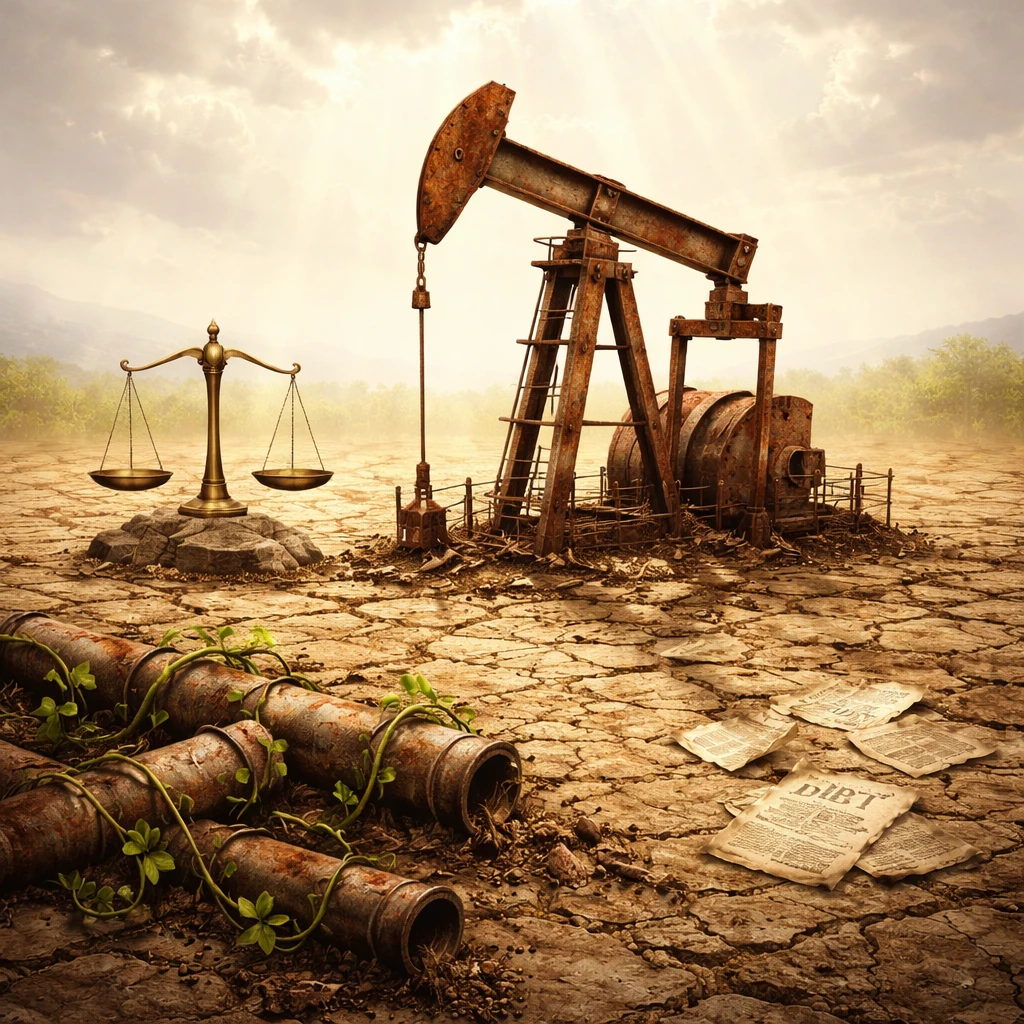

President Donald Trump has unequivocally stated that American oil companies will return to Venezuela's oil industry and undertake the significant investments needed to rehabilitate its deteriorated energy infrastructure. According to Trump, these companies will invest tens of billions of dollars to restore production levels, positioning themselves to gain from the country's extensive petroleum reserves. However, fulfilling this vision requires considerable risk reduction measures to encourage US firms to operate in a country marked by political instability, extensive infrastructure challenges, and a complicated geopolitical environment.
A paramount obstacle to re-entry is the establishment of secure conditions for operators and their assets. Venezuela's oil sector, primarily managed by the state-owned Petróleos de Venezuela, S.A. (PDVSA), has historically involved direct military oversight. The oil facilities themselves face significant risks, including theft and sabotage, which currently undermine operational viability.
Tai Liu, an upstream oil analyst at BloombergNEF, emphasized the necessity of comprehensive security assurances for foreign oil companies. Initially, the deployment of US military resources to safeguard critical infrastructure may be needed to mitigate risks. However, sustainable long-term security rests upon Venezuela's ability to maintain stability and protect investments. As Dan Pickering, chief investment officer at Pickering Energy Partners, noted, "Oil companies are unlikely to invest capital in a country where the threat of violence or sabotage against pipelines and equipment is prevalent." This reality highlights the imperative for a stable rule of law to support ongoing operations.
Beyond physical security, political stability emerges as a central concern. Fully revitalizing Venezuela's oil production capacity to match levels prior to the nation’s socialist transformations necessitates a comprehensive rebuilding of infrastructure—spanning pipeline networks, drilling rigs, port facilities, and reliable power supplies. Industry consensus suggests that these efforts would require annual investments exceeding $10 billion and a decade or more to yield returns.
This prolonged timescale introduces complexities related to governance. The Venezuelan government must transition towards democratic structures resistant to upheaval, while US administrations will also change during this period. Oil companies will require assurances that contractual conditions and policies will remain consistent and predictable to justify such long-term commitments. Ryan Kellogg, deputy dean at the University of Chicago’s Harris School of Public Policy, highlighted that a mere verbal commitment from the current US administration is insufficient; a strong, enduring political consensus is essential, which presently does not exist.
Another critical barrier is the presence of sanctions and restrictive oil laws governing foreign investment. The US currently enforces an oil embargo and sanctions targeting Venezuela’s oil industry, which diminish the attractiveness of re-engagement. Compounding this, Venezuelan law mandates that foreign operators enter public-private joint ventures subject to stringent fiscal terms—including a 30% royalty and a 60% income tax—conditions deemed unfavorable by industry participants.
Luisa Palacios, managing director at Columbia University's Center on Global Energy Policy, remarked on the regime’s unwelcoming stance, questioning why any firm would submit to such onerous terms. Given that alternative oil producers such as the United States, Guyana, and Argentina offer more competitive arrangements, Venezuela faces heightened challenges in attracting sophisticated oil operators.
Homayoun Falakshahi, lead crude research analyst at Kpler, suggested that Venezuela must overhaul its contractual framework to secure the involvement of companies boasting cutting-edge technology crucial for efficient extraction.
The issue of outstanding debts held by foreign oil companies further complicates Venezuela's prospects. Several international firms, including Eni, Repsol, ConocoPhillips, and ExxonMobil, had their assets expropriated by Venezuela in 2007 and have sought billions in compensation from PDVSA.
This outstanding litigation creates legal uncertainties and could impede future cooperative endeavors. Kellogg pointed out that ExxonMobil’s prior experience in the country remains relevant, and some form of debt restructuring or repayment would be required. However, Venezuela currently lacks the financial capacity to settle these claims.
Restoring access to global capital markets, from which Venezuela has long been excluded due to governance and fiscal insolvency issues, would be critical to fund the rehabilitation and expansion of oil production capabilities. Palacios noted that while political changes could enhance investment inflows, these would likely fall short of levels needed for substantial production increases.
Finally, the availability of financial guarantees and incentives will heavily influence the willingness of oil firms to reengage. Moderate investment coupled with constructive relations with the US government might enable Venezuela to restore its oil fields to capacities seen before the implementation of rigorous US sanctions, according to Palacios. However, achieving growth beyond this base level requires significant capital and patience.
Trump alluded to the possibility of taxpayer-funded reimbursement or support mechanisms to facilitate infrastructure recovery and offset initial expenditures.
Pickering underscored the importance of attractive fiscal terms, financial backstops, and guarantees, noting while US government support could accelerate progress, it remains uncertain whether such aid will be forthcoming.
Industry experts concur that under the appropriate conditions—primarily encompassing legal security, political stability, favorable fiscal regimes, debt resolution, and financial incentives—Venezuela's vast oil reserves will draw sustained interest from international companies. This dynamic is reminiscent of past major oil-producing nations confronted with instability where the resource scale ultimately prevailed in attracting investment.
Palacios emphasized the operational challenges inherent to Venezuela’s complex environment, noting that significant oil production increases hinge on establishing a functional partnership with the US government.