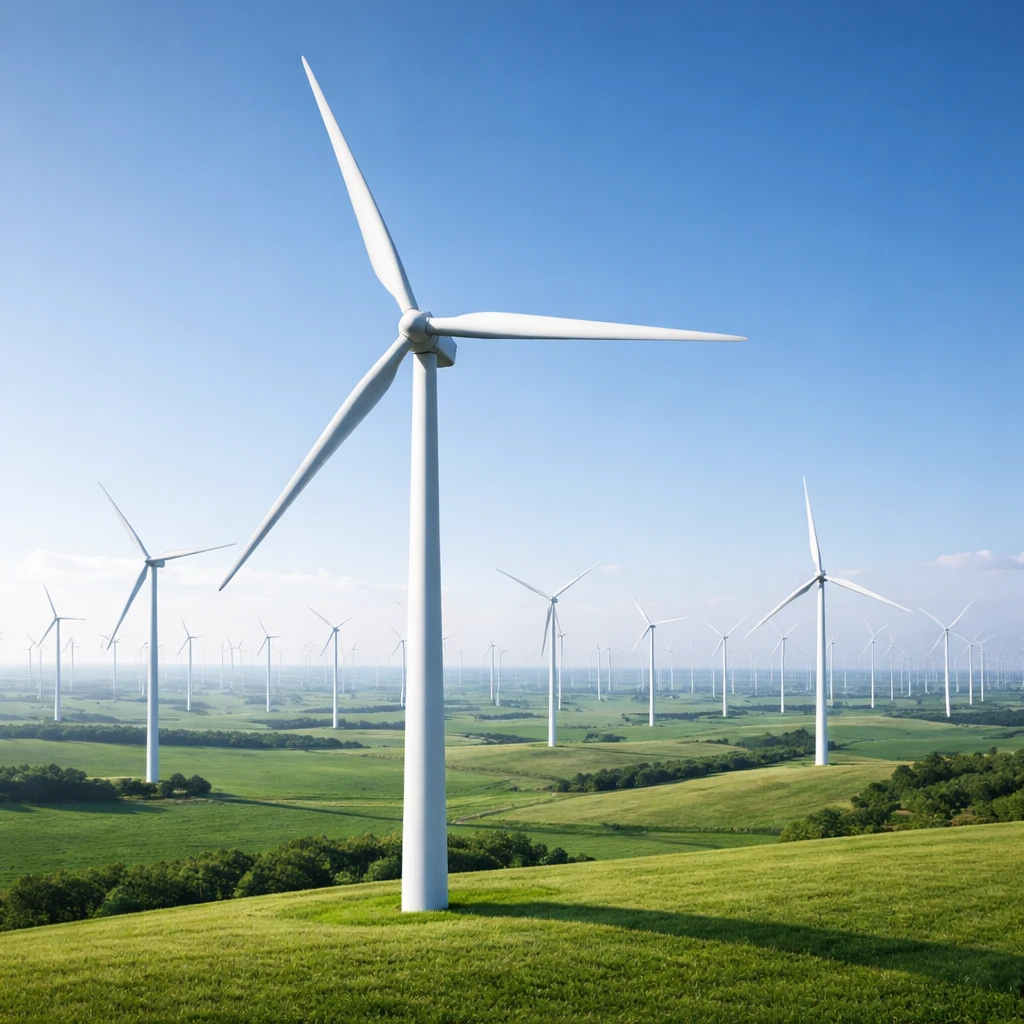

In a recent public address with United States oil industry leaders, President Donald Trump expressed skepticism about China's domestic use of wind energy, asserting that the country principally manufactures wind turbines for foreign markets and does not rely significantly on wind power for its energy needs. His remarks reflect a broader critical stance toward wind energy, emphasizing economic and environmental concerns.
During the discussion, Trump characterized windmills as economically inefficient and environmentally detrimental, stating, “My goal is to not let any windmill be built. They are losers. They lose money, they destroy your landscape, they kill your birds.” These comments reinforce his historically oppositional position toward wind power development within the United States.
Specifically addressing China, Trump claimed, “All you have to do is say to China ‘How many windmill areas do you have in China?’ So far they are not able to find any. They use coal and they use oil and gas and some nuclear, not much. But they don't have windmills. They make them and sell them to suckers like Europe and suckers like the United States before.” This statement implies a narrative that China mass-produces wind turbines mainly for export, while domestically continuing to depend on fossil fuels and only minimal nuclear energy.
However, this portrayal stands in contrast to industry and market data that indicate China is a global leader not only in wind turbine manufacturing but also in the scale of operational wind power capacity. According to market reports, China accounted for approximately 65% of the worldwide installed wind capacity as of 2023, establishing it as the largest wind power market globally.
Furthermore, as of the first half of 2025, China represents about 74% of the total large-scale solar and wind power projects under construction worldwide, underscoring its significant investments in renewable energy infrastructure going forward.
China’s existing wind farm capacity was estimated at approximately 444,000 megawatts by February 2025. This figure constitutes nearly 44% of global wind power capacity—almost triple the equivalent figure found in the United States. Such capacity highlights China’s extensive development and reliance on wind-generated electricity as a core component of its power generation mix.
Nonetheless, in the continuation of his remarks, President Trump reiterated his critique of wind energy quality and deployment within China, stating, “Those windmills are so pathetic and so bad. And most of them are built in China, and I give China a lot of credit. They build them, but they have very few wind farms.” This commentary, while acknowledging Chinese manufacturing dominance, downplays the breadth and scale of wind farm operation within the country.
The juxtaposition between President Trump’s comments and the comprehensive market data presents a marked divergence in perspectives regarding the utilization and impact of wind power in China. On one hand, the political narrative suggests minimal domestic deployment and questions the viability of wind energy. On the other, empirical data underscores China’s leadership in both manufacturing and operational capacity of wind power infrastructure.
Such contrast invites scrutiny of the accuracy and implications behind political characterizations of renewable energy, considering the pivotal role these narratives may play in shaping public policy and investment in the sector. Meanwhile, data reflecting China’s significant commitments to wind energy development remains a key reference point in analyzing global energy transitions.