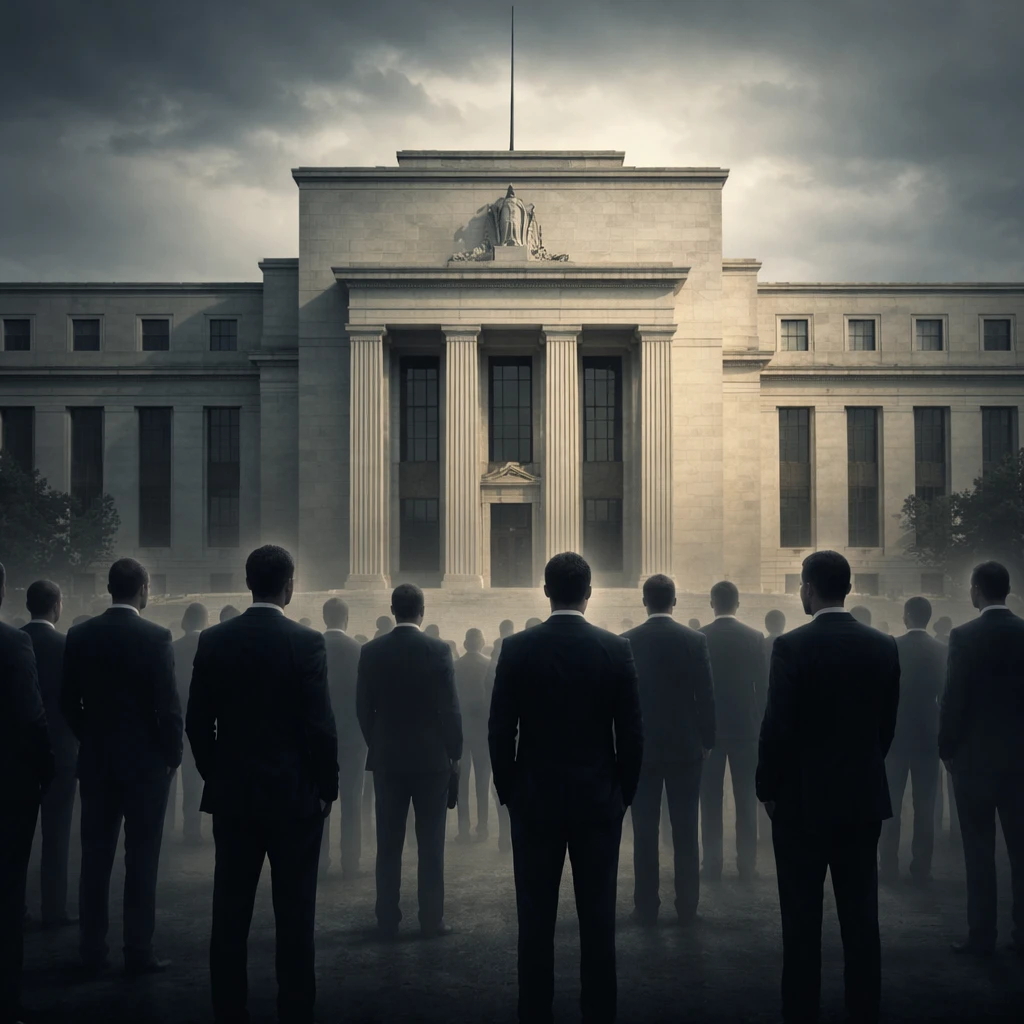

Within the consensus of economic stewardship, an independent central bank is viewed as indispensable for the stability and integrity of any advanced economy. This principle seems so self-evident that consulting economists is often unnecessary; the economic volatility experienced by countries like Turkey and Argentina serves as cautionary evidence of the consequences when executive power interferes excessively with monetary authorities.
The United States Federal Reserve, as the preeminent global central bank, underpins the foundation of international finance. Interference by the presidency with the Federal Reserve’s autonomy is traditionally regarded as a critical breach, capable of triggering market chaos and systemic risks. Yet, the recent announcement that the Department of Justice has subpoenaed Federal Reserve Chair Jay Powell in connection with a criminal inquiry generated only transient, mild market apprehension.
Corporate leadership, for whom an independent Federal Reserve represents a strategic interest directly affecting economic conditions and operational planning, has shown a similar lack of visible concern in public arenas. Despite the gravity of the situation, public declarations of support for Powell or defense of Fed autonomy from major corporations or influential industry organizations remain absent.
The investigation, disclosed by Powell himself, centers ostensibly on his congressional testimony regarding cost overruns associated with the renovation of the Federal Reserve’s Washington, D.C., headquarters. In a rare and direct public statement, Powell rejected this explanation as a diversion. He clarified his position, stating that the investigation's true impetus stems from the Federal Reserve's decisions to set interest rates aligned with its mandate to promote the public interest rather than accommodating the preferences of the sitting president.
This tension revolves principally around contrasting approaches to monetary policy. The president has consistently advocated for substantially lower interest rates to stimulate economic growth, whereas Powell and the Federal Open Market Committee must balance growth objectives with inflation control and financial stability. Decisions to lower interest rates precipitously risk igniting inflationary pressures, an outcome that the Fed is mandated to avoid.
Throughout the past year, President Trump has demonstrated a willingness to challenge Federal Reserve independence openly. Measures include public criticism, attempts to remove Fed Governor Lisa Cook, and appointments of individuals perceived as sympathetic to the administration onto the rate-setting committee. These actions have intensified concerns within the corporate sector.
Jeffrey Sonnenfeld, founder of the Yale Chief Executive Leadership Institute, reported that a majority of CEOs privately express significant unease regarding the erosion of Fed independence by the administration. His survey of 200 top executives found that 71% view the administration as damaging the Fed’s autonomy, and 80% consider the president’s pressure on Powell as contrary to the national interest. Yet, these private sentiments have not translated into public demonstrations of support or protest.
The absence of public dissent may be attributed to several factors. Notably, no major business coalitions or leading CEOs have vocalized criticism, with groups such as the Business Roundtable providing no comment when solicited. Historical precedents, such as former President Trump’s retaliatory call for a boycott against Harley-Davidson following its production shifts in response to trade tariffs, have likely contributed to a climate of caution among executives. The company’s subsequent struggles and CEO dismissal underscore the potential repercussions of crossing presidential red lines.
Sonnenfeld explained that this dynamic creates a disincentive for individual CEOs to speak out; the risk of personal and corporate retaliation encourages silence unless a robust collective effort materializes. Some leaders have opted for discrete private engagement with the White House. For example, executives from Walmart, Target, and Home Depot have publicly and privately communicated concerns about the disruptive effects of tariffs on supply chains, seeking to influence the administration through back channels rather than public confrontation.
There is also speculation that some market participants anticipate a resolution of tensions without significant policy changes, subscribing to the notion that the president may ultimately retreat from aggressive stances. This viewpoint reduces the incentive for leaders to act precipitously in defense of the Fed Chair, preferring to observe and capitalize on market reactions.
A more pragmatic explanation considers the economic interests at play. Business executives and market participants often favor lower interest rates, recognizing the immediate benefits for credit conditions and investment. This preference could lead some to prioritize short- term advantages over concerns about the implications for longer-term institutional independence or economic stability.
Erasmus Kersting, an economics professor at Villanova University, noted that the influence of presidential preferences on monetary policy decisions has increased relative to past decades when economic indicators held more weight. He observed that this shift might explain why alarm within the business community and Wall Street remains subdued, as some align with the president’s instincts regarding economic stimulus.
In sum, the Federal Reserve finds itself at a crossroads where its independence is under unprecedented political challenge. Public dissent from Corporate America remains limited despite private apprehensions. This phenomenon reflects a complex interplay of political risk, economic interest, collective action difficulties, and strategic silence among business leaders seeking to navigate an uncertain and politically charged environment.