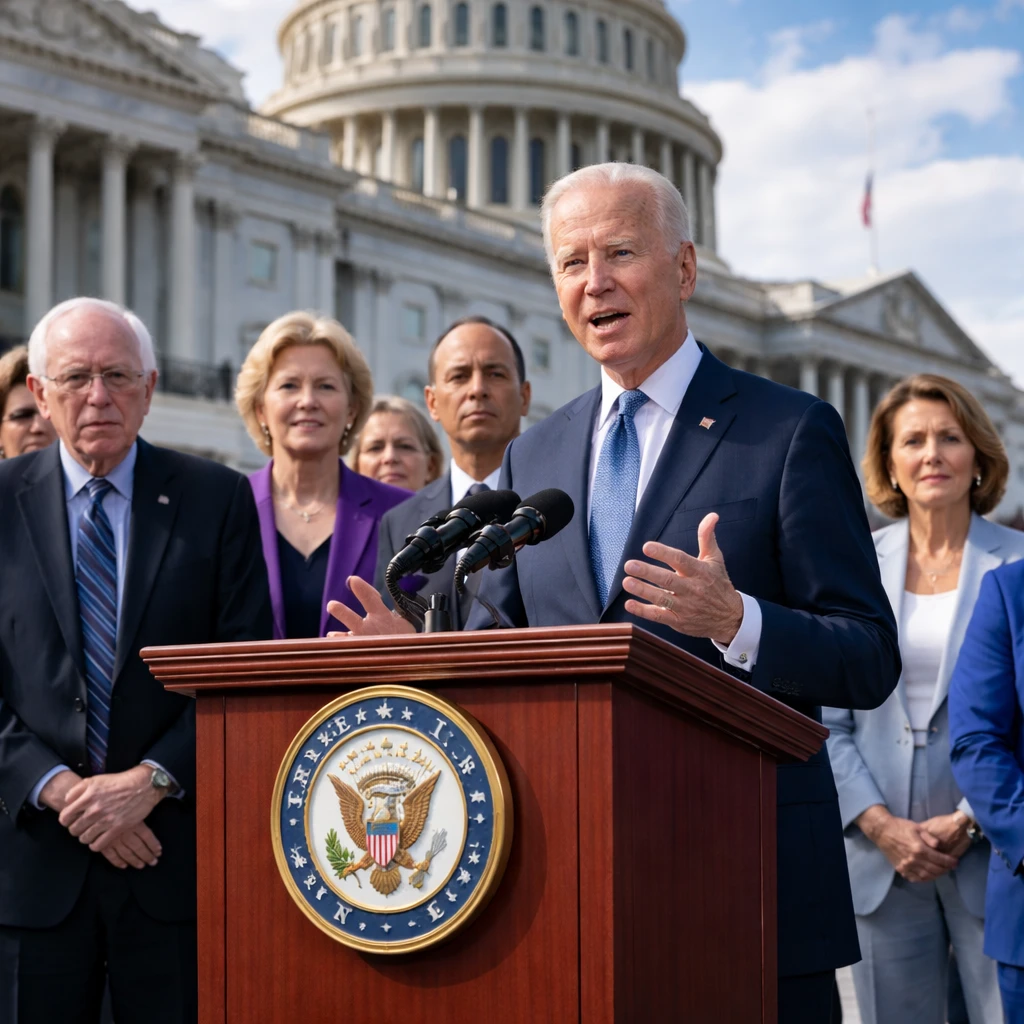

In the landscape of President Donald Trump’s second term, opposition parties confront a spectrum of contentious issues, including immigration policies, economic inflation, institutional independence, and foreign alliances. Yet, Democrats are deliberately concentrating their efforts on healthcare, a policy area that has evolved from a political impediment to a cornerstone of their platform in recent elections. They argue that prioritizing healthcare will be more effective in regaining Congressional majority in the midterms compared to engaging with transient controversies emanating from the White House.
Last year, Republicans enacted legislation reducing Medicaid funding by approximately $1 trillion over ten years and chose not to renew subsidies introduced during the COVID-19 pandemic, which had served to reduce the cost of Affordable Care Act (ACA) insurance plans. This legislative action has galvanized Democrats, who are producing campaign content highlighting the struggles faced by hospitals and American families encountering sharply increased insurance premiums, often sharing personal healthcare experiences.
Senator Jon Ossoff from Georgia, a prominent Democratic incumbent facing significant reelection challenges, is slated to address healthcare difficulties at an upcoming campaign event in the suburbs of Atlanta. This focus points to the broader sentiment within the party regarding the compelling nature of healthcare as a campaign issue.
Brad Woodhouse, a seasoned Democratic strategist and executive director of Protect Our Care, regards healthcare as a critical and energizing topic for Democratic campaigns at every electoral level. Contrasting this, Republicans justify their actions by underscoring the need to curb escalating health spending and to eliminate fraud and inefficiencies. President Trump has recently initiated a digital platform aimed at facilitating access to discounted prescription medications, yet substantive bipartisan legislation addressing healthcare costs remains elusive despite Republican congressional control.
Ron Bonjean, a Republican strategist, concedes the political weakness healthcare represents for his party, identifying the absence of feasible legislative solutions as a core obstacle. This suggests a continued focus on healthcare policy could influence political dynamics in upcoming elections.
Historically, Democrats considered healthcare a political liability, illustrated by the loss of the House majority in 2010 following the enactment of the ACA without Republican support, and relinquishing the Senate in 2014 after a troubled rollout of Healthcare.gov. The political environment shifted notably after President Trump’s term began, as his administration championed efforts to repeal and replace Obamacare—a move that heightened Republican vulnerability on health issues.
The recent Republican legislation imposing work requirements and shifting costs to states while reducing federal health care and food assistance funding motivated robust Democratic opposition. Despite Republicans’ $50 billion allocation towards rural health, advocacy groups have heavily criticized these measures, directing millions into campaigns attacking the party on healthcare.
Last year’s expiration threat of enhanced ACA tax credits spurred Democrats to leverage the issue politically, even inciting a government shutdown. This maneuvering enhanced their perceived electoral positioning despite the failure to restore the funding fully. Democratic strategist Eric Stern attributes ownership of the healthcare issue to Republicans currently, setting the stage for significant Democratic discourse in electoral campaigns.
Democratic candidates across various states are increasingly engaging with healthcare stakeholders and constituents affected by rising costs. Campaign activities include visits to hospitals and pharmacies, discussions with health leaders, and sharing intimate anecdotes of insurance challenges and drug prices. Senator Ossoff has portrayed healthcare as a critical, life-or-death question, with activists like Teresa Acosta exemplifying the real-world impact of subsidy terminations through increased premium costs.
Georgia represents a particular case where the failure to expand Medicaid under the ACA results in heightened reliance on marketplace plans, making the expiration of subsidies particularly consequential. Early data indicates a notable decrease in plan enrollment for 2026, highlighting the real-time implications of policy shifts.
Republican opponents of Democrats, including Representatives Mike Collins and Buddy Carter, have voted against extending ACA tax credits, criticizing the program as financially unsustainable and favoring more limited Republican proposals. Some Republicans, such as Representative Derrick Van Orden, who supported a temporary extension, exhibit internal divisions, balancing constituent needs against broader party policy critiques.
Van Orden emphasizes the necessity for the Republican Party to construct substantive healthcare policy, moving beyond avoidance tactics. This acknowledgement suggests a potential recalibration within the party towards more proactive healthcare solutions.