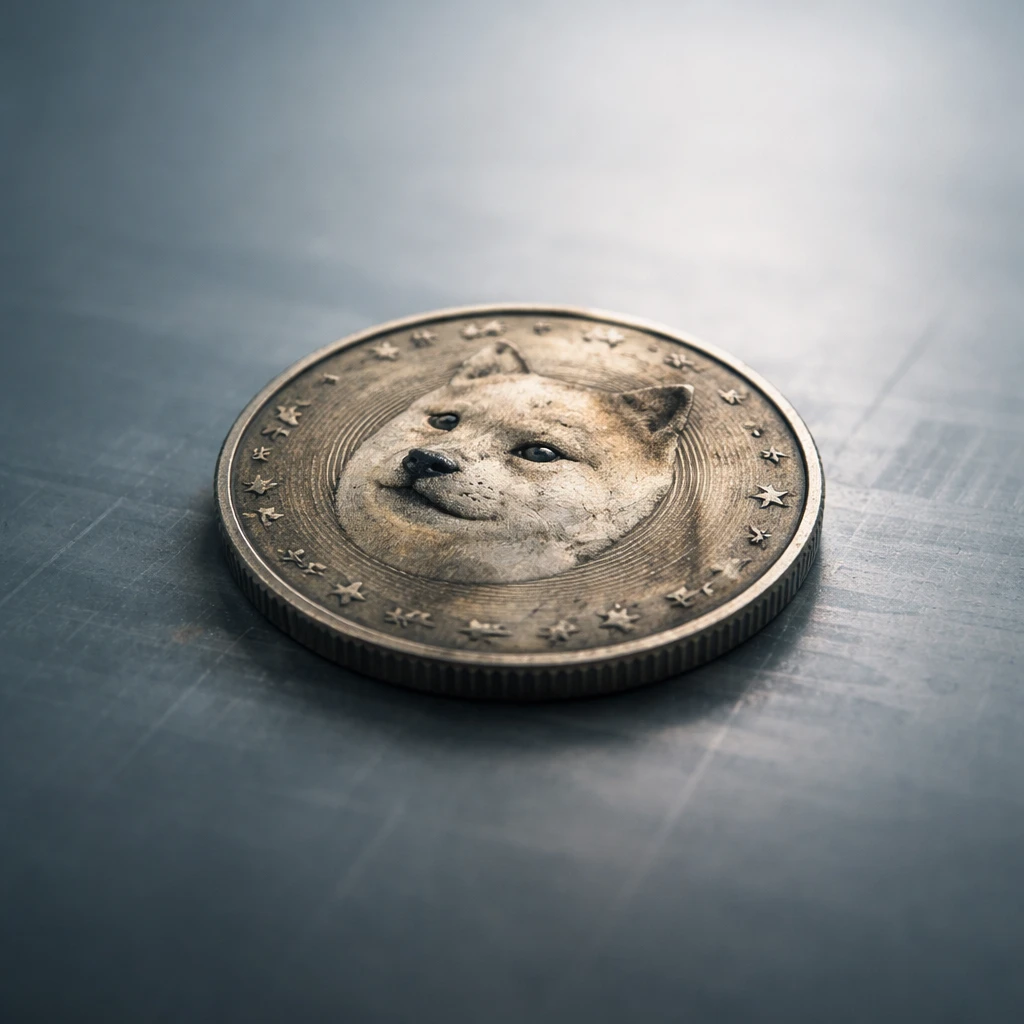

As the calendar year winds down, the digital asset space remains largely uneventful for traders and investors, with most cryptocurrencies trading within tight ranges throughout the day. However, Dogecoin, which is widely recognized as the largest meme-based cryptocurrency, has emerged as one of the more volatile performers, albeit in a negative direction.
At 3:30 p.m. Eastern Time, Dogecoin's price had fallen approximately 5% over the prior 24 hours, reaching near $0.12 per coin. This recent decline contributes to the token’s overall depreciation for the year, with the coin trading roughly 63% lower compared to its value at the beginning of 2025.
To understand the factors contributing to Dogecoin's latest sell-off, it is important to consider the timing alongside investor behavior towards year-end portfolio adjustments. Market participants tend to reassess their asset allocations around this period, often reducing exposure to highly speculative holdings. Given Dogecoin’s profile as a meme token with considerable price volatility, it is subject to the risk-off sentiment that typically accompanies attempts to reduce risk exposure prior to a potential market slowdown.
Analysts and cryptocurrency commentators have noted that the investment thesis underpinning Dogecoin and its meme coin counterparts has weakened considerably. One structural aspect that affects Dogecoin’s standing is its design featuring an unlimited supply of tokens. This characteristic allows new coins to be introduced continually into the market, potentially diluting value and increasing selling pressure.
Moreover, Dogecoin’s market dynamics remain heavily influenced by factors such as hype, celebrity endorsements, and social media activity rather than grounded financial metrics or utility. These drivers can create price instability, amplified by the concentration of ownership: approximately 90% of Dogecoin’s circulating supply is held by a limited number of large wallets.
This ownership concentration implies that the actions of a few large holders can have outsized impacts on Dogecoin’s price. If these investors—or “whales”—decide to liquidate significant holdings suddenly, it could trigger accelerated selling and deeper price declines moving forward.
Conversely, the same concentration could support the price if these major holders continue to accumulate new tokens and maintain their existing positions. However, given the prevailing negative momentum and the uncertainties related to supply and market sentiment, retail investors may approach Dogecoin with increased caution as they consider their exposure to this token.
In summary, Dogecoin’s decline at the close of the year reflects a complex interplay between year-end portfolio rebalancing, inherent structural features of the token, and the concentrated nature of its ownership. These factors collectively contribute to heightened volatility and present risks that investors should carefully evaluate when contemplating involvement with Dogecoin.