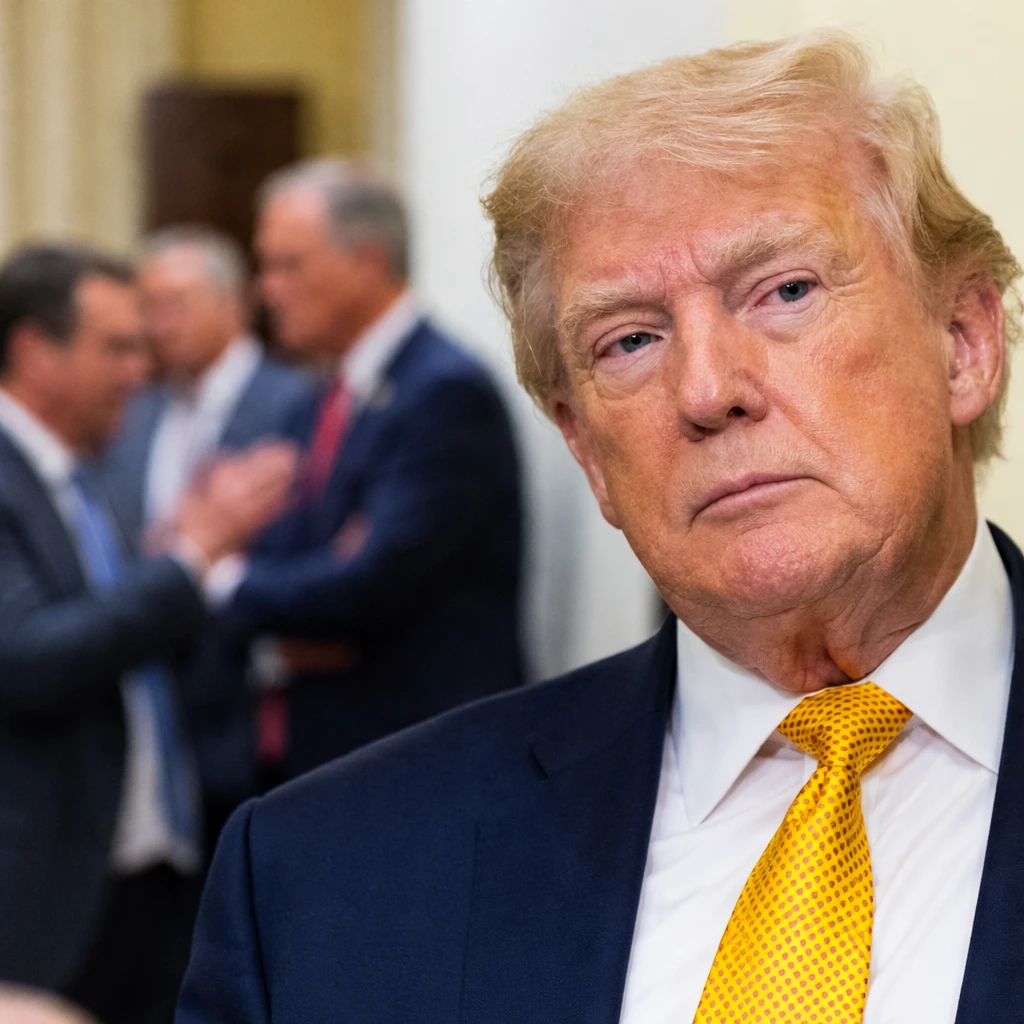

WASHINGTON — The start of the political calendar for House Republicans was marked by a spirited gathering, as President Donald Trump energized party members with a vigorous address at the Kennedy Center. However, within just the first week of legislative activity in this pivotal midterm election year, notable rifts within the GOP have become increasingly apparent.
Republican lawmakers are signaling a shift toward greater autonomy from the president after a period during which they largely aligned with his directives. This evolving dynamic manifests in pushback against Trump’s self-styled “Donroe doctrine,” characterized by his assertive posture in the Western Hemisphere, as well as divisions regarding health care policy. The divergence underscores an emerging complexity as Republicans contend with the formidable challenge of retaining majorities in both the House of Representatives and the Senate.
Senate Majority Leader John Thune underscored the party’s focus during a visit to the U.S.-Mexico border, accompanied by Republican Senate hopefuls. Thune emphasized an intensified concentration on affordability concerns and reported that legislation is advancing on housing and health care issues. This focus echoes foundational campaign themes associated with Trump’s earlier presidential bid.
Despite this, recent weeks in Washington have been largely dominated by Trump’s controversial military initiative to capture Venezuelan leader Nicolás Maduro, his provocations regarding military options to acquire Greenland, the release of sensitive documents related to Jeffrey Epstein, and contentious debates over extending subsidies for Affordable Care Act insurance plans — a perennial source of GOP discord.
Furthermore, incidents involving Immigration and Customs Enforcement officers, including fatal shootings in cities such as Minneapolis, have prompted questions about the Republican approach to immigration enforcement, diverting attention from what many regard as Trump’s successes on border management.
Trump’s influence over the Republican caucus remains substantial. This was evident in the recent failure of two House veto override attempts, where most Republican members sided with the president despite previous support for the underlying bills. Representative Thomas Massie of Kentucky, noted for his consistent dissent from Trump directives, attributed these outcomes in part to what he described as prosecutorial intimidation exerted by the president.
Meanwhile, Democrats assert that Trump’s preoccupation with foreign military engagements detracts from addressing critical domestic issues such as economic hardship faced by American families. Senate Democratic Leader Chuck Schumer criticized the administration’s apparent pivot toward a costly and open-ended conflict in Venezuela amid rising living expenses nationwide.
In an effort to constrain presidential military actions in Venezuela, Democrats are advancing war powers resolutions requiring congressional approval prior to any armed intervention. Though such bills rarely pass, a procedural vote garnered bipartisan momentum when five Republicans joined Democrats, setting the stage for a crucial vote next week. Similar resolutions are progressing in the House.
Republican senators defending their votes have framed their positions as consistent with Trump’s own policy goals of reducing foreign military involvements. Senator Todd Young of Indiana remarked that prolonged military entanglements in Venezuela would contradict the administration’s stated objective of minimizing overseas commitments.
President Trump responded with strong disapproval, calling on the Republicans who supported the resolution — including Senator Susan Collins of Maine, a vulnerable incumbent — to be denied re-election. This intra-party conflict raises strategic concerns as Republicans face multiple retirements and potential electoral setbacks during the current cycle.
Resistance to Trump’s proposal regarding Greenland also surfaced prominently within GOP ranks. Senator Thom Tillis of North Carolina, who is retiring after disagreements with the president, openly criticized the suggestion of acquiring Greenland and rebuked comments by White House officials advocating such a move. Other Republicans, including Senators John Thune and Roger Wicker, expressed reservations about military threats toward Denmark, underscoring respect for allied sovereignty.
Representative Don Bacon of Nebraska highlighted the importance of congressional independence and checks and balances, noting that while the president retains influence over the party, such aggressive measures have also reinforced opposition among some members.
Health care issues further expose fissures within the GOP. At the Kennedy Center, Trump urged Republicans to claim ownership of health care policy, but internal divisions became evident when 17 House Republicans broke ranks to support a Democratic proposal extending Affordable Care Act subsidies. Representative Mike Lawler of New York, while critical of the ACA, acknowledged the need to address health care costs, a message Democrats are leveraging in campaign efforts.
Additionally, on the fifth anniversary of the January 6 attack on the Capitol, Trump informed House Republicans that he directed his supporters to approach Congress “peacefully and patriotically.” The White House launched a website portraying investigations into the events of that day as a partisan “witch hunt.”
Contrasting the White House’s narrative, the Senate approved installing a commemorative plaque honoring the Capitol police who defended the building during the attack. The memorial had previously been withheld from display due to Speaker Mike Johnson’s concerns over legal compliance. Senator Tillis advocated for acknowledging the sacrifices of law enforcement and staff, a position supported by Democrats who emphasize the importance of historical honesty.