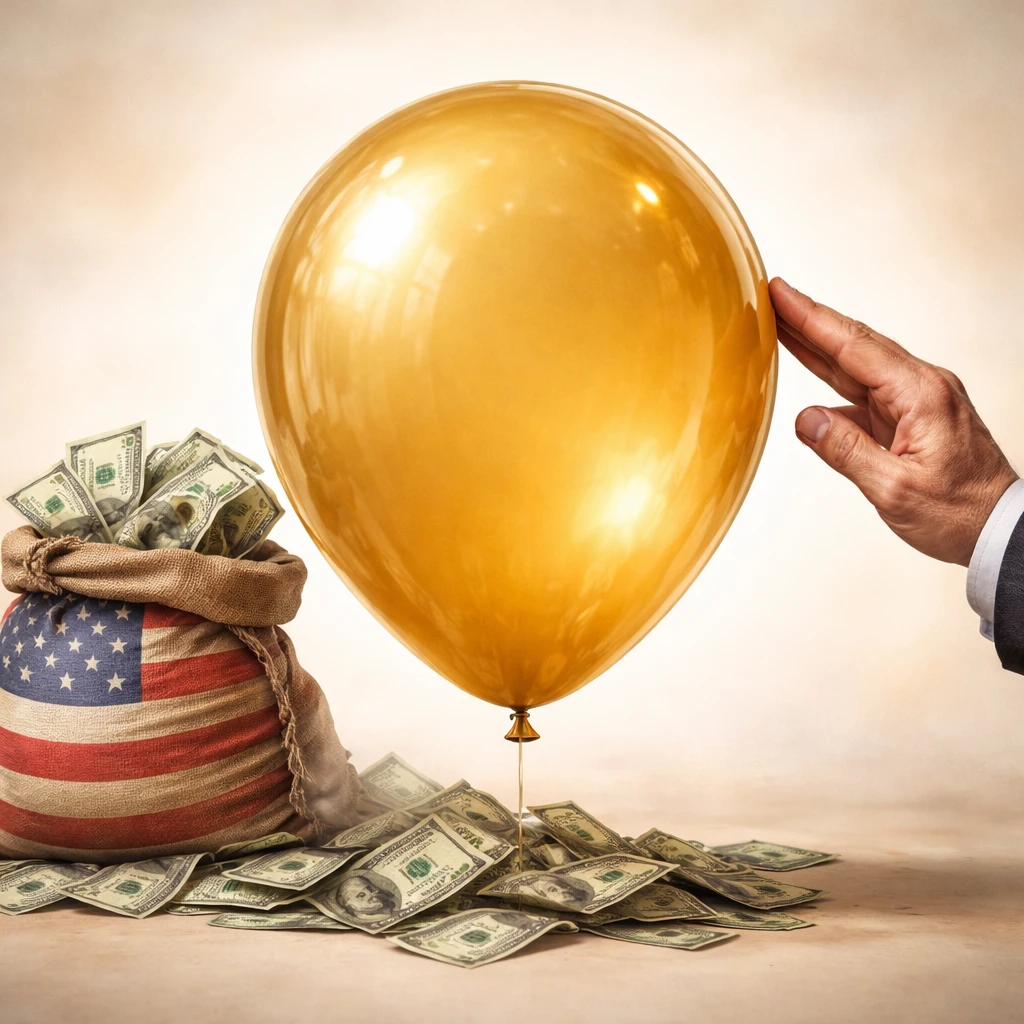

Renowned economist Peter Schiff has publicly challenged recent statements made by former President Donald Trump concerning the origins of the 2022 inflation surge. Trump's claims have placed the blame exclusively on the policy decisions enacted under President Joe Biden and the Democratic-controlled Congress. However, Schiff argues that such assertions are inaccurate and overlook critical fiscal and monetary policy factors from the preceding administration.
In a commentary shared via X on Wednesday, Schiff emphasized that the annual inflation rate reaching 9.1% in June 2022 was not a consequence of Biden-era policies but rather the outcome of fiscal and monetary decisions implemented before Biden assumed office. Specifically, Schiff pointed to extensive deficit spending during the Trump administration, financed by actions from the Federal Reserve and authorized by a Republican-majority Congress. He contended that while Democratic policies introduced under Biden's tenure indeed contributed additional inflationary pressures, they largely aggravated an already escalating problem rather than initiating it.
Meanwhile, President Trump has consistently highlighted his administration’s record on inflation management. He has maintained that he inherited a deteriorating economic landscape from Biden and is actively working to resolve inflation issues. However, this positioning has faced criticism from Democratic strategist Jessica Tarlov, who characterizes Trump's narrative as misleading. Tarlov highlights discrepancies in Trump's inflation figures, noting that his numbers exclude essential cost factors such as food, rent, and healthcare—components vital to the comprehensive measurement of inflation—and instead prioritize reductions in gas prices, which are a smaller segment of expenditures.
Tarlov also pointed out that President Biden's term concluded with inflation rates at approximately 2.9%, contrasting sharply with Trump’s claims of inheriting inflation nearing 9%. This contrast underscores the debate over the accuracy and framing of inflation statistics within political discourse.
Further analysis from economist Justin Wolfers questions the feasibility of Trump's pledges during his recent campaign to lower prices significantly. Wolfers observed that, in a typically healthy economy, price decreases on a broad scale are rare after periods of high inflation. Instead, wage growth is the usual economic response, although Wolfers notes that such wage increases have been insufficient to offset the cost pressures faced by consumers, thereby leading to an ongoing affordability crisis.
Despite the contentious debate, recent commentary from Federal Reserve officials signals a broader consensus expecting inflationary pressures to diminish over time. New York Federal Reserve President John Williams and Fed Governor Stephen Miran expressed shared views anticipating an easing of inflation. Williams also indicated that the consequences of tariffs imposed during the Trump era on inflation would likely manifest in a more subdued and extended fashion than previously anticipated.
Statistical data comparing inflation across administrations further inform this discussion. An analysis reported by Investopedia determined that the average year-over-year inflation rate during Trump’s term stood at 2.46%. In contrast, under Biden's administration, the average inflation rate escalated to 4.95% per year. This significant increase is linked primarily to expansive fiscal measures, including a $1.9 trillion stimulus package aimed at economic recovery from the COVID-19 pandemic, as well as external factors such as surging gasoline prices ensuing from geopolitical tensions during Biden’s presidency.
These divergent perspectives on inflation causality highlight the complexities embedded in economic policy impacts. The debate reveals an intricate interplay between fiscal strategies, monetary policy, and external shocks contributing to inflationary trends over recent years.