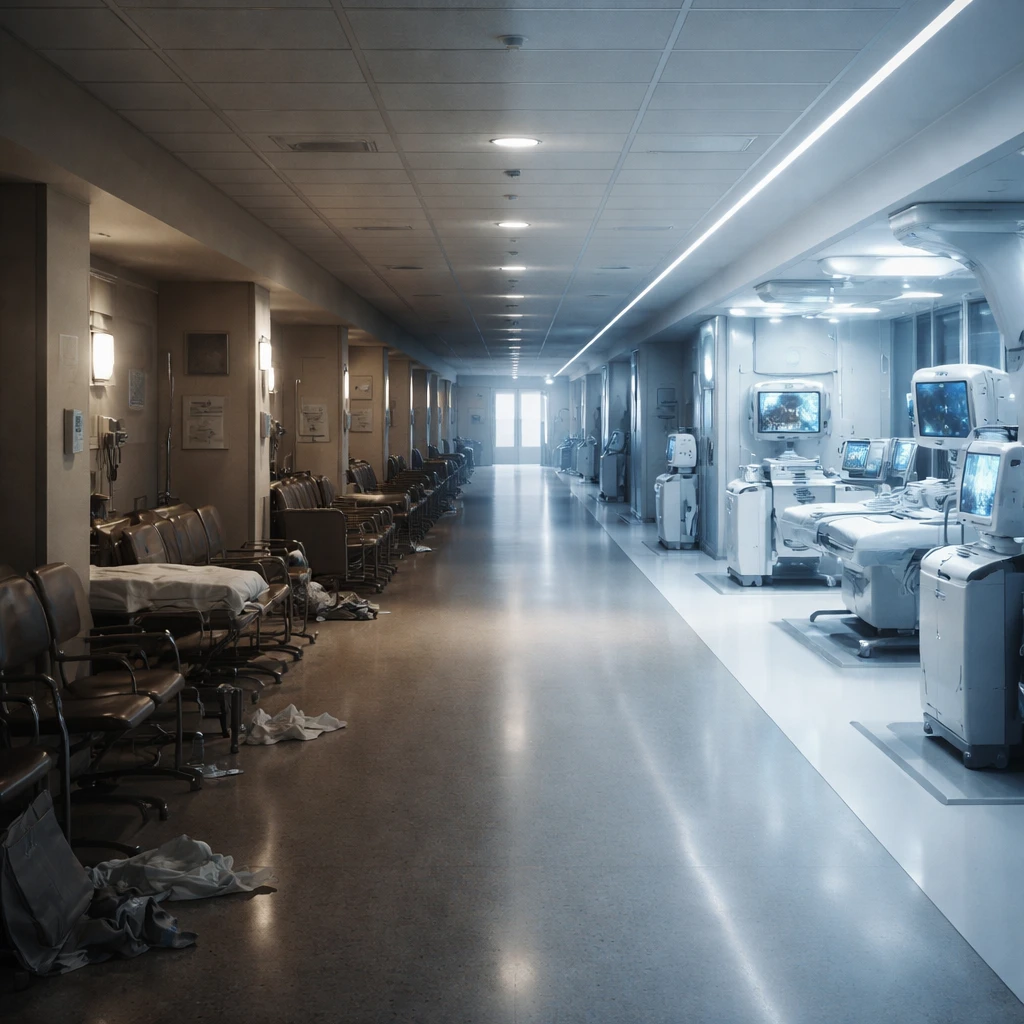
In a pointed response to a tragic incident in Canada, Elon Musk expressed critical views on government-run healthcare systems, likening their efficiency to that of the Department of Motor Vehicles (DMV). The comments followed reports that a 44-year-old man, identified as Prashant Sreekumar, passed away after enduring an extended wait of over eight hours in the emergency department of Grey Nuns Community Hospital in Edmonton, Alberta.
According to accounts, Sreekumar was admitted after experiencing severe chest pain at his workplace. His family described the pain intensity as exceeding typical scales, rating it "15 out of 10." Despite these complaints, hospital personnel reportedly administered only Tylenol and conveyed that an electrocardiogram (ECG) revealed no significant abnormalities. Sreekumar remained in triage for eight hours before finally being called for treatment. Tragically, shortly thereafter he collapsed and was declared dead from apparent cardiac arrest.
Sreekumar's wife spoke publicly about the ordeal, describing her repeated efforts throughout the day to alert medical staff to his worsening condition. She recounted being told by hospital employees that she was "being very rude" when voicing her concern. In a video statement that circulated widely, she mentioned that her husband's blood pressure steadily increased during the wait, with a final recorded reading of 210. Despite this escalation, staff reportedly dismissed the chest pain as non-acute and instructed him to remain seated. Moments later, he stood and immediately collapsed.
The hospital operates within Alberta's publicly funded healthcare system, which has acknowledged the incident and announced an ongoing review, although specific details have yet to be released.
Elon Musk’s commentary on these events was delivered via social media posts on X. His statements criticized government oversight of medical services, equating their quality to the slow and often frustrating experience encountered at the DMV. These remarks echoed a similar post Musk had made the previous day on Christmas, wherein he stated, "Government healthcare is like having the DMV as your doctor." He followed this criticism by promoting his involvement with artificial intelligence (AI) projects, suggesting that innovations like Grok—a chatbot developed by his company xAI—and Optimus, a humanoid robot prototype by Tesla, have the potential to revolutionize healthcare provision.
These AI systems are still under development, yet Musk positions them as viable alternatives to traditional medical services, envisioning a future where access to care is enhanced through technology. Musk has previously expressed beliefs that AI could deliver what he terms "superhuman" medical care, potentially surpassing the capabilities of existing human healthcare providers and significantly increasing overall wealth and well-being.
The distressing situation in Edmonton has ignited public debate regarding emergency room wait times and patient treatment under pressure in publicly funded healthcare systems. Criticism has intensified around instances where patients face prolonged delays and perceived indifference by hospital staff, especially in urgent medical situations.
Musk's remarks, combining critique and promotion of technological solutions, reflect his broader stance on government services and his advocacy for AI’s transformative role in healthcare. For now, advocates for reform and innovation stress the urgency of addressing shortcomings in conventional care settings to prevent further loss of life under circumstances akin to those experienced by Sreekumar and his family.
Key Points:
- Elon Musk publicly compared government-operated healthcare services to the inefficiency and frustration experienced at the DMV, sparked by a Canadian man’s death following an eight-hour emergency room wait.
- 44-year-old Prashant Sreekumar died from a cardiac arrest shortly after delayed treatment at Grey Nuns Community Hospital in Edmonton, amid reports that hospital staff minimized his symptoms and rebuked his wife’s concerns.
- The Alberta public healthcare system confirmed it is reviewing the case, highlighting issues of long ER wait times and strained medical resources within government-run healthcare facilities.
- Musk used the incident to advocate for AI-driven healthcare innovations, promoting his projects Grok and Optimus as potential future alternatives offering advanced medical care.
- The current capabilities and effectiveness of AI healthcare tools such as Grok and Optimus remain unproven as both technologies are still in development.
- Public healthcare systems may continue facing challenges related to resource constraints, long wait times, and patient management, as demonstrated in this case.
- The review of the hospital's handling of the incident is ongoing, with no detailed findings or corrective actions publicly disclosed at this time.
- Opinions comparing public healthcare efficiency to other government services, while highlighting system weaknesses, might oversimplify complex healthcare delivery issues.