
In the realm of display technology, Micro-LEDs have garnered significant attention over recent years, frequently appearing in discussions about next-generation screens ranging from smartphones like iPhones and iPads to televisions designed for sleek, high-luminance experiences. Despite the anticipation and interest, the adoption of micro-LED devices has been constrained by substantial cost barriers, which often put these products out of reach for many consumers.
These challenges stem from the intricate nature of Micro-LED screens, which incorporate thousands of tiny LEDs, with one dedicated to each individual pixel. This design facilitates enhanced control over brightness and contrast ratios and contributes to energy efficiency by removing the necessity of traditional LCD backlighting. However, manufacturing such screens is immensely complex and slow, as large quantities of minuscule LEDs must be precisely assembled, driving up demand and production expenses. This complexity has even led leading companies like Apple to defer plans for micro-LED adoption in favor of established OLED technologies.
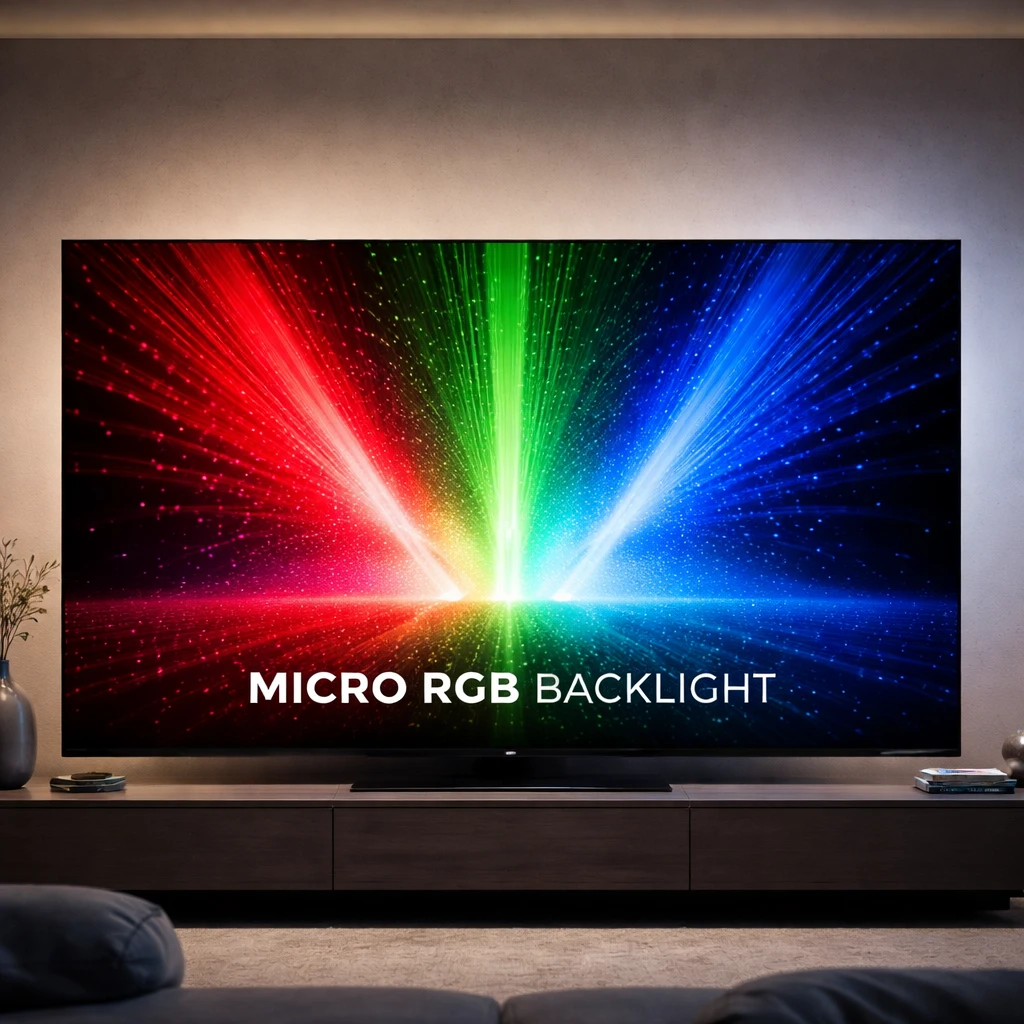
Looking ahead to industry events such as the Consumer Electronics Show (CES), emerging trends hint at a novel display technology poised to reshape high-end television sets and broader display markets. This innovation, known as Micro RGB displays, offers promising enhancements by further refining color control alongside the brightness benefits already attributed to Micro-LEDs.
Micro RGB technology advances the capability to render precise reds, greens, and blues under individually controlled backlighting, leading to more vibrant and exact color reproduction. This increased granularity in color management marks a significant step forward from previous technologies, including quantum dot displays, which historically have struggled with color accuracy. Specifically, while quantum dot displays could achieve about 85% color fidelity relative to the BT.2020 HDR standard, Micro RGB displays have demonstrated the potential for 100% color accuracy, as evidenced by Samsung's pioneering Micro RGB television introduced last year.
Samsung’s model employed separate red, green, and blue backlights directly integrated into the panel, negating the need for color filters required in conventional quantum dot systems. This foundational design enables the higher definition and vibrancy these displays deliver. Following Samsung’s launch, other manufacturers are beginning to explore and introduce similar Micro RGB technologies, signaling that this display type will likely become the new benchmark for premium television panels, superseding Micro-LEDs.
Despite its technical advantages, Micro RGB technology remains positioned at the higher end of the market spectrum. The cost remains significant, illustrated by Samsung’s 115-inch Micro RGB TV priced near $30,000 when released. Nonetheless, ongoing developments hint at models debuting in the near future that may offer reduced costs and more consumer-friendly sizes, including options around 55 inches, broadening accessibility without sacrificing display quality.
As this technology gains traction, it represents a critical evolution in display manufacturing, promising consumers superior visual performance but also challenging manufacturers to balance technological complexity with economic viability. Observing how these dynamics unfold will be crucial for stakeholders in consumer electronics industries, particularly those focused on premium television markets and display panel manufacturing.