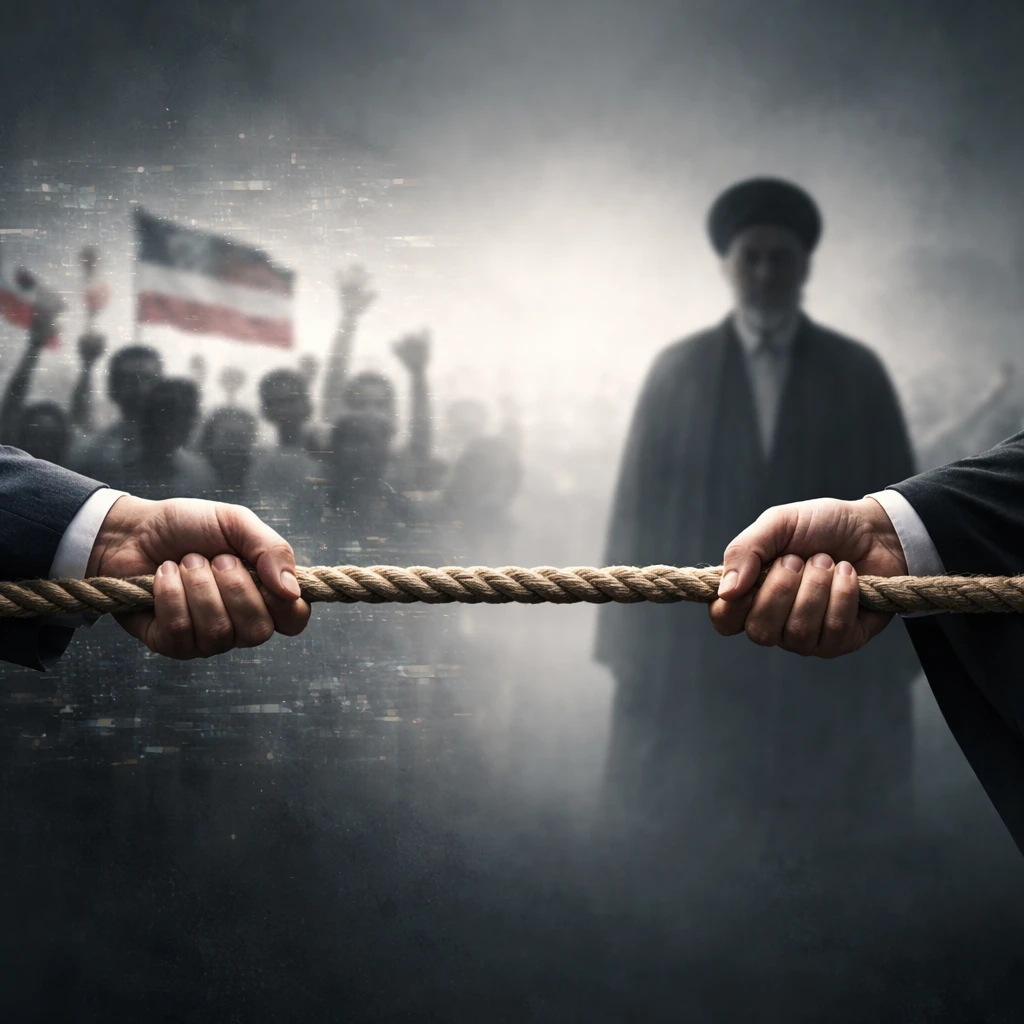
Iran is witnessing significant social upheaval as protests continue to sweep through the nation, putting Tehran and various cities under substantial pressure amid an expansive crackdown by the government. This turmoil has persisted for nearly two weeks, marking a challenging phase in the country's internal stability.
The unrest has manifested in a multitude of demonstrations spanning hundreds of urban and rural locations, indicating a broad-based movement against current conditions. A notable facet of the government's approach to quell these protests involves widespread communication blackouts, particularly an extensive internet shutdown across the nation, severely hindering the ability of independent entities to verify real-time conditions and casualty figures.
According to reports from the U.S.-based Human Rights Activists News Agency, as of the thirteenth day of demonstrations, more than 2,300 individuals have been detained with at least 65 fatalities reported. These events have unfolded in over 500 separate locations nationwide, underscoring the depth and breadth of the unrest. Official Iranian channels have yet to update or confirm these figures, creating a gap in the public record of the situation's scale.
In response to the unrest, Supreme Leader Ayatollah Ali Khamenei has openly attributed the protests to foreign interference, specifically implicating the United States. Khamenei characterized the demonstrators as "rioters" and "hirelings," dismissing their cause while framing the unrest as a product of external machinations. On the social media platform X, he issued pointed remarks directed at President Donald Trump, warning that arrogant rulers historically lose power at the zenith of their dominance and asserting that Trump would similarly fall.
His commentary juxtaposed current leadership with historical examples of fallen tyrants and autocrats, signaling a readiness to resist both internal dissent and external pressures. This narrative seeks to solidify internal legitimacy amidst the volatile environment.
President Trump escalated the rhetoric with a distinct warning toward Iran concerning the treatment of protesters. Speaking from the White House, Trump asserted that Iran was facing serious difficulties and cautioned the regime against resuming deadly violence against its citizens as witnessed in previous incidents. He emphasized that any renewed killings could result in direct U.S. involvement characterized by striking "very hard where it hurts," although he carefully noted that this would not entail deploying American ground forces.
During a conversation with conservative radio host Hugh Hewitt, Trump reiterated his message of holding Iran accountable but refrained from specifying particular measures the U.S. might undertake. Nonetheless, the gravity of his statements underscored a willingness to impose substantial consequences should Iranian authorities intensify repression.
Adding to the discourse surrounding Iran's domestic challenges, Reza Pahlavi, the exiled son of the former Shah, publicly condemned the government's efforts to sever communication channels including internet, landlines, and potentially satellite access. He highlighted an urgent desire among millions of Iranians for greater freedom and expressed appreciation for President Trump's commitments to confront the regime. Moreover, Pahlavi called upon European nations to enhance their pressure on Iran, signaling an international dimension to the opposition’s strategy.
Parallel to the physical and political turmoil, speculative activity has surged in digital trading arenas. Particularly, a cryptocurrency-based prediction market has experienced increased volume on bets concerning the possibility of Supreme Leader Khamenei’s removal from power by January 31. Although the heightened activity reflects tangible interest, the current market consensus estimates about a 21% chance of such a leadership change occurring within the month, indicating skepticism about the protests precipitating immediate regime change.
This multifaceted situation paints a complex portrait of Iran’s current landscape: widespread internal unrest, assertive governmental responses, international political confrontations, and dynamic speculative markets—all set against limited reliable information due to imposed communication restrictions.