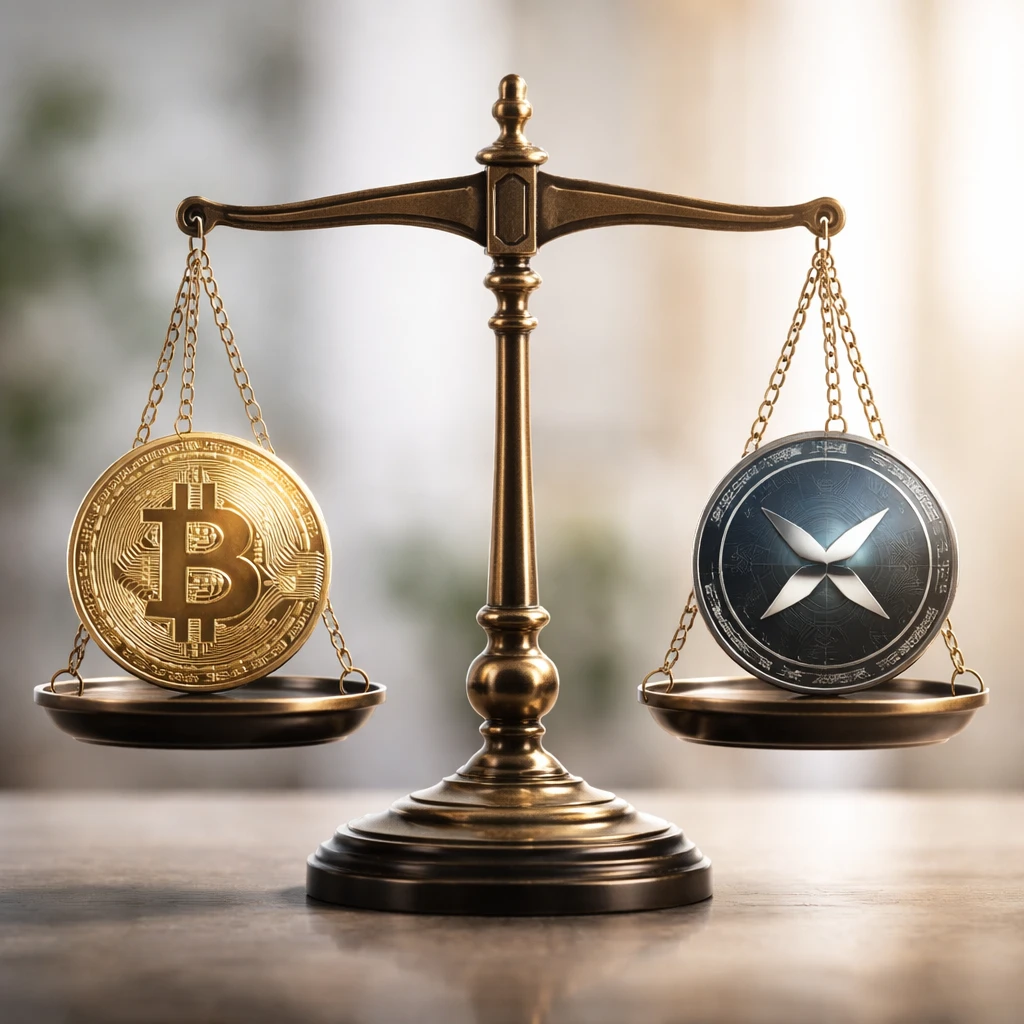

The cryptocurrency market witnessed a notable surge in Bitcoin (BTC) prices following the presidential election in November 2024. The victory of Donald Trump was widely interpreted as favorable for the crypto industry, with expectations of regulatory conditions that would benefit digital currencies. Although Bitcoin experienced a substantial increase in value as a result, it ultimately concluded the year with losses. Several influential factors contributed to this retreat, among them mounting concerns over the broader macroeconomic environment and evolving projections about interest rate trends.
Another significant element affecting Bitcoin's price was substantial profit-taking activity, particularly by large holders known as "whales." These investors, commanding considerable Bitcoin reserves, opted to sell portions of their stakes amid the prevailing uncertainties. Such dynamics raise important questions: should investors reconsider the dominant cryptocurrency in favor of XRP (XRP), which has recently gained attention for its pronounced gains and different operational framework?
Bitcoin: The Foundational Cryptocurrency and Its Perceived Value
Recognized as the pioneering cryptocurrency, Bitcoin has periodically demonstrated resilience even when other digital assets lagged. One key rationale behind this relative stability is the common comparison of Bitcoin to "digital gold." As an asset often regarded as a safeguard against inflation and currency depreciation, Bitcoin's capped supply plays a central role in this perception.
Bitcoin's maximum supply is limited to 21 million coins. The majority of these have already been mined and are presently circulating in the market. This finite availability likens Bitcoin to gold, traditionally valued as a scarce resource. Amid worries about the diminishing purchasing power of the U.S. dollar, such as concerns stemming from the U.S. national debt surpassing $38 trillion and the significant budgetary allocation necessary for servicing interest payments, investors view Bitcoin as a store of value capable of preserving wealth over time.
Concerns regarding U.S. debt levels are longstanding; however, some suggest that the situation may be approaching a critical juncture. Debt accumulation can propagate a self-perpetuating cycle which, compounded by actions like the Federal Reserve's substantial monetary interventions following the Great Recession, has contributed to elevated asset prices. These monetary policies have increased liquidity in the economy, raising inflationary fears and potentially undermining the dollar's strength. Consequently, assets such as gold and Bitcoin attract interest as hedges against expected currency devaluation.
XRP: A Different Approach Within the Cryptocurrency Sphere
Positioned as the fifth-largest cryptocurrency, XRP emerged early in the digital currency journey and differentiates itself with a blockchain network designed for efficiency in transaction processing. Unlike Bitcoin's more decentralized structure, XRP's network provides higher throughput, enabling it to process significantly more transactions per second. This architecture fulfills a particular niche, notably facilitating international payment transfers in a speedy and cost-effective manner.
The company behind XRP, Ripple, capitalizes on the coin and its technological infrastructure to offer payment solutions tailored to established financial institutions. Ripple's platform aims to streamline global transactions by enabling banks and payment providers to execute payments instantaneously across borders. Additionally, Ripple's framework supports seamless currency exchange utilizing stablecoins, enhancing liquidity management in multiple currencies.
One of Ripple's critical offerings is its on-demand liquidity service. This feature eliminates the traditional requirement for pre-funded foreign bank accounts, thus optimizing capital efficiency for institutions engaged in cross-border operations. Furthermore, Ripple operates a multi-asset prime brokerage service, granting institutional traders access to a diverse set of assets, including both conventional financial instruments and cryptocurrencies.
Despite its utility and technological advantages, XRP faces competition from other crypto networks with strong technical capabilities. The ultimate impact of XRP will depend on its ability, along with the broader Ripple ecosystem, to gain substantial traction and become a leading infrastructure for international payment facilitation.
Investment Considerations: Bitcoin or XRP?
The narrative surrounding Bitcoin as "digital gold" remains under scrutiny. At times, Bitcoin's price movements have mirrored the volatility observed in technology-focused equities, such as those found on the Nasdaq stock exchange. Nevertheless, Bitcoin may provide diversification benefits within a broader portfolio context. Institutional investor adoption appears to commence predominantly with Bitcoin, given its status and market position.
In contrast, while XRP exhibits promising potential due to its utilization in practical financial applications, it is important to acknowledge the inherent volatility typical of cryptocurrencies. XRP's price dynamics often correlate closely with broader market trends, underscoring its speculative nature compared to Bitcoin's established profile.
From an allocation perspective, maintaining a primary exposure to Bitcoin aligns with prevailing institutional strategies and the digital gold rationale. Concurrently, a modest, speculative position in XRP might be justified by its prospects in international payment systems. Investors should weigh these considerations carefully within the context of their risk tolerance and investment objectives.
Conclusion
In the ongoing evaluation between Bitcoin and XRP, each cryptocurrency caters to different facets of the digital asset ecosystem. Bitcoin represents scarcity and a potential inflation hedge, whereas XRP focuses on enhancing transaction efficiency and financial system integration. Investment decisions should reflect these distinctions alongside market conditions and individual portfolio goals.