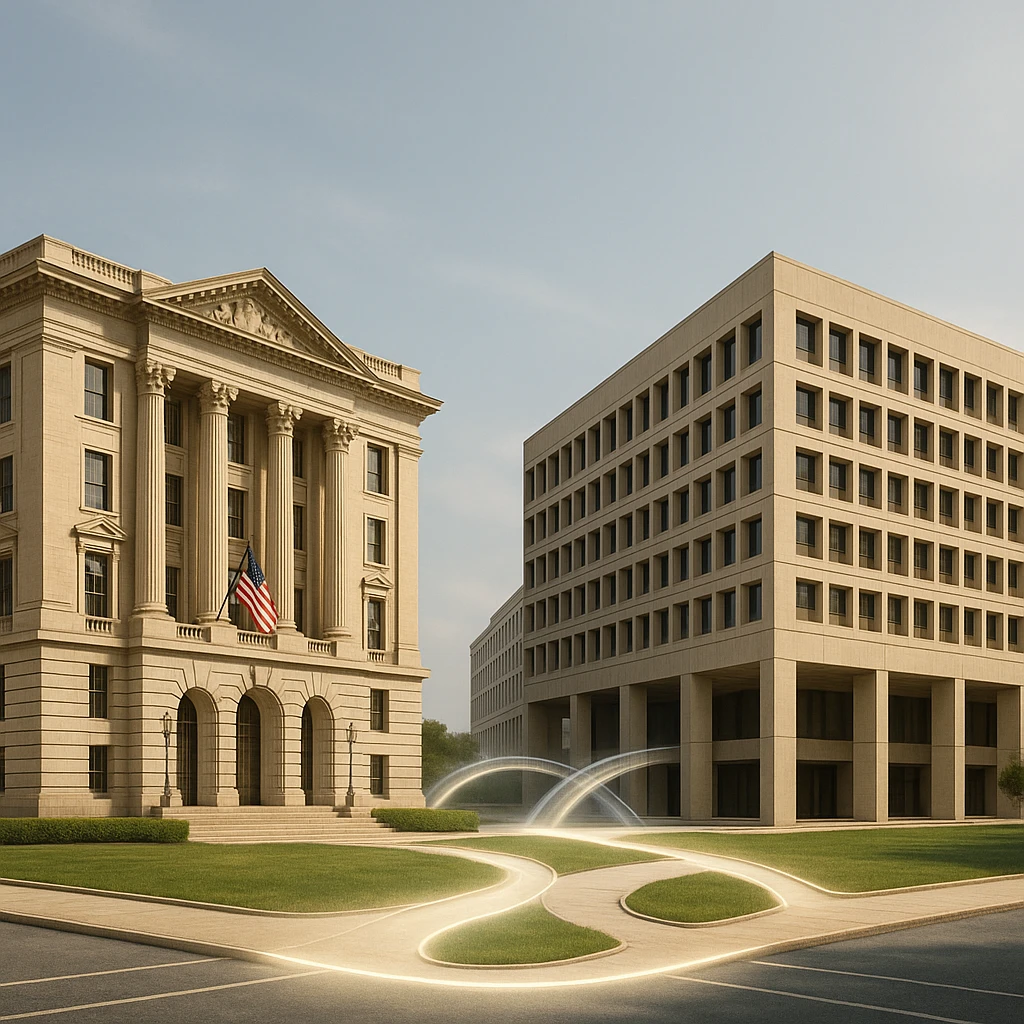

The FBI is embarking on a pivotal change in its operational base as Director Kash Patel revealed on Friday that the agency’s longstanding headquarters, the J. Edgar Hoover Building in Washington, D.C., will cease operations permanently. Instead, the predominant staff presence will relocate to the Ronald Reagan Building, located in close proximity to the current headquarters.
This relocation follows a collaborative effort involving key figures in the federal government. Patel credited both former President Donald Trump and members of Congress for their crucial roles in facilitating the transition. According to Patel, when his administration began assessing FBI infrastructure, there was an impending financial burden looming over taxpayers. A plan existed for constructing a new FBI headquarters with a price tag nearing $5 billion and an expected opening date set as far ahead as 2035.
Recognizing the financial and temporal inefficiencies of this proposal, Patel’s leadership opted to discontinue the expansive new construction project. Instead, leadership identified the Ronald Reagan Building as a viable existing facility with the capacity to house FBI operations. This decision was presented not only as a cost-saving measure but also as one that could expedite the consolidation of FBI activities without the prolonged delays associated with erecting a completely new headquarters.
Patel explained, “We scrapped that plan. Instead, we selected the already-existing Reagan Building, saving billions and allowing the transition to begin immediately with required safety and infrastructure upgrades already underway.” These improvements aim to ensure the facility meets the FBI’s stringent operational and security standards.
Tracing the agency’s history, the Hoover Building has functioned as the central hub for FBI activities since it opened in 1975, symbolizing decades of federal law enforcement presence in the capital city. The decision to vacate this iconic building signals a significant shift in how the FBI plans to organize and manage its physical footprint moving forward.
Patel assumed the role of FBI Director in 2024 following the nomination by former President Trump, succeeding Christopher Wray. His appointment coincided with statements indicating a vision to restructure the bureau to better meet contemporary challenges. The closure of the Hoover Building and the move to a more modern and adaptable space appear to be integral steps within this envisioned reorganization framework.
This announcement leaves open the possibility of further internal changes, as Patel's actions thus far reflect a focus on operational efficiency and fiscal prudence. By avoiding the substantial expense and long timeline of constructing a new headquarters, the FBI under Patel’s direction demonstrates a preference for pragmatic solutions that balance cost, safety, and functionality.
The transition to the Ronald Reagan Building is currently underway, with necessary safety and infrastructure enhancements in progress to accommodate FBI personnel. This swift relocation effort aims to minimize disruption and maintain continuity in the agency’s critical national security and law enforcement roles.
For additional context on the evolving political landscape affecting federal agencies, readers are encouraged to follow upcoming developments closely. Notably, international diplomacy news, such as high-profile meetings like Ukraine President Zelenskyy’s trip to Florida for peace talks with Donald Trump, continue to define the broader governmental environment in which the FBI operates.
Disclaimer: Portions of this report were generated with the assistance of AI tools, followed by editorial review and publication by Benzinga staff.