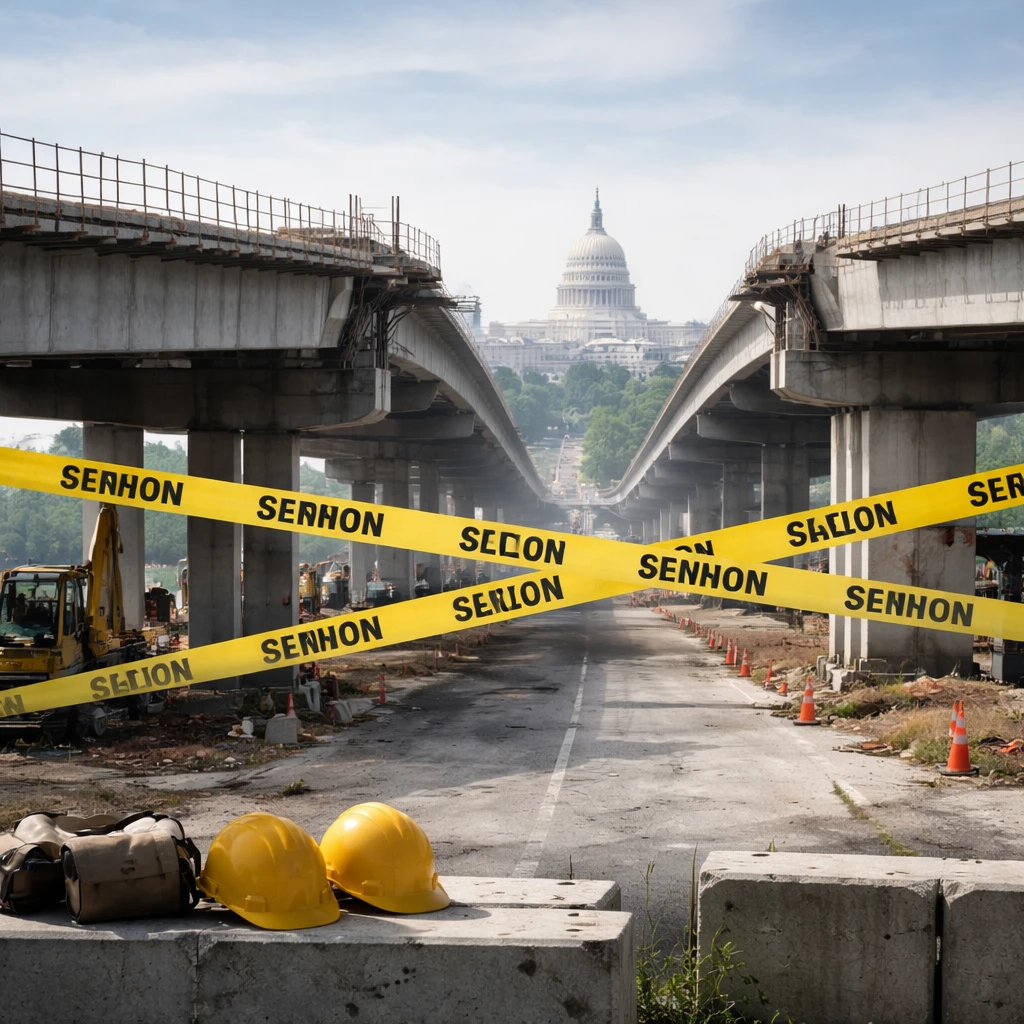

Legal authorities have recently stepped in to prevent the premature termination of a vital infrastructure project in the United States, a move initially proposed by former President Donald Trump. The matter came to public attention when Pete Buttigieg, who served as the U.S. Secretary of Transportation during the Biden administration, remarked on the federal court's decision to obstruct efforts to discontinue what he termed as one of America’s most crucial infrastructure initiatives.
In a public statement posted on the social media platform X during the weekend, Buttigieg emphasized the gravity of the court’s ruling, noting that the halted suspension would have contravened federal obligations established under the previous administration during his leadership. He specified that these legal commitments are binding and were entered in good faith by the federal government, thus rendering the suspension attempt unlawful.
Buttigieg expressed concern that despite the court's decision, the project's continuance remains vulnerable to political interference. He underscored the necessity for ongoing vigilance to protect both the project and the significant workforce engaged in its execution against politically motivated actions targeting its progress.
The infrastructure project in question has drawn considerable attention due to its scale and significance, with implications for transportation, economic stability, and employment. The decision to block the suspension is reflective of the judiciary's role in upholding legal agreements amidst political conflicts.
Concurrently, the initiative has become a focal point of criticism from several Democratic legislators who have publicly condemned Trump’s maneuver to withhold substantial federal infrastructure funding. Among their concerns is the suggestion that the funding block is leveraged to demand that various projects — including notable hubs such as Penn Station and Dulles Airport, along with the Gateway Project — be named in honor of the former president.
Senator Bernie Sanders of Vermont characterized this approach as rife with corruption and egotism, urging members of the Republican Party to challenge such tactics. Similarly, Representative Jamie Raskin from Maryland asserted that the former president lacks the authority to unilaterally withhold congressional appropriations and intimated the need for intervention concerning his conduct described as megalomaniacal.
Moreover, Senator Cory Booker from New Jersey warned that the withholding of Gateway Project funding not only violates legal protocols but also imperils union employment, the regional economy, and the safety and quality of life for hundreds of thousands reliant upon this infrastructure on a daily basis. The concerns span workforce stability and broader socioeconomic impacts, revealing the high stakes involved in the funding dispute.
As this legal and political contention unfolds, stakeholders in the infrastructure sector, including state and local leaders, labor unions, and industry professionals, monitor the situation closely. The case highlights the complex interaction between federal commitments, infrastructure development, and political dynamics influencing critical public projects.
While the court's intervention has temporarily preserved the project's momentum, the ongoing debate underscores the tenuous nature of large-scale infrastructure initiatives contingent on sustained governmental cooperation and funding assurances. Observers emphasize the importance of safeguarding such projects from abrupt disruptions that could jeopardize progress and the many direct and indirect benefits they entail.
Note: This article is based on verified information and does not incorporate speculative content or external references not directly presented by the original statements and court rulings.