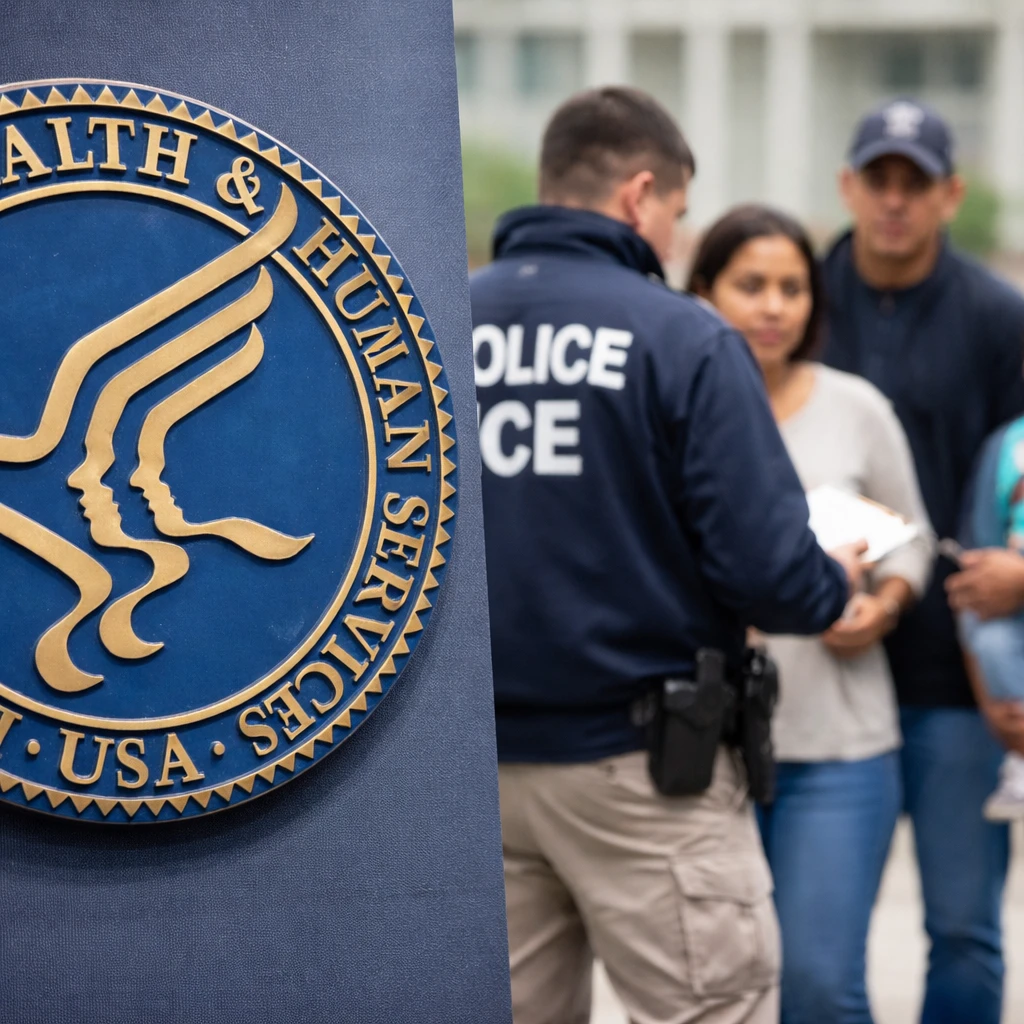

A recent federal court ruling allows the U.S. Department of Health and Human Services (HHS) to restart the transmission of specified personal data related to Medicaid beneficiaries to immigration enforcement officials. This development follows extended legal challenges from 22 states over privacy and data protection concerns, with the judgment narrowly circumscribing the types of information that may be shared at this time.
U.S. District Judge Vince Chhabria, presiding in San Francisco, issued the decision on January 2, enabling HHS to provide Immigration and Customs Enforcement (ICE) with basic biographical information about immigrants residing in the United States without authorization. The ruling adheres to federal laws authorizing such disclosures and reflects administrative priorities declared under the previous government administration's intensified immigration crackdown. However, the sharing is restricted to limited data elements, precluding the release of extensive personal, particularly medical, information.
The background to this legal progression traces to an earlier injunction by Judge Chhabria in August that prohibited HHS from sharing sensitive personal data, including addresses, with ICE officers. This temporary restraining order was extended late last year amid ongoing litigation.
Effective after the temporary order lapsed on January 5, HHS may transmit fundamental identity and contact information of undocumented immigrants enrolled in Medicaid, according to the recent ruling. The judge emphasized that while the biographical data sharing is lawful and sufficiently justified by the agency, more expansive data transfer faces limits due to ambiguities concerning its nature, necessity, and potential ramifications.
Importantly, the court forbids disclosure of detailed medical records or sensitive health information to ICE or the Department of Homeland Security (DHS). In addition, the Medicaid data of U.S. citizens and legally present immigrants in the plaintiff states remains protected against release.
HHS has yet to confirm the actual resumption of data sharing consistent with the ruling. The agency did not respond to requests for comment regarding current practices at the time of reporting.
Medicaid primarily serves as a jointly funded health coverage program between state governments and the federal government, offering nearly free medical services to low-income individuals and families. Federal regulations preclude most undocumented immigrants and some lawfully present noncitizens from enrolling in full Medicaid benefits; however, all states are legally obligated to provide emergency Medicaid for urgent and life-threatening medical situations regardless of immigration status.
Initial data sharing between HHS and immigration authorities began in June of the previous year, involving millions of Medicaid enrollees in select states. Subsequently, a July agreement granted DHS daily access to personal details, including Social Security numbers and residential addresses, for all Medicaid recipients nationwide, a figure approximating 77 million enrollees. These arrangements proceeded without public announcements.
The revelation of this extensive personal health data sharing with deportation enforcement prompted the lawsuit filed by the 22 states. Advocates have voiced concerns that such disclosures could deter immigrants from seeking even critical emergency medical care for themselves or their families due to fears over immigration enforcement. Critics also highlight heightened anxieties created by other immigration crackdowns involving multiple federal agencies and military personnel operating in approximately Democratic-led cities.
The Centers for Medicare and Medicaid Services (CMS) maintains that their data sharing aligns with federal statutes and supports executive priorities related to immigration enforcement. Complementary measures have included permitting the IRS to share taxpayer data with ICE, further facilitating efforts to locate and detain undocumented individuals.