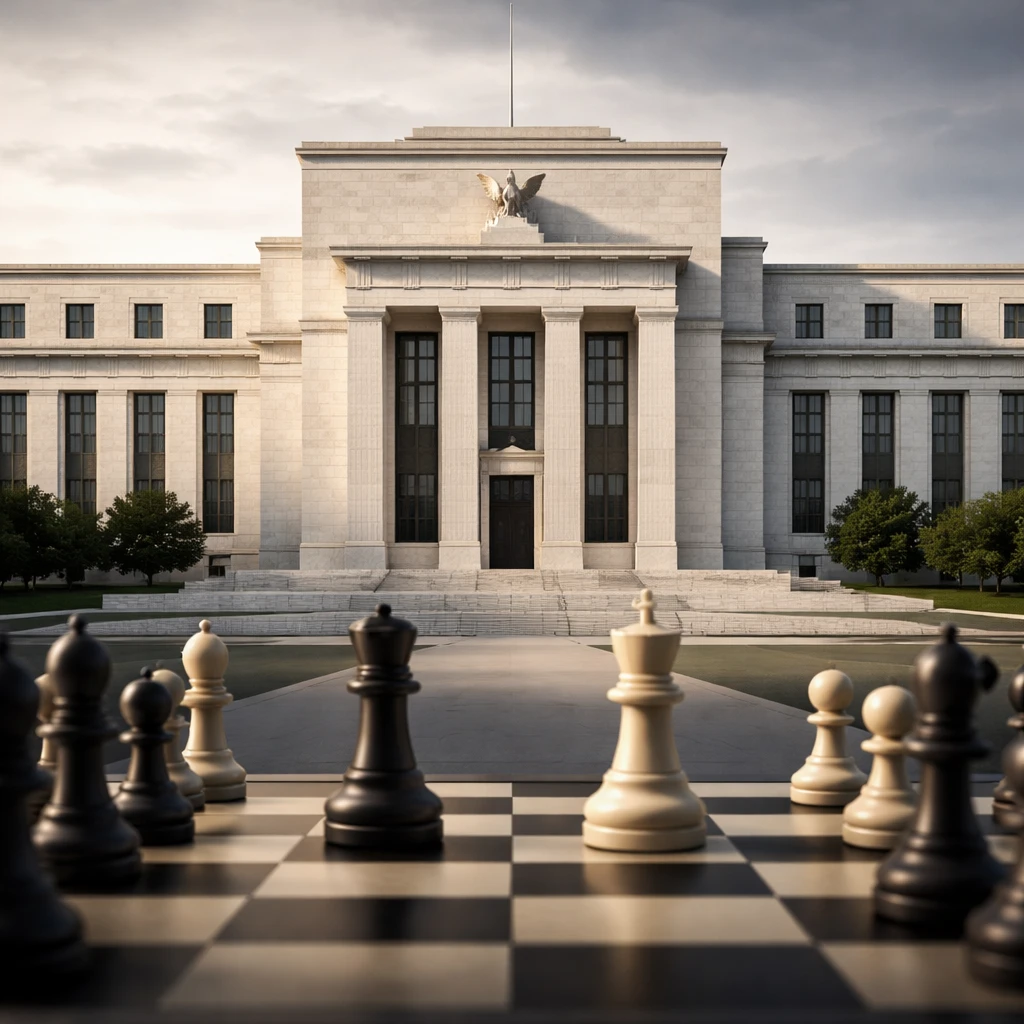

On January 12, the S&P 500 saw modest gains despite emerging reports that U.S. prosecutors are examining testimony given by Federal Reserve Chair Jerome Powell in relation to renovations of two Federal Reserve buildings. This development has prompted criticism from across Wall Street, former officials at the Federal Reserve and Treasury, as well as some Republican lawmakers.
President Trump has denied any direct involvement in the investigation. However, his administration has exhibited a sustained pattern of antagonism toward Powell since Trump assumed office, including public denunciations and a recent threat to sue the Fed Chairman for "gross incompetence."
Market observers should be attentive to these developments as the Justice Department's probe may represent an effort to weaken the Federal Reserve's autonomy. The market impact could be severe should there be any perception that monetary policy decisions are being swayed by political considerations rather than economic indicators and prudent policy judgment.
Persistent Presidential Pressure on the Federal Reserve
President Trump's administration has openly advocated for monetary policies that favor lower interest rates. Given the administration's implementation of significant tariffs, which risk dampening economic growth, combined with the federal debt surpassing $38 trillion, lower interest rates would serve dual purposes: cushioning the economy against tariff-induced weaknesses and reducing government debt servicing costs.
While previous presidents have occasionally sought to influence the Federal Reserve, President Trump's approach has been notably aggressive. His tactics have included direct threats of legal action and disparaging remarks on social media platforms, a pattern with several notable instances:
- April 2025: After Powell cautioned that tariffs could induce stagflation—a troubling economic state marked by high inflation and unemployment—Trump responded by threatening to dismiss Powell and labeled him a "major loser" on social media.
- June 2025: Anticipating the Federal Open Market Committee's decision to keep interest rates steady, Trump preemptively insulted Powell, calling him a "stupid person" and a "numbskull."
- August 2025: The President attempted to remove Fed Governor Lisa Cook, citing alleged mortgage fraud from 2021. However, federal law restricts removal of Fed governors to cases of official misconduct. The Supreme Court upheld Cook's tenure.
- December 2025: Approaching Powell’s term completion in May, Trump publicly specified his preference for a successor who would lower interest rates when markets perform well and threatened legal action against Powell for incompetence.
- January 2026: The Department of Justice issued grand jury subpoenas to the Federal Reserve related to Powell's testimony from June, raising the possibility of criminal charges. Powell characterized the inquiry as a political strategy to coerce interest rate reductions.
Additionally, President Trump’s nomination of Stephen Miran, who replaced former Fed Governor Adriana Kugler after her early resignation, may have subtly altered the Fed's dynamics. Miran has voted against the majority in three Federal Open Market Committee meetings, consistently advocating for more aggressive interest rate cuts.
Implications of Compromising Federal Reserve Autonomy
The Federal Reserve’s dual mandate involves maintaining price stability and maximizing employment by setting monetary policy, particularly through adjustments to the federal funds rate—the benchmark that influences interest rates across the U.S. economy.
The Federal Reserve operates as an independent entity, insulated from political pressure. This autonomy allows policymakers to implement decisions aimed at long-term economic stability rather than reacting to short-term political incentives.
Should the Fed's independence be undermined, there is a risk that political actors could compel the central bank to reduce interest rates primarily to enhance immediate economic indicators or electoral prospects, irrespective of inflationary consequences. Such artificially stimulated economic growth could ultimately exacerbate inflation, adversely affecting consumers by diminishing the purchasing power of incomes and savings.
Moreover, elevated inflation tends to increase Treasury yields as investors demand greater returns to offset added risk. Rising yields raise the government's cost of debt servicing, potentially unsettling bond investors further and driving yields to even higher levels.
From an investment standpoint, higher Treasury yields make bonds more attractive relative to stocks. Historically, the S&P 500 has often experienced underperformance when 10-year Treasury bond yields exceed 4.5%; currently, yields stand near 4.2%. Should Fed independence be compromised or even perceived as politically influenced, investor confidence could wane, triggering significant market volatility and sharp declines in stock valuations.