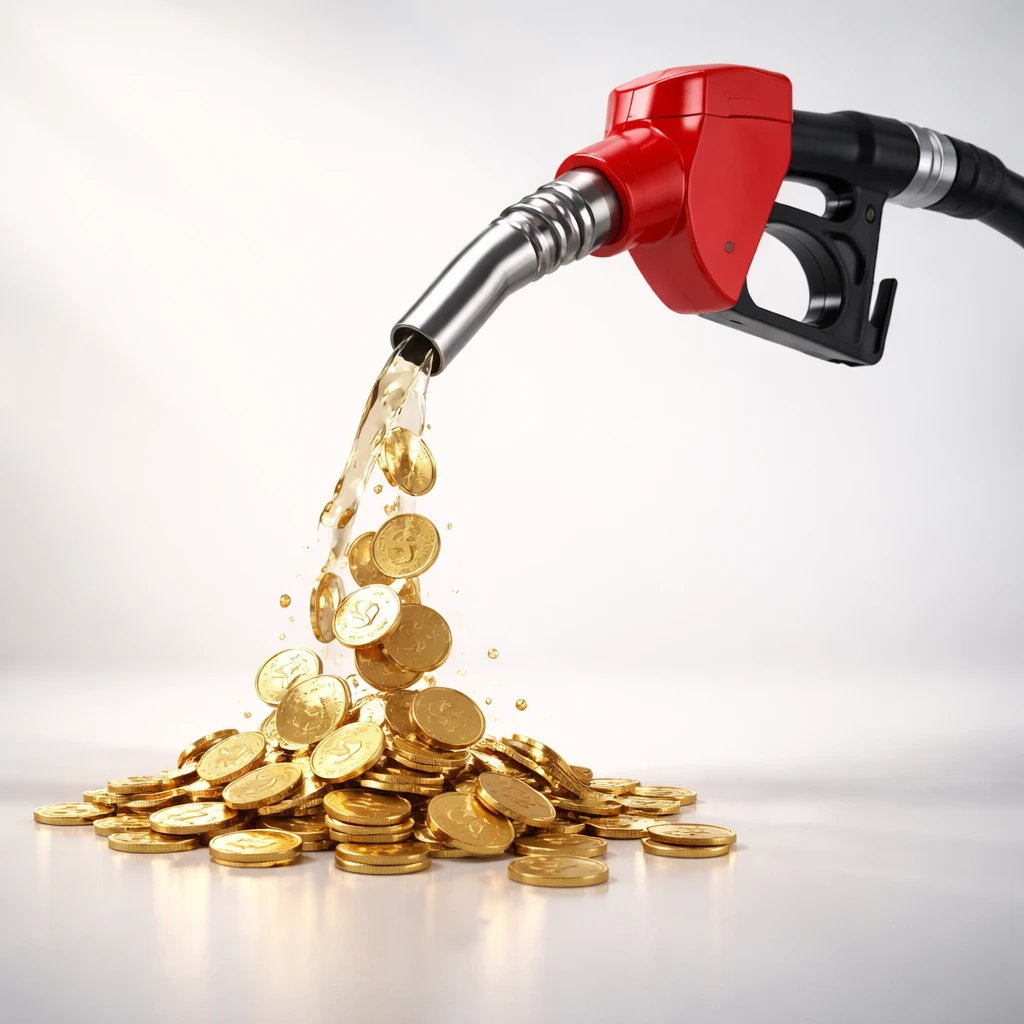

In a notable shift from recent years of elevated gasoline costs, projections indicate that the average price of gasoline in the U.S. could drop below the $3 per gallon mark in 2026. This would mark the fourth consecutive year of declining pump prices and the first since 2020 to sustain such affordability nationally. The forecast, provided by a fuel savings platform specializing in petroleum market analysis, anticipates an average price of $2.97 per gallon for the year.
This trend offers a welcome respite for consumers facing ongoing inflationary pressures, following a tumultuous period when gas prices played a significant role in driving inflation rates higher. Notably, in 2022, amidst the geopolitical upheaval caused by Russia's invasion of Ukraine, gasoline prices surged past $5 per gallon—an unprecedented peak. This spike not only strained household budgets but also contributed to the U.S. inflation rate exceeding 9%.
The market dynamics underlying the projected price reductions are multifaceted. Industry analysts note that the oil market is achieving a more balanced state post-pandemic, which supports more stable and lower gas prices. While unpredictable events, such as the recent United States military strike in Venezuela and the subsequent capture of the country’s leader, could have raised concerns about oil supply disruptions, experts remain cautiously optimistic. Due to the substantial time required to rehabilitate Venezuela's deteriorating energy infrastructure, immediate impacts on the gasoline market are expected to be minimal.
Supporting these sentiments, crude oil futures displayed little volatility following the U.S. intervention in Venezuela, indicating market confidence in manageable supply conditions. Furthermore, the forecast predicts that American drivers might spend significantly less on gasoline in 2026, with total expenditures estimated to fall by $11 billion compared to 2025.
This expected cost reduction translates to average annual household gasoline expenditures dropping from $2,716 in 2022 to approximately $2,083 in 2026. Consumers in ten states are particularly advantaged by regional lower prices, with annual averages expected to fall below $2.75 per gallon in Alabama, Arkansas, Kansas, Louisiana, Mississippi, Missouri, Oklahoma, South Carolina, Tennessee, and Texas.
Seasonal fluctuations remain, with prices forecasted to peak monthly at $3.12 per gallon in May, correlating with the transition to summer-grade fuels and increased demand. However, prices are expected to decline again by year-end, settling near $2.83 per gallon on average.
Underlying the decline in gasoline prices is the broader context of cheaper oil worldwide. In 2025 alone, crude oil values dropped by approximately 20%, marking the most significant annual decrease since 2020. This drop reflected ongoing quarterly price reductions sustained over an entire year—a trend not observed since the early 2000s.
Projections from the U.S. Energy Information Administration further support this outlook, anticipating U.S. oil prices will average $51 per barrel in 2026. This contrasts with higher averages seen in previous years: $65 per barrel in 2025 and $77 per barrel in 2024.
Importantly, this decrease in fuel prices is not attributed to weakened demand but rather to an increase in supply. The Organization of the Petroleum Exporting Countries (OPEC), under Saudi Arabia's lead, notably increased production in 2025, influenced partly by political pressures. Concurrently, U.S. oil production remains robust, reaching near-record highs with preliminary estimates indicating 13.83 million barrels per day at the close of 2025, edging close to historical maximum output levels.
Yet, while production remains strong, the anticipated lower prices are prompting some U.S. oil companies to reconsider and reduce drilling activities. Government data forecasts a modest decline in U.S. oil production in 2026 to about 13.5 million barrels per day. This potential contraction in output could eventually reduce domestic supply, possibly shifting more market influence back to OPEC members in the future.
Industry experts caution consumers against assuming persistently low prices and highlight the delicate balance between supply, demand, and production decisions. The evolving landscape necessitates vigilance regarding actions by oil-producing nations and future market developments.
Despite otherwise encouraging projections for 2026, various uncertainties could still disrupt the favorable price environment. Military interventions or geopolitical instability in regions such as Venezuela could imperil energy supplies, resulting in price spikes. Similarly, the protracted conflict between Russia and Ukraine continues to affect energy infrastructure and supply chains, with ongoing attacks contributing to market unpredictability.
Furthermore, recent tensions involving Iranian officials warning of potential hostilities toward U.S. troops in the Middle East add another layer of geopolitical risk. Political decisions within OPEC also represent a variable factor; while increased production has supported lower prices recently, a shift toward production cuts to address low pricing could reverse the downward trend.
Ultimately, although the gasoline market is expected to offer concrete relief amid wider affordability challenges, the situation requires continuous observation to navigate the complexities posed by international events and energy policy decisions.