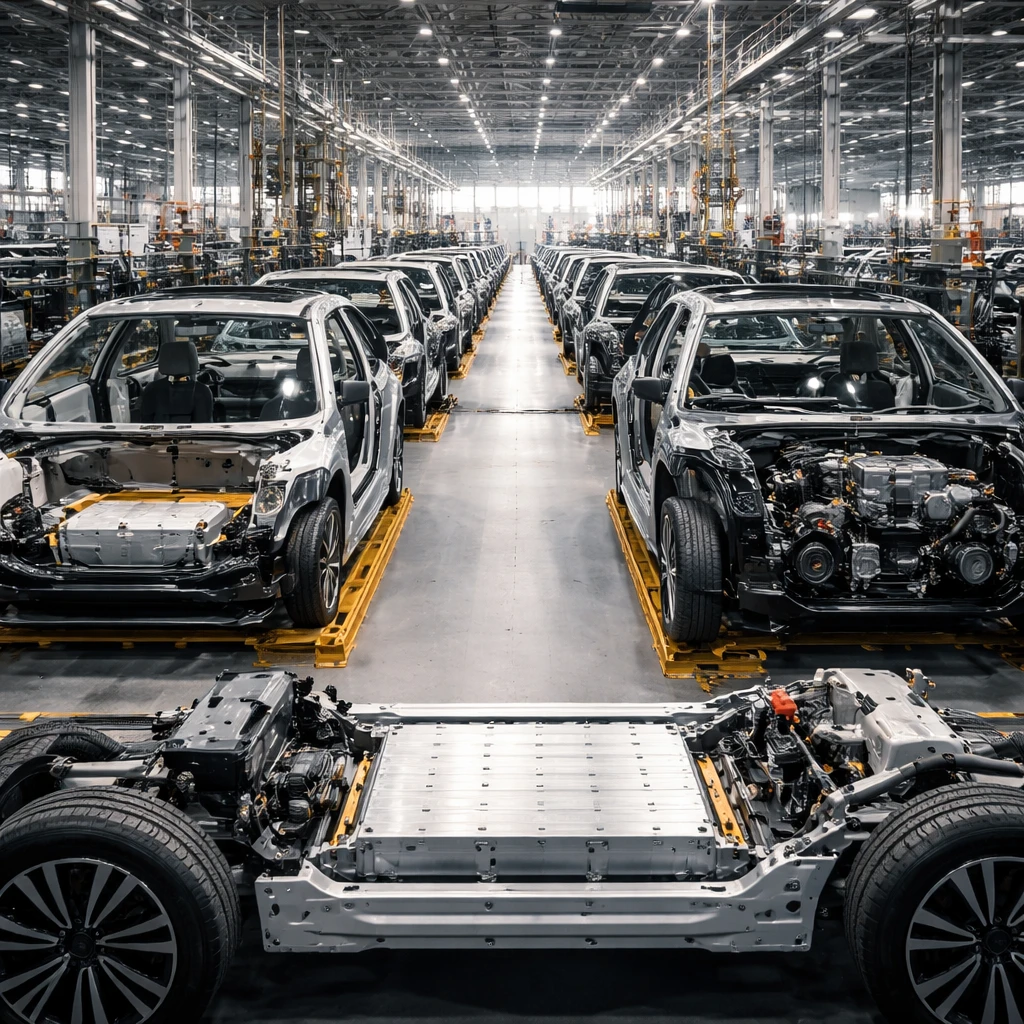

General Motors (GM) has revealed it will record a $6 billion loss related to its recent decision to scale back its electric vehicle ambitions. This financial charge adds to a previously reported $1.6 billion write-down announced in October, which was also connected to revisions in its electric vehicle programs. The mounting charges illustrate the substantial costs automotive companies face as regulatory and policy landscapes change in the United States.
Traditionally, GM, along with other automotive firms, had invested heavily in electric vehicle development under the expectation of stringent environmental regulations designed to promote zero-emission vehicles. These anticipated policies, aligned with the Biden administration's climate agenda, included federal incentives and regulatory measures aimed at accelerating the transition to electric transportation. A further assumption underpinning these investments was that states, emulating California’s stance, would implement aggressive measures banning the sale of gasoline-powered vehicles within the next decade.
Previously, GM set a target to exclusively produce electric vehicles by the year 2035. However, shifts in federal policies under the Trump administration rolled back these emissions standards and scaled back financial backing for electric vehicle adoption. Additionally, the federal government challenged the authority of states to enforce more rigorous environmental regulations, sowing uncertainty around the regulatory environment governing vehicle emissions.
Despite these changes, electric vehicles continue to maintain a strong presence in the U.S. market, with substantial consumer interest persisting. Additionally, global demand for electric vehicles remains on an upward trajectory, highlighting that EVs are a continuing factor in automobile markets worldwide.
A significant portion of GM's $6 billion charge stems from the necessity to resolve contracts that were made with suppliers for parts related to the electric vehicle programs that have now been scaled back or canceled. These contractual settlements contribute heavily to the financial impact announced by the automaker.
This recent announcement of GM’s financial charge is mirrored by similar developments from other industry players. For instance, Ford revealed in December it would take a substantial charge of $19.5 billion tied to its own re-evaluation of electric vehicle planning. This indicates a broader trend among traditional automakers adapting their strategies in response to shifting regulatory and market conditions.
Notably, GM’s disclosures did not include the cessation of any specific electric vehicle models at this time, nor did the automaker declare any factory closures or workforce reductions directly linked to the current adjustment in its electric vehicle approach. Nevertheless, the company previously announced in October the elimination of one production shift at Factory Zero, its EV assembly plant located in Detroit. This decision resulted in the indefinite layoff of approximately 1,200 hourly workers.
Similar workforce impacts have been observed in related facilities, such as the GM EV battery plant in Ohio, where the company placed around 550 workers on indefinite layoff. These employment actions reflect the operational consequences tied to the shift in GM’s EV strategy.
The demand for electric vehicles experienced a notable surge during the summer and September months, driven in large part by the scheduled expiration of a $7,500 U.S. federal tax credit available to EV buyers. This incentive stimulated higher sales volumes in the earlier part of the year.
However, in the fourth quarter of the year, electric vehicle sales in the United States saw a sharp decline across the industry. This decrease was evident both when compared to the previous year’s figures and relative to the record sales levels hit in the third quarter. This pattern underscores the volatility of the EV market in response to policy changes and incentive expirations.
Speaking to investors in October, GM’s Chief Executive Officer Mary Barra emphasized that electric vehicles remain a central focus for the company, describing them as its "North Star." Nevertheless, she acknowledged the reality that sales of traditional internal combustion engine-powered cars and trucks are projected to remain strong over a prolonged period, suggesting a more gradual transition to electric vehicles than initially anticipated.