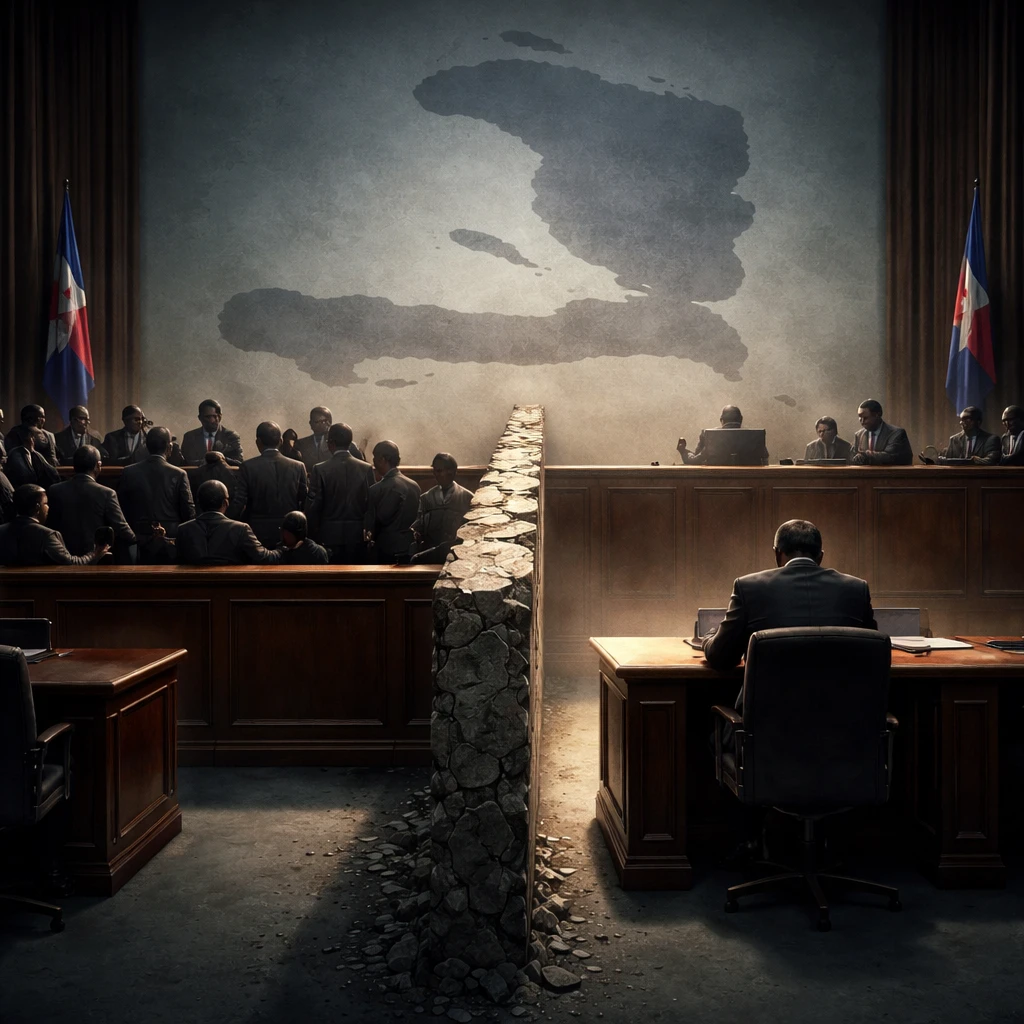

Haiti’s Transitional Presidential Council (TPC) has declared its plan to remove Prime Minister Alix Didier Fils-Aime from office, counter to persistent admonitions from the United States government. This development represents a significant escalation in the ongoing political turmoil of the Caribbean nation, where elections have been postponed repeatedly due to severe security concerns and administrative uncertainty.
On Friday, members of the TPC revealed their intent to replace Prime Minister Fils-Aime within the next 30 days. This decision followed a vote where five out of nine council members supported the move. However, officials caution that the resolution is not yet legally binding, pending its publication in Haiti’s official gazette—a necessary procedural step to enact such a change.
Established in 2024 amidst a profound political crisis triggered by the assassination of President Jovenel Moise in 2021, the Transitional Presidential Council was tasked with steering Haiti toward stabilization. Since its inception, the TPC has been riddled with internal conflicts and questions about its legitimacy, complicating efforts to restore order and effective governance.
The United States, a key international actor in Haitian affairs, has expressed firm opposition to the council’s proposed dismissal of Fils-Aime. Secretary of State Marco Rubio articulated a position underscoring the importance of maintaining the current prime minister to combat pervasive gang domination and to foster national security. Rubio further called upon the council to disband by its February 7 mandate expiration, urging avoidance of influence by corrupt parties.
Reinforcing this stance, the U.S. embassy in Haiti issued statements in both French and Haitian Creole, warning political leaders about potential severe repercussions should they undermine ongoing security initiatives. Notably, the embassy’s use of the phrase "pri final" or "final price" was interpreted by some as indicating the possibility of intensified punitive measures against underminers of stability.
The political situation is further complicated by the council’s previous activities. After the ouster of a former prime minister, the TPC appointed Fils-Aime in November 2024. Since then, it has postponed presidential elections multiple times; these elections are currently anticipated to commence in August. Additionally, the council itself is under pressure as its mandate is set to expire on February 7, raising questions about the future governance framework.
Relations with external actors have been strained, as evidenced by the U.S. imposing visa restrictions on one council member accused of facilitating criminal networks and obstructing efforts against gangs. This individual has denied such allegations and accused both the United States and Canada of exerting unjust pressure on Haiti's internal politics.
Meanwhile, the humanitarian situation in Haiti continues to deteriorate. More than 1.4 million citizens have been displaced due to escalating violence. A recent United Nations report estimates approximately 8,100 violent deaths over the past year, marking a significant increase compared to figures from 2024. Carlos Ruiz-Massieu, head of the U.N. Integrated Office in Haiti, has described the country as entering a "critical phase," emphasizing the urgent need to resolve internal disputes to restore democratic institutions and stabilize the nation.