
The House of Representatives is preparing to vote Thursday on a legislative proposal that would reinstate the expired health care subsidies provided under the Affordable Care Act (ACA). This development signals a significant departure from Republican leadership's stance, as a group of Republican representatives joined Democrats to push forward a bill aimed at helping millions secure health insurance coverage through Obamacare.
The push for a vote emerged after several Republican members supported a "discharge petition," an unusual procedural move that allowed the measure to bypass objections from the House Speaker Mike Johnson. Approval in the House would send the bill to the Senate, where bipartisan efforts to reach a compromise are underway. Without legislative progress, an estimated number of people risk losing insurance coverage this year.
This bipartisan action seeks to resolve the deadlock over enhanced tax credits initially introduced during the COVID-19 pandemic but which expired late last year when attempts to renew them were stalled amid a government shutdown.
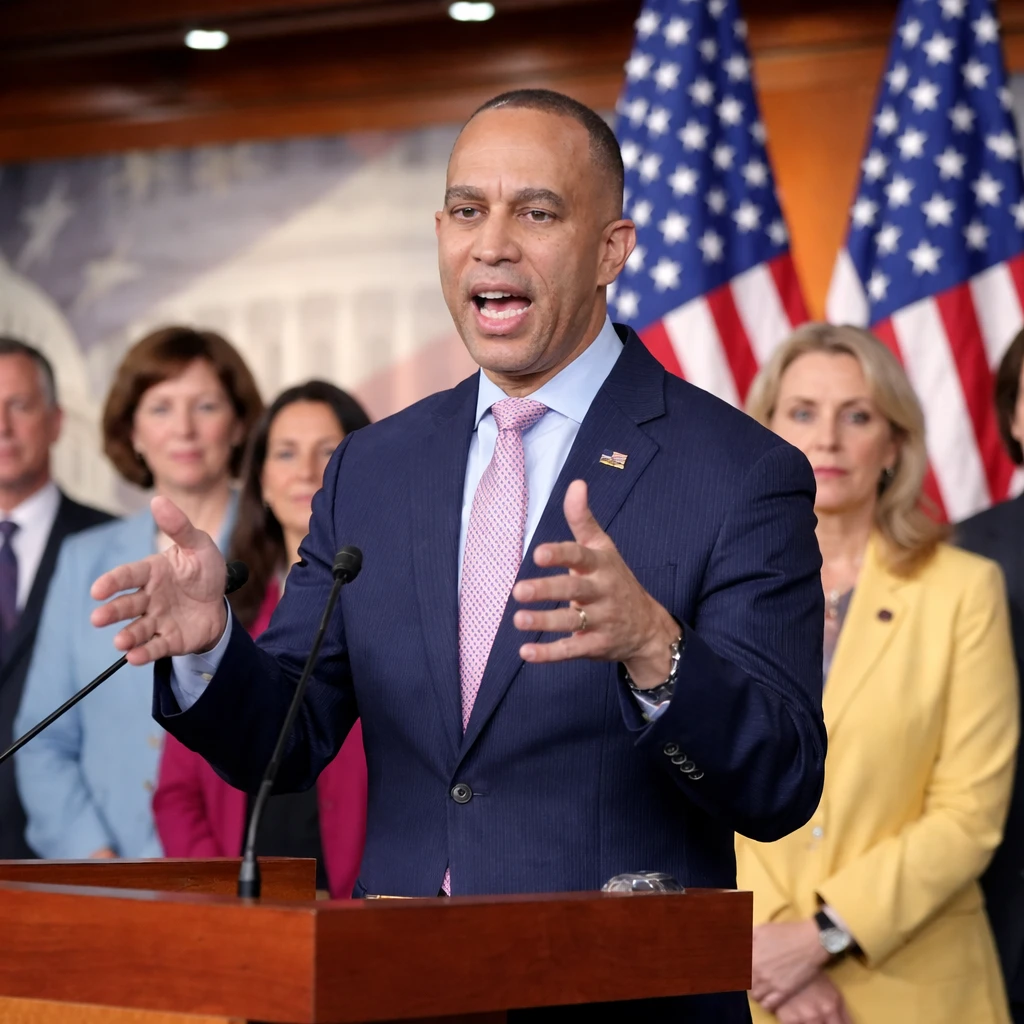
House Democratic Leader Hakeem Jeffries addressed the urgency of the issue, emphasizing that the affordability crisis in health care is a substantive and pressing reality, contrary to assertions made by former President Donald Trump. Jeffries stated, "Democrats made clear before the government was shut down that we were in this affordability fight until we win this affordability fight. Today we have an opportunity to take a meaningful step forward."
Ahead of the vote, the nonpartisan Congressional Budget Office (CBO) released estimates indicating that the bill, which would extend subsidies for three years, would increase the national deficit by approximately $80.6 billion over ten years. Conversely, the CBO projects an increase in insured individuals by 100,000 in the first year, 3 million in 2027, 4 million in 2028, and 1.1 million in 2029.
Despite efforts by Speaker Johnson, a Republican from Louisiana, who has spent months opposing the extension, concerns over fraud in federal health care funding during the pandemic were cited as reasons to reject the renewal. Johnson's office referenced investigations, including one in Minnesota, to support the argument against further COVID-era health care subsidies.
While the House bill’s momentum highlights increasing support for the subsidies that have facilitated insurance access for roughly 22 million Americans, the Senate is not obligated to act on this legislation. Instead, a bipartisan group of senators is crafting an alternative proposal, aiming for a shorter, two-year subsidy extension with reforms targeting fraud reduction.
Senate Majority Leader John Thune of South Dakota indicated that any successful plan would need to implement income thresholds to channel financial aid toward those most in need. He and other Republicans also emphasize that recipients should contribute nominal payments toward their coverage. Additionally, the expansion of health savings accounts (HSAs), which allow for tax-free medical spending, is considered a key component for garnering support on the Senate side.
Senator Jeanne Shaheen, a Democrat from New Hampshire engaged in the negotiation process, affirmed a mutual commitment among lawmakers to address fraudulent activities in health care subsidies. She pointed out the urgent need to find solutions, given that millions are losing or have lost health insurance due to unaffordable premiums.
Former President Trump has advocated for providing funds directly to Americans through health savings accounts to allow them more autonomy in managing health expenses, a position largely opposed by Democrats who argue that such measures fall short of covering the extensive costs involved.
The Republicans' maneuver to force a floor vote bypassed Speaker Johnson and his leadership, reflecting internal party divisions. Johnson had previously attempted to limit the vote on subsidy extension, favoring a temporary continuation coupled with amendments. This stance was challenged after discussions with more conservative factions, who oppose the subsidies as support for what they consider a failed ACA framework. Ultimately, a modest health care reform proposal from Johnson was approved but stalled, leading to rank-and-file lawmakers taking initiative in response to constituents facing rising insurance costs this year.
Notably, Republican Representatives Brian Fitzpatrick, Robert Bresnahan, Ryan Mackenzie of Pennsylvania, and Mike Lawler from New York joined Democrats on the discharge petition, achieving the necessary 218 signatures to advance the legislation. These members represent pivotal swing districts, whose electoral outcomes may influence control of the House in the forthcoming election cycle. Lawler has framed the bill as a tool for Senate lawmakers to reach bipartisan agreement.
During a recent address to House Republicans, Trump encouraged his party to actively engage in shaping health care policies, an issue that has been a persistent challenge since the Republican-led failed attempt to repeal the ACA during his administration.