
Impact of Federal Funding Cuts on Aging U.S. Wastewater Infrastructure
January 9, 2026
News & Politics

Impact of Federal Funding Cuts on Aging U.S. Wastewater Infrastructure

Diminished Aid Undermines Improvements in Vulnerable Communities’ Water Systems

Summary

Numerous U.S. communities face significant challenges due to deteriorating wastewater infrastructure, posing potential health and property hazards. While substantial funds were pledged under the Bipartisan Infrastructure Law and the Biden administration to rectify these issues, many of these commitments have been reduced during the Trump administration. These funding reductions, intertwined with a retreat from diversity, equity, and inclusion initiatives, could exacerbate existing disparities as underfunded wastewater systems are prevalent in economically disadvantaged areas.

Key Points

Approximately 17 million Americans rely on about 1,000 wastewater systems that transfer pollutants in clear violation of federal clean water regulations upon discharge into waterways.
The most troubled systems predominantly serve rural communities with average household incomes nearly $12,000 lower than the national average, indicating socioeconomic challenges.
Federal estimates suggest that addressing forthcoming wastewater, flooding, and water quality requirements over the next two decades will require investments upwards of $630 billion.

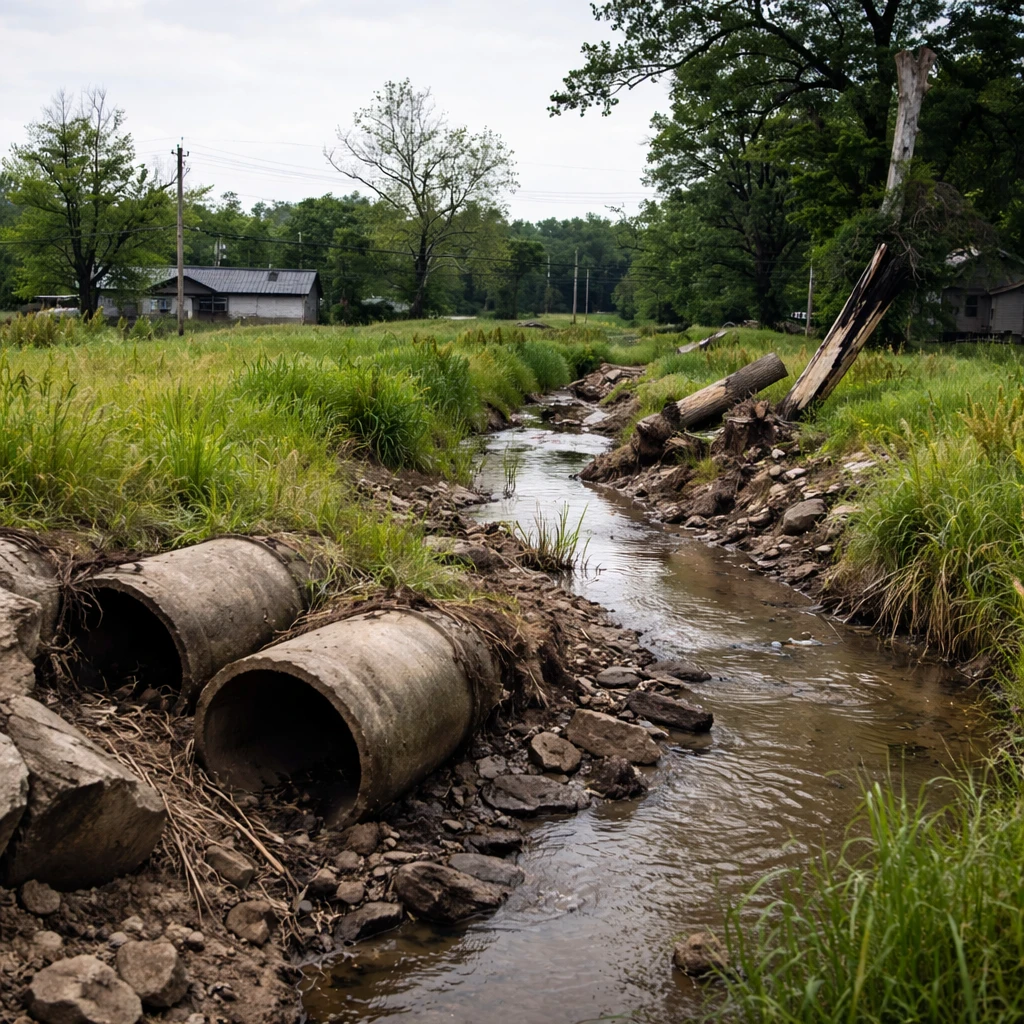
Across the United States, many communities are burdened with wastewater systems that are outdated and in poor condition, threatening both the wellbeing of residents and the integrity of their homes. Efforts to rectify these problems were bolstered by extensive financial commitments from the Bipartisan Infrastructure Law and policies under the Biden administration, promising hundreds of millions of dollars dedicated to improving wastewater infrastructure.

Despite these intentions, a significant portion of such funding has been rolled back since President Donald Trump assumed office. Some of these funding cuts coincide with a broader reduction in focus on programs promoting diversity, equity, and inclusion, initiatives that advocates warn are essential to addressing disparities in infrastructure. Given that many of the most severely degraded wastewater systems are located in impoverished communities, decreased assistance may widen existing inequalities.

Expanding on these concerns, at least 17 million Americans currently rely on approximately 1,000 wastewater systems nationwide that are in serious violation of the federal clean water standards at the points where they discharge into local waterways. Notably, around 2.7 million individuals are served by the most problematic subset of these systems, which are predominantly situated in rural areas and have a track record of consistent, repeated non-compliance with environmental guidelines. Customers of these systems tend to have household incomes that average nearly $12,000 less than the national mean, underscoring socioeconomic dimensions of the infrastructure challenges.

Moreover, the financial requirements to address not only water pollution but also flooding and water quality concerns in the coming 20 years have escalated significantly, now estimated to exceed $630 billion according to federal data examined by trade analysts.

This scenario illustrates the growing tension between aging infrastructure needs and the ability of economically strained communities to fund essential maintenance and upgrades. Without adequate investment and supportive policies, these systems continue to deteriorate, raising public health risks and threatening property values, particularly in lower-income and rural regions.

The rollback of planned federal funding and simultaneous deprioritization of equity-focused policies could hamper national efforts to modernize wastewater infrastructure, leaving vulnerable populations at heightened risk while complicating the broader goal of sustainable water management across the country.

Risks
  • Reduction in federal funding coupled with diminished diversity, equity, and inclusion efforts may intensify infrastructure disparities, particularly impacting economically disadvantaged and rural communities reliant on failing wastewater systems.
  • Ongoing underinvestment in wastewater infrastructure poses health and property risks for tens of millions of Americans, potentially leading to broader socioeconomic consequences.
  • The increasing financial burden for water infrastructure maintenance and upgrades might overwhelm local communities with limited economic capacity, risking further degradation and non-compliance with environmental standards.
Disclosure
This analysis is based exclusively on the data and information provided regarding U.S. wastewater infrastructure funding and conditions, without any additional external input or speculation.
Search Articles
Category
News & Politics

News & Politics

Related Articles
Amazon's Investment Propels Beta Technologies Stock in After-Hours Trading

Beta Technologies Inc, an aerospace company specializing in electric aircraft and propulsion systems...

Maximizing Your 401(k): Understanding the Power of Employer Matching

Overestimating investment returns can jeopardize retirement savings. While it's prudent to plan cons...

SoFi Shares Slip Slightly Despite Strong Q4 Earnings and Bullish Outlook

SoFi Technologies Inc’s stock saw a minor decline Tuesday afternoon following a period of heighten...

UBS Adjusts Tech Sector Outlook, Advocates Diversification Into Healthcare and Financials

UBS has revised its stance on the U.S. information technology sector from attractive to neutral, hig...

ArcelorMittal Advances Green Steel Production with Major Dunkirk Investment

ArcelorMittal's recent announcement of a €1.3 billion investment in an electric arc furnace (EAF) ...

Why Retirement Savings Remain Stagnant and How to Address Common Pitfalls

Many individuals find themselves concerned about the insufficient growth of their retirement account...