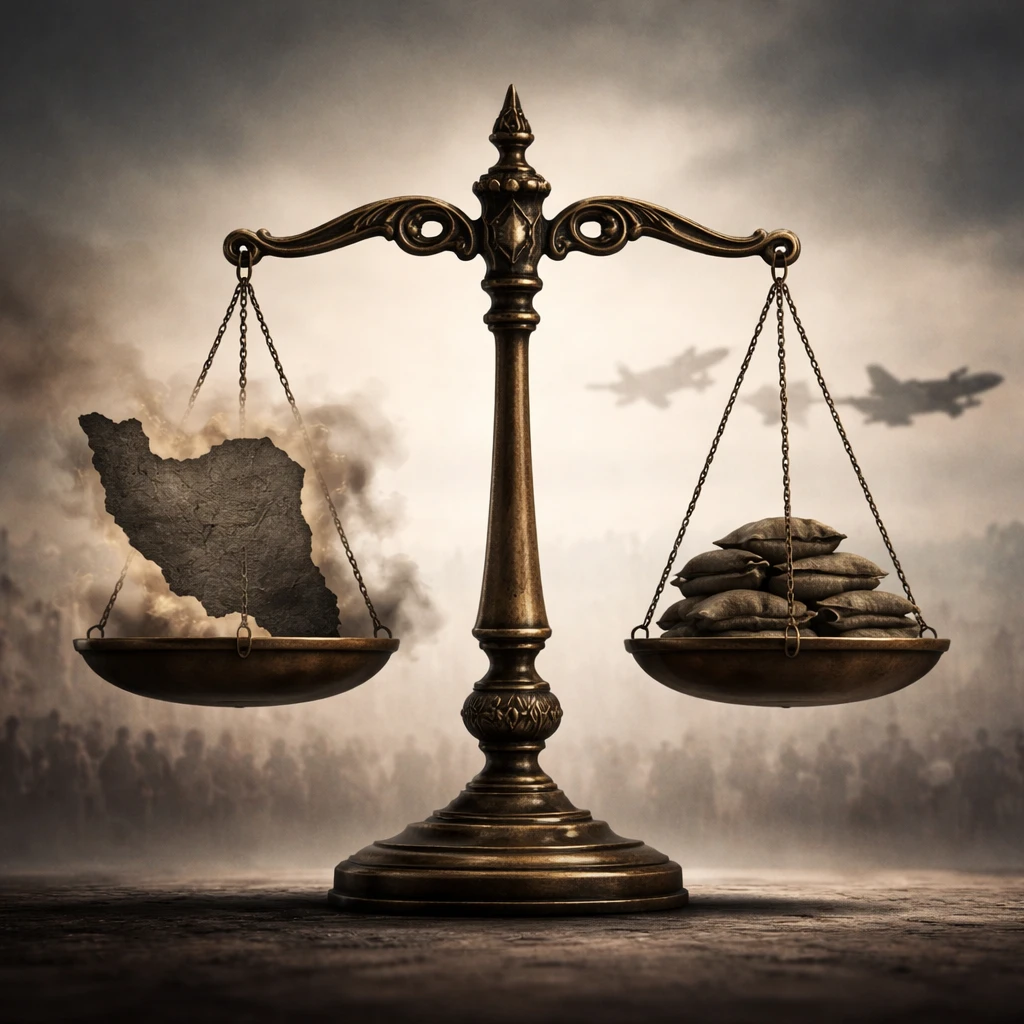

In the wake of severe domestic protests accompanied by a harsh government crackdown, Iran's ruling establishment faces mounting anxiety about the potential repercussions of a targeted US military strike. Insights from six current and former officials familiar with confidential deliberations reveal that top Iranian authorities believe such an attack could seriously destabilize their grip on power by reigniting widespread public dissent.
Senior political and security figures convened in multiple high-level meetings recently to directly communicate their concerns to Supreme Leader Ayatollah Ali Khamenei. Participants reported that the recent repression—which rights organizations have identified as the most violent unrest since the 1979 Islamic Revolution—has significantly weakened the populace's inclination to remain fearful. Instead, officials warned that fear "is no longer a deterrent" for many citizens who might once have been subdued.
In these discussions, officials cautioned that a substantial segment of the population appears ready to challenge security forces anew. They suggested that external actions, such as a constrained US military strike, might embolden the protesters further, potentially causing "irreparable damage" to Iran’s ruling framework. One official articulated the viewpoint that adversaries of Iran are actively aiming to fuel increased demonstrations with the goal of dismantling the Islamic Republic. However, this official also expressed concern that if an uprising were to occur, it could provoke a surge in violence.
These behind-the-scenes apprehensions stand in stark contrast to Tehran’s public posture, which projects defiance both toward domestic protesters and international actors, particularly the United States. This divergence highlights the regime's uncertainty beneath its outward expressions of control and resilience.
The concerns have emerged at a time when US President Donald Trump is reportedly considering several measures, including precision strikes targeting Iranian security units and senior personnel. The intended effect of such actions would be to "inspire" demonstrators and potentially weaken clerical authority. Nonetheless, officials from Israel and Arab states have cautioned that air strikes alone may not suffice to overthrow Iran’s political structure. Compounding these dynamics is the recent deployment of the USS Abraham Lincoln carrier strike group along with accompanying warships to the Middle East, substantially increasing the US’s operational capacity in the region should a decision to strike be made.
Analysts and former officials note that any resurgence of protests triggered by a US strike would be qualitatively different from the public reaction following last year’s Israeli and US attacks on Iranian nuclear sites. Those prior strikes did not spark mass demonstrations. However, the situation now appears more volatile as a result of the extensive January crackdown, which a United Nations expert and the US-based Human Rights Activists News Agency (HRANA) attribute with a death toll reaching into the thousands.
A former senior moderate official observed that the public mood has shifted dramatically toward open anger. "People are extremely angry," he stated, emphasizing that a military confrontation initiated by the US could become a catalyst for widespread street protests. "The wall of fear has collapsed. There is no fear left," he added.
This evolving environment in Iran suggests that the regime's traditional reliance on intimidation as a method of control is losing efficacy. The apprehension among leadership circles reflects an acute sensitivity to how external military actions might interact with, and intensify, internal pressures.
Key Points
- Iranian officials have acknowledged that public fear no longer prevents widespread protest activities after a recent violent crackdown.
- High-level meetings have conveyed grave concern to Supreme Leader Khamenei about the risk that a limited US military strike could exacerbate unrest.
- Tehran’s public expressions of defiance contrast with the internal worries of its leadership regarding regime stability amid ongoing internal dissent.
- The recent deployment of the USS Abraham Lincoln strike group enhances US military options in the Middle East, potentially influencing Iran’s domestic dynamics.
Risks and Uncertainties
- A limited US strike may unintentionally galvanize protesters, leading to greater civil unrest and violence.
- The potential for "irreparable damage" to the ruling system raises questions about the regime’s ability to maintain control under combined internal and external pressure.
- The absence of fear as a deterrent complicates regime tactics for managing dissent, potentially resulting in unpredictable escalation.
- It remains uncertain whether military actions alone, without broader strategic efforts, will produce significant political change within Iran.