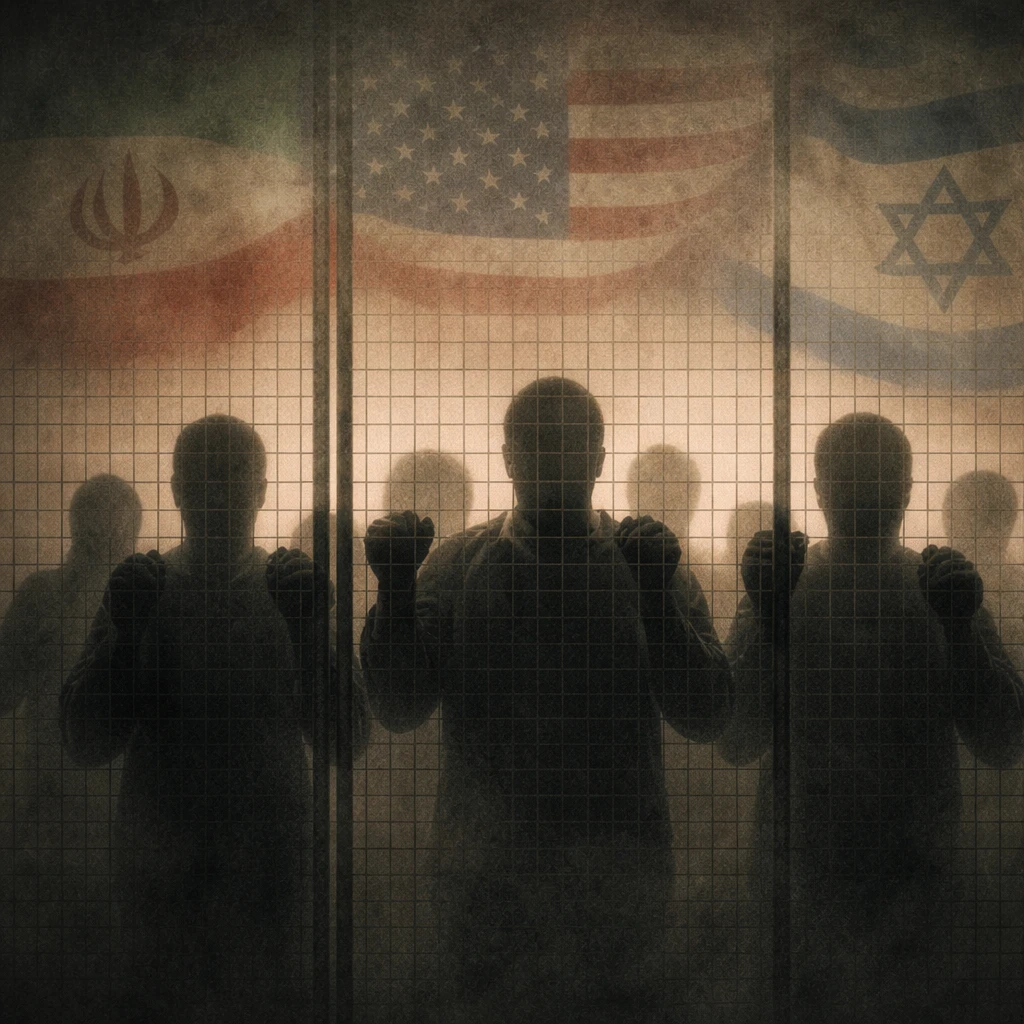

In a notable escalation of political repression, Iranian authorities apprehended four senior reformist political figures between late Sunday and early Monday. The detainees include Azar Mansouri, who leads the Reformists Front, and Mohsen Aminzadeh, a former diplomat. These arrests coincide with sustained anti-government protests and a period of intensified military-related threats perceived from the United States and Israel.
The judicial system's formal allegations assert that those arrested orchestrated activities aimed at disrupting Iran's political and social fabric. Reporting from regional media outlets confirms the involvement of the Islamic Revolutionary Guard Corps in executing a judicial order that led to Mansouri's arrest at her residence. The Reformist Front has officially confirmed the detentions.
Government's Intensified Measures Against Opposition
These arrests follow a wave of unrest that originated in January, initially sparked by economic difficulties that broadened into sweeping antigovernment demonstrations. Iranian officials have continuously asserted that foreign interference, primarily from Israel and the United States, fuels these protests. Authorities have labeled the protestors as extremists or terrorists, attributing the turmoil to external forces bent on destabilizing the regime.
Besides Mansouri and Aminzadeh, who once served as deputy foreign minister, Ebrahim Asgharzadeh, a former member of parliament, is also among those charged with serious offenses alleged by the judiciary. The nature of the accusations relates closely to conspiracy and efforts to provoke instability under the pretext of foreign collaboration.
The Closing of Political Space
Experts analyzing the situation interpret the arrests as indicative of a governmental strategy to extinguish political dissent. Sina Azodi, director of the Middle East Studies program at George Washington University, remarked that the ruling Islamic Republic appears committed to governing through intensified crackdowns and generating fear among political dissidents. This approach represents a notable departure from any prior tolerance of oppositional voices within the system.
The crackdown has exacerbated diplomatic strain between Iran and Washington. Despite the ongoing tension, diplomatic dialogues continue, albeit under a cloud of mutual suspicion and unresolved disputes. Notably, previous threats from the U.S. President towards Iran over protestor treatment catalyzed indirect talks in Oman, reflecting a complicated interplay between confrontation and negotiation.
Continued Negotiations Amid Heightened Repression
Despite the recent intensification of political suppression, official negotiations between the Iranian government and the United States remain scheduled, with forthcoming sessions planned for the following week. Iran’s parliamentary official, Masoud Pezeshkian, described these talks as progress, emphasizing a preference for sustained engagement over confrontation.
Further complicating the geopolitical landscape, Phyllis Bennis, a fellow at the Institute for Policy Studies, indicated that while the arrests may not directly influence ongoing nuclear negotiations, their timing coincides with heightened regional tensions and planned diplomatic visits, including that by Israeli Prime Minister Benjamin Netanyahu to the United States.
This juxtaposition of stringent domestic repression with efforts at diplomatic dialogue underscores the multifaceted challenges confronting Iran as it navigates internal stability concerns alongside external diplomatic pressures.