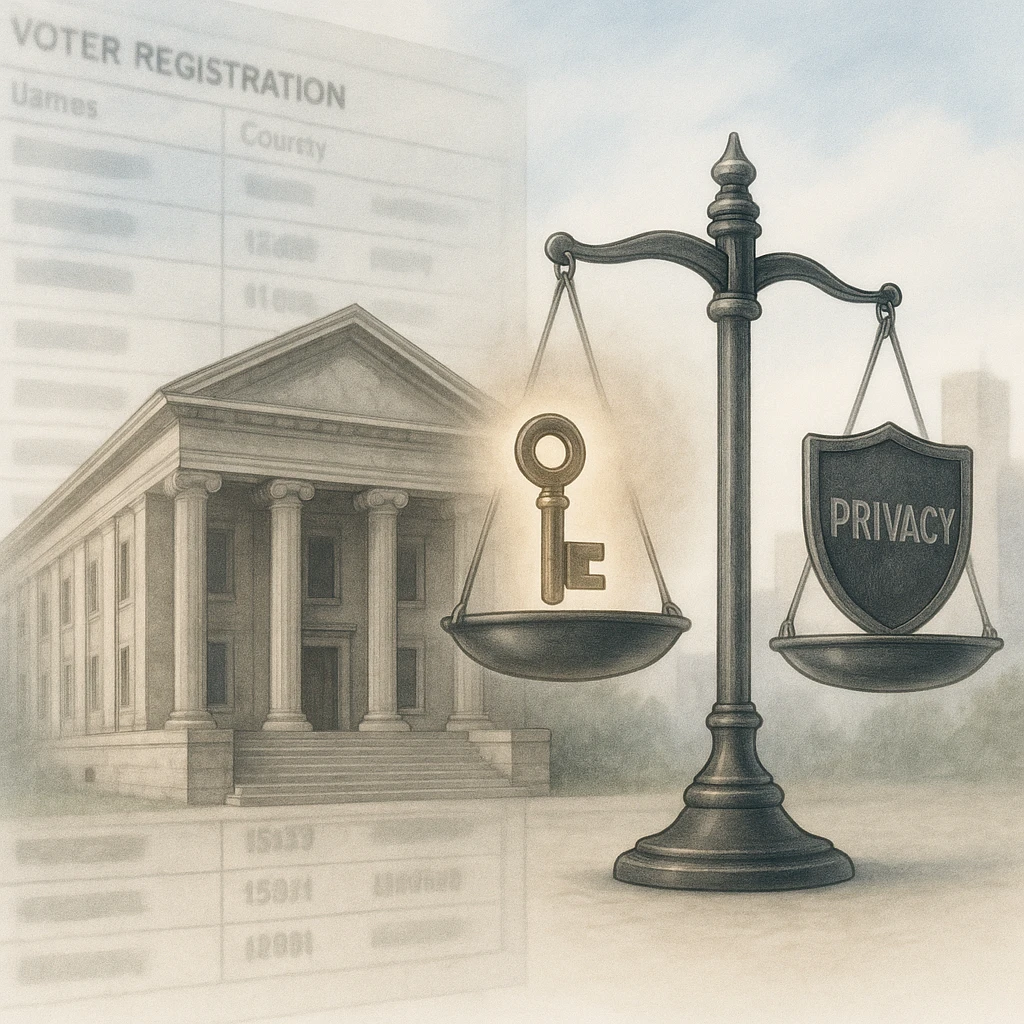

The Department of Justice (DOJ) has intensified its legal efforts to obtain extensive voter records from states and local jurisdictions, filing lawsuits against four states—Colorado, Hawaii, Massachusetts, and Nevada—as well as taking legal action against Fulton County in Georgia. These developments mark an expansion of the DOJ’s campaign to compel the release of sensitive voter data from 18 states in total, a number which has grown over recent months.
These actions predominantly target states led by Democratic officials and those States where former President Donald Trump did not secure victory during the 2020 presidential election. The DOJ claims that gaining access to this information is essential to ensuring adherence to federal laws requiring states to maintain accurate voter rolls.
The requested data from states includes full, unredacted voter registration lists containing personal identifying information such as driver’s license numbers and partial Social Security numbers. The Justice Department has justified these demands as necessary for validating the integrity of voter registration records to enforce federal election laws effectively.
However, numerous states have declined to provide such sensitive data, citing state statutes and privacy concerns that prohibit the sharing of this information. This has led to multiple lawsuits aimed at compelling compliance with federal requests.
The most recent suits announced by the Justice Department involve Colorado, Hawaii, Massachusetts, and Nevada. Assistant Attorney General for Civil Rights Harmeet Dhillon emphasized the department’s position, stating, “We will not permit states to jeopardize the integrity and effectiveness of elections by refusing to abide by our federal elections laws. If states will not fulfill their duty to protect the integrity of the ballot, we will.”
Alongside state-level actions, the DOJ has also filed suit against Fulton County, Georgia. The department is seeking comprehensive access to ballots and related records from the 2020 election held in the county, a critical location in the election and a focal point of debunked allegations of fraud advanced by Trump and his supporters.
This lawsuit closely followed the dismissal of a highly publicized election interference case against Trump and associated individuals, initially initiated by local county prosecutors in Fulton County but terminated last month.
State officials have been vocal in resisting the DOJ’s demands. In Colorado, Secretary of State Jena Griswold, a Democrat campaigning for attorney general, publicly opposed the DOJ’s lawsuit by asserting that the state would not surrender the sensitive voting records of its residents to the former president, whom she stated lacks the legal right to the data. She pledged to defend Colorado’s elections and democracy vigorously in court.
The DOJ’s lawsuit against Colorado arises amid recent related events, including former President Trump’s social media announcement pardoning Tina Peters—a former Colorado county clerk currently serving a state sentence for unauthorized access to voting systems—in connection with investigations into the 2020 election. It is important to note Peters was convicted under state law, and federal pardoning authority does not extend to state convictions; in Colorado, this power lies with the state governor.
Furthermore, the DOJ has recently declared it will conduct a review of Colorado’s prison system, though how this relates to the broader voter data litigation has not been detailed.
In recent statements, Assistant Attorney General Dhillon also promoted the department's use of a citizenship verification tool maintained by the Department of Homeland Security. This system is being employed to analyze voter records for noncitizen registrations; however, it has reportedly also flagged American citizens incorrectly.
These legal contests underscore the continued friction between the federal government and states over election administration, data privacy, and the balance between election security and voter confidentiality. The outcomes remain uncertain as states proceed to defend their laws and protect sensitive voter information from federal access demands.