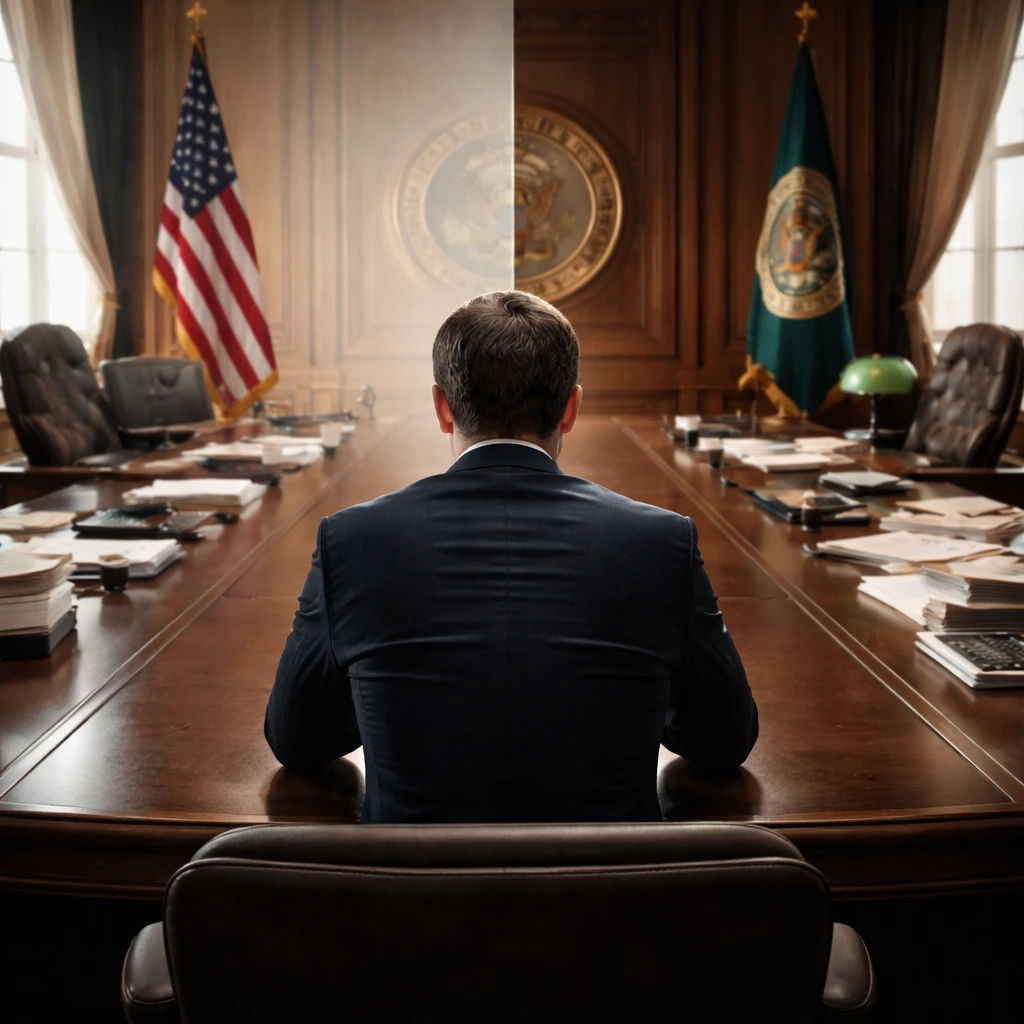
Since the announcement late last week, financial analysts and Federal Reserve experts have been examining Kevin Warsh’s background with keen interest to anticipate the approach he might take if confirmed as the next Federal Reserve chair. However, focusing heavily on Warsh’s academic and professional résumé risks overlooking a critical issue: the political context in which his nomination occurs. The underlying challenge stems not from Warsh’s qualifications, but from the fact that President Donald Trump, who has publicly demanded strict adherence to his policy views from the Fed chair, is the one making the appointment.
President Trump’s stance on Federal Reserve independence is clear. In December, he unequivocally declared via social media that the Fed chair must align with his perspectives, stating, “Anybody that disagrees with me will never be the Fed Chairman!” This unprecedented demand sets a high bar that no Fed chair has traditionally faced, given the institution’s long-established principle of independence from direct political control.
The role of the Fed chair is singularly important within the U.S. government, bearing significant influence over national and global monetary policy. Despite this, the chair is one voice among twelve on the Federal Open Market Committee (FOMC) and cannot unilaterally dictate policy. Warsh, if confirmed, would need to navigate a fraught path: convincing financial markets of the Fed’s independence while simultaneously assuring the president he remains firmly under his influence. This dual mandate is intrinsically conflicting and presents a near-impossible balancing act.
Last week, President Trump announced Warsh as his nominee to succeed Jerome Powell, whose chairmanship officially concludes in May. Warsh’s credentials are notable — he attended Stanford University, earned a law degree from Harvard, worked at Morgan Stanley, and was the youngest ever appointed to the Fed Board of Governors. Trump himself described him as the archetypal candidate, fit for the role in a conventional sense.
Initial market reaction to the nomination was cautiously positive, reflecting relief that Trump avoided appointing a divisive partisan figure. The selection of Warsh was seen as a nod to institutional stability. However, scrutiny quickly resurfaced as analysts revisited Warsh’s track record, drawing attention to his past monetary policy stances. He has been characterized as hawkish — tending to favor higher interest rates — and has faced criticism for his misjudgment of the recovery following the 2008 financial crisis. Additionally, observers noted a marked shift in his public inflation risk assessments coinciding with Trump’s re-election, raising questions about the consistency of his views.
By the start of the week, concerns over Warsh’s past policy inclinations had largely receded amid uplifting U.S. manufacturing data, which boosted investor confidence and propelled stocks near record highs. Yet the overarching political dynamics remain largely unaltered.
President Trump has never concealed his desire for lower interest rates as a lever to stimulate the economy, explicitly linking his expectations to the Federal Reserve’s operations. Should he have had the ability to dismiss Powell and replace him with a firm loyalist without risking market turmoil, it is believed he would have done so already.
However, Trump's policy decisions are tempered by advisors such as Treasury Secretary Scott Bessent, who recognize the dangers of antagonizing bond markets. Against this backdrop, Trump’s attempts to exert influence have included actions perceived as political maneuvers, such as targeting Fed officials. Notably, he has repeatedly threatened to remove Powell, labeled him a greater threat to America than foreign adversaries, and sought to dismiss Fed governor Lisa Cook based on allegations that remain legally contested. Further intensifying tensions, the Justice Department launched a criminal investigation into the Fed's expenditure on its headquarters, an action widely interpreted as an escalation of Trump’s pressure on the central bank and one that elicited a rare public condemnation from Powell himself.
Warsh is acutely aware of these challenges and pressures yet has accepted the nomination for one of the most influential economic positions worldwide. If confirmed by the Senate, he will assume office with full cognizance of the president’s expectations and the extent to which Trump is willing to leverage power if those expectations are not met.
Warsh’s tenure as Fed chair would unfold under an extraordinary set of constraints, between the institutional obligations of the Federal Reserve and the personal demands of the President, a scenario that elevates the difficulty and complexity of the role well beyond normal parameters.