
As the political landscape in the United States continues to evolve in early January, a series of occurrences are drawing national attention and potentially foreshadowing significant shifts in governance and public policy. The outcomes of forthcoming state elections could considerably affect the remaining term of President Donald Trump and illuminate possibilities for the political environment afterward. Concurrently, multiple pressing issues across immigration enforcement, international conflict, socio-political unrest overseas, housing market dynamics, and White House infrastructure developments are shaping discussions.
Heightened Immigration Enforcement Incidents Spark Local Unrest
Recent incidents involving federal immigration agencies have intensified tensions in two American cities, leading to public demonstrations and calls for scrutiny. In Minneapolis, following the fatal shooting of a 37-year-old United States citizen by an Immigration and Customs Enforcement (ICE) officer, residents have taken to the streets demanding the cessation of the Trump administration's immigration enforcement efforts within the city. Despite public outcry, the White House maintains a stance defending the actions taken by the ICE officer involved.
Simultaneously, in Portland, Oregon, a married couple sustained injuries requiring hospitalization after being shot by Border Patrol agents during the execution of a traffic stop. According to a law enforcement source, the officers fired upon the couple after the latter allegedly attempted to strike them with their vehicle. Portland's mayor has publicly urged ICE to halt all operations within city limits pending a comprehensive investigation of the incident.
Congressional Moves to Restrict Presidential Military Authority in Venezuela
Amid growing uncertainty regarding President Trump's subsequent actions in the escalating conflict involving Venezuela, lawmakers have initiated efforts aimed at limiting the president's unilateral capacity to engage militarily. A bipartisan group comprising several Republicans and Democrats collectively advanced a resolution designed to restrict future deployment of US military forces to Venezuela without explicit congressional authorization. Although the measure's ultimate passage remains uncertain, the vote serves as a symbolic critique of the executive's recent decision to conduct a strike in Venezuela and capture President Nicolás Maduro without congressional consent.
Iran Experiences Nationwide Communication Blackout Amid Protests
Iran has undergone an extensive internet and telephone line shutdown coinciding with widespread anti-government demonstrations, which arose in response to ongoing economic challenges and stringent security measures. Despite the government's attempt to disrupt communication networks shortly after protest activities erupted in Tehran and other major urban centers, video footage of the protests has continued to circulate online. Human rights organizations report that at least 45 protesters have lost their lives since the demonstrations began, with hundreds more injured and over 2,000 detainees documented. The disruption highlights the government's efforts to control information flow amid increasing domestic dissent.
Debate Intensifies Over Institutional Investors' Impact on Housing Affordability
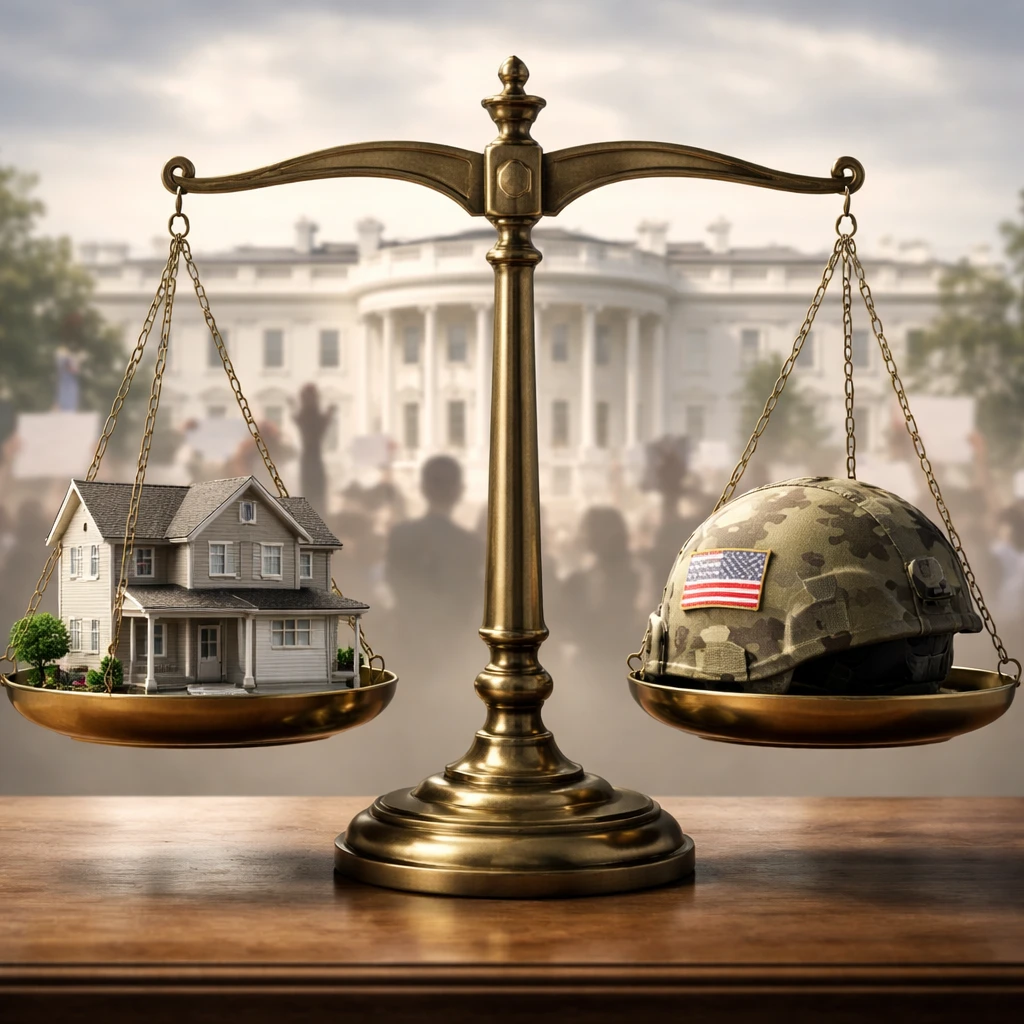
President Trump has voiced intentions to prohibit large institutional investors from purchasing single-family homes, citing concerns over the strain their acquisitions place on individual American homebuyers. This policy proposal responds to the growing trend of corporations such as Blackstone, JPMorgan Chase, and other financial entities acquiring family residences to repurpose them as rental properties. Critics contend that this practice inflates home prices and diminishes affordability for typical buyers. Conversely, some housing market experts assert that such measures may exert limited influence on the overall availability of housing stock. It is noteworthy that the cost of homeownership in the US has surged considerably, driven by historically low inventory and mortgage rates currently exceeding 6%. Data from the National Association of Home Builders indicates a near 55% nationwide increase in home prices from early 2020 through the third quarter of 2025.
Expansion and Renovation of White House Facilities Underway
New information has emerged regarding the renovation plans encompassing the White House's East and West Wings. Central components of the East Wing expansion include the addition of a "grand stair" and a sizable ballroom measuring approximately 22,000 square feet, capable of accommodating 1,000 guests. The complete expansion spans roughly 89,000 square feet. In the West Wing, a second story is being constructed on the Colonnade, intended to echo the East Wing's design following the demolition of the previous structure in the prior year. Architect Shalom Baranes has provided detailed insights into the project's magnitude, which has met with some reservations from the National Capital Planning Commission. Construction activity above ground is projected to commence around April.
These developments across various domains collectively represent ongoing shifts in US governance, societal challenges, and governmental infrastructure adaptation as the nation progresses through the initial month of the year.