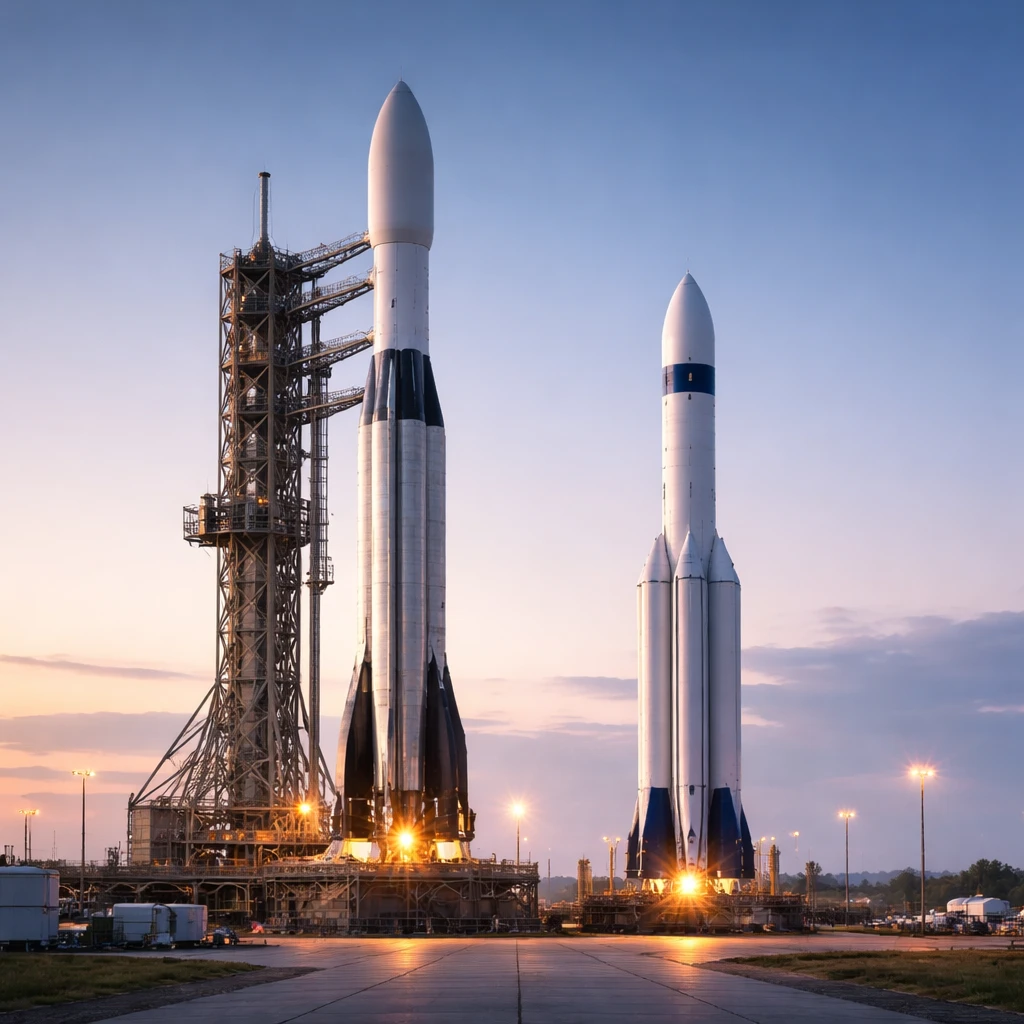

Elon Musk's SpaceX is poised for an initial public offering (IPO) in 2026, with investors anticipating a valuation around $1.5 trillion. Musk himself owns 42% of SpaceX and, combined with his existing $484 billion net worth, this IPO could establish him as the world's first trillionaire. Despite public skepticism about billionaire wealth, investor demand for SpaceX shares is expected to be extremely high, driven by the company's track record as a dominant player in the global space industry.
However, analysts voice concerns about SpaceX's anticipated IPO price, which could be nearly 70 times its annual sales—an extremely lofty valuation that may be difficult to justify. In contrast, investors seeking exposure to the rapidly evolving private space sector might consider a more affordable alternative: China's LandSpace. This private company aims to bring a comparable space launch business to market at a fraction of SpaceX’s valuation.
Founded in 2015, LandSpace represents one of China's leading private space enterprises, alongside firms such as iSpace, Galactic Energy, and Space Pioneer. Although younger by over a decade compared to SpaceX and somewhat behind in technological milestones, LandSpace is increasingly viewed as a domestic counterpart to SpaceX.
LandSpace's flagship product has been the Zhuque-2 rocket, powered by liquid oxygen and liquid methane. First launched into orbit in 2013, Zhuque-2 has completed multiple flights since that time. The company’s latest development, the Zhuque-3 rocket, takes inspiration directly from SpaceX's successful Falcon 9 vehicle. Zhuque-3, which achieved orbit in December 2025, is designed with reusability in mind but experienced a crash during its landing attempt—mirroring early challenges faced by SpaceX’s reusable rockets.
LandSpace plans to build on this progress in 2026, aiming to conduct as many as twelve launches and a similar number of landing attempts to refine their reusable rocket technology. Should the company replicate SpaceX’s trajectory, at least one successful reflown rocket is expected this year. The Zhuque-3 bears several design similarities to the Falcon 9: both are two-stage rockets outfitted with nine engines on the first stage, equipped with grid fins and landing legs intended for vertical landings. Additionally, Zhuque-3 is constructed from stainless steel, akin to SpaceX's Starship, to enhance heat resistance and structural strength during atmospheric reentry. Payload capacity for Zhuque-3 ranges between 8 to 12 tons into Low Earth Orbit, slightly lighter than Falcon 9 but within a comparable range.
Successfully landing and reflighting Zhuque-3 in 2026 would position LandSpace within eleven years of SpaceX’s initial Falcon 9 landing milestone—a noteworthy achievement for a company still relatively young and less developed. Still, catching up to the rate and scope of SpaceX's current operations remains a significant challenge. SpaceX now undertakes more than 150 Falcon 9 flights annually while simultaneously advancing lunar lander projects, testing numerous Starship spacecraft, and expanding the Starlink broadband satellite constellation. LandSpace still has considerable ground to cover before reaching such scale.
Regarding its planned public offering, LandSpace has received regulatory approval to list on Shanghai Stock Exchange's STAR Market in early 2026. Financially, the company remains unprofitable to date, reporting revenues of approximately 36.4 million yuan ($5 million) in the first half of 2025 against losses of 87.6 million yuan. However, it boasts significant momentum, with revenue growing eightfold compared to the same period in 2024. LandSpace’s IPO aims for a valuation near $1 billion, making it roughly 1,500 times cheaper than SpaceX's expected valuation.
While LandSpace does not yet match SpaceX’s technological maturity or profitability and continues to trail in innovation and operational scale, it represents a lower-cost entry into the burgeoning commercial spaceflight industry. For investors interested in space ventures outside the United States, LandSpace offers a promising, if riskier, avenue that leverages China's growing capabilities and aspirations in this sector.
However, analysts voice concerns about SpaceX's anticipated IPO price, which could be nearly 70 times its annual sales—an extremely lofty valuation that may be difficult to justify. In contrast, investors seeking exposure to the rapidly evolving private space sector might consider a more affordable alternative: China's LandSpace. This private company aims to bring a comparable space launch business to market at a fraction of SpaceX’s valuation.
Founded in 2015, LandSpace represents one of China's leading private space enterprises, alongside firms such as iSpace, Galactic Energy, and Space Pioneer. Although younger by over a decade compared to SpaceX and somewhat behind in technological milestones, LandSpace is increasingly viewed as a domestic counterpart to SpaceX.
LandSpace's flagship product has been the Zhuque-2 rocket, powered by liquid oxygen and liquid methane. First launched into orbit in 2013, Zhuque-2 has completed multiple flights since that time. The company’s latest development, the Zhuque-3 rocket, takes inspiration directly from SpaceX's successful Falcon 9 vehicle. Zhuque-3, which achieved orbit in December 2025, is designed with reusability in mind but experienced a crash during its landing attempt—mirroring early challenges faced by SpaceX’s reusable rockets.
LandSpace plans to build on this progress in 2026, aiming to conduct as many as twelve launches and a similar number of landing attempts to refine their reusable rocket technology. Should the company replicate SpaceX’s trajectory, at least one successful reflown rocket is expected this year. The Zhuque-3 bears several design similarities to the Falcon 9: both are two-stage rockets outfitted with nine engines on the first stage, equipped with grid fins and landing legs intended for vertical landings. Additionally, Zhuque-3 is constructed from stainless steel, akin to SpaceX's Starship, to enhance heat resistance and structural strength during atmospheric reentry. Payload capacity for Zhuque-3 ranges between 8 to 12 tons into Low Earth Orbit, slightly lighter than Falcon 9 but within a comparable range.
Successfully landing and reflighting Zhuque-3 in 2026 would position LandSpace within eleven years of SpaceX’s initial Falcon 9 landing milestone—a noteworthy achievement for a company still relatively young and less developed. Still, catching up to the rate and scope of SpaceX's current operations remains a significant challenge. SpaceX now undertakes more than 150 Falcon 9 flights annually while simultaneously advancing lunar lander projects, testing numerous Starship spacecraft, and expanding the Starlink broadband satellite constellation. LandSpace still has considerable ground to cover before reaching such scale.
Regarding its planned public offering, LandSpace has received regulatory approval to list on Shanghai Stock Exchange's STAR Market in early 2026. Financially, the company remains unprofitable to date, reporting revenues of approximately 36.4 million yuan ($5 million) in the first half of 2025 against losses of 87.6 million yuan. However, it boasts significant momentum, with revenue growing eightfold compared to the same period in 2024. LandSpace’s IPO aims for a valuation near $1 billion, making it roughly 1,500 times cheaper than SpaceX's expected valuation.
While LandSpace does not yet match SpaceX’s technological maturity or profitability and continues to trail in innovation and operational scale, it represents a lower-cost entry into the burgeoning commercial spaceflight industry. For investors interested in space ventures outside the United States, LandSpace offers a promising, if riskier, avenue that leverages China's growing capabilities and aspirations in this sector.