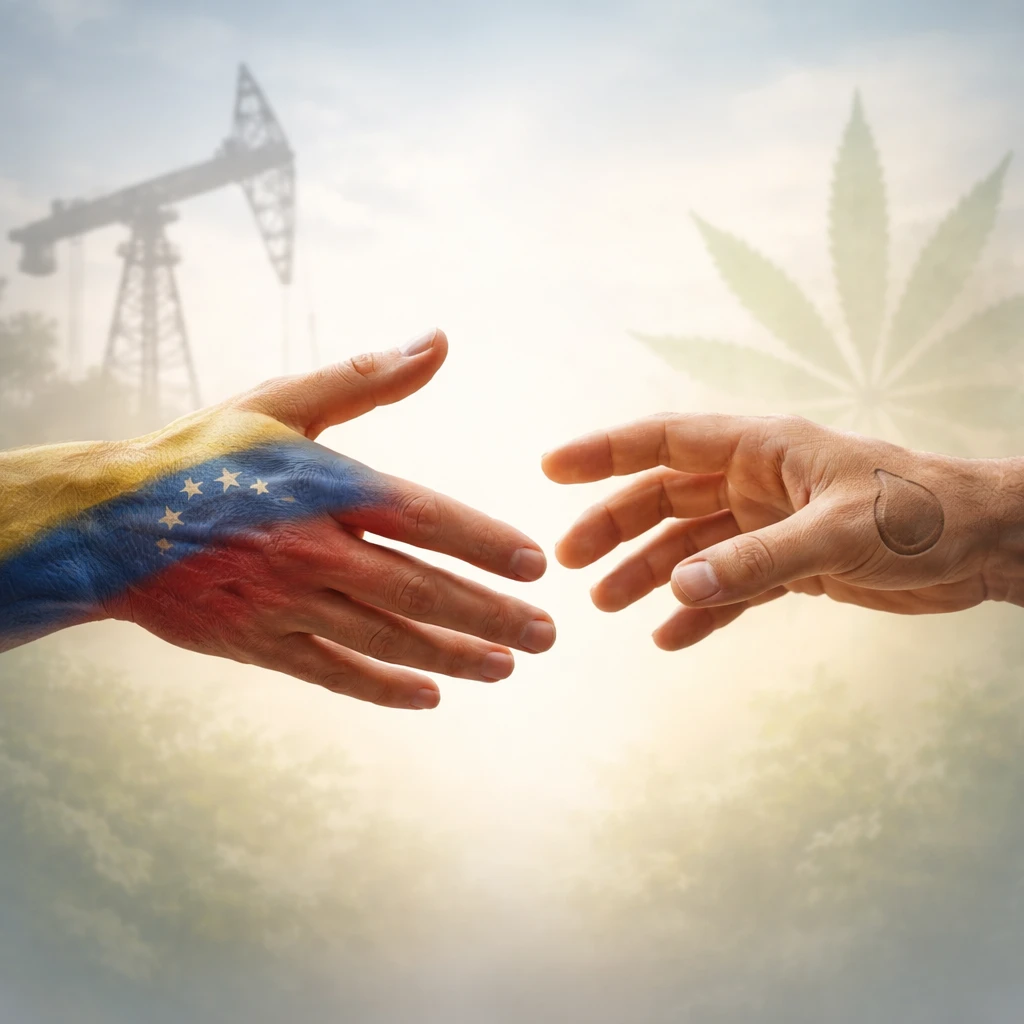
President Nicolas Maduro of Venezuela has officially declared his government’s willingness to enter earnest negotiations with the U.S. administration focused on two critical areas: drug trafficking control and the prospective development of Venezuela’s vast oil reserves. This statement was made during an in-depth interview with Spanish journalist Ignacio Ramonet, released publicly on Thursday.
Maduro’s declaration takes place against the backdrop of mounting tensions between Venezuela and the United States, which has recently intensified its pressure campaign. The U.S. Southern Command has escalated military activity in the region, including the aggressive targeting and destruction of boats said to be involved in drug smuggling operations. Furthermore, U.S. authorities have enforced a maritime blockade against oil tankers sanctioned under existing restrictive measures.
Accusing Washington of seeking regime change and the appropriation of Venezuela's oil assets, Maduro criticized the U.S. for deploying drone strikes within Venezuelan territory. Among these operations was a recent drone assault on a port facility purportedly utilized by a Venezuelan criminal organization for narcotics storage. Since early September, U.S. strikes related to anti-drug efforts within Venezuela have reportedly resulted in at least 115 fatalities across 35 incidents targeting suspected drug cartel entities.
Despite the heightened hostilities and condemnations, President Maduro has expressed a willingness to continue dialogue with the United States, emphasizing that discussions could extend to topics such as the controversial CIA drone attack. Concurrently, U.S. actions have extended to intercepting Venezuelan oil shipments in international waters and the seizure of the largest oil tanker near Venezuelan coastal regions, provoking strong objections from Venezuelan officials.
Venezuela’s envoy to the United Nations has labeled these U.S. interventions as an unprecedented extortion effort and described the activities as an ongoing large-scale act of aggression. In response to these developments, Venezuela has received affirmations of support from allies. Russia reiterated its backing of the Venezuelan government’s sovereignty, and Belarus declared its willingness to provide refuge to Maduro, reiterating his welcome.
President Maduro’s overture for discussions with the United States underscores a complex and fraught relationship marked by mutual antagonism as well as potential avenues for negotiation on matters of shared concern—namely narcotics control and energy resource management. The evolution of these talks, if they proceed, could hold significant implications for stability and cooperative engagement between the two nations.