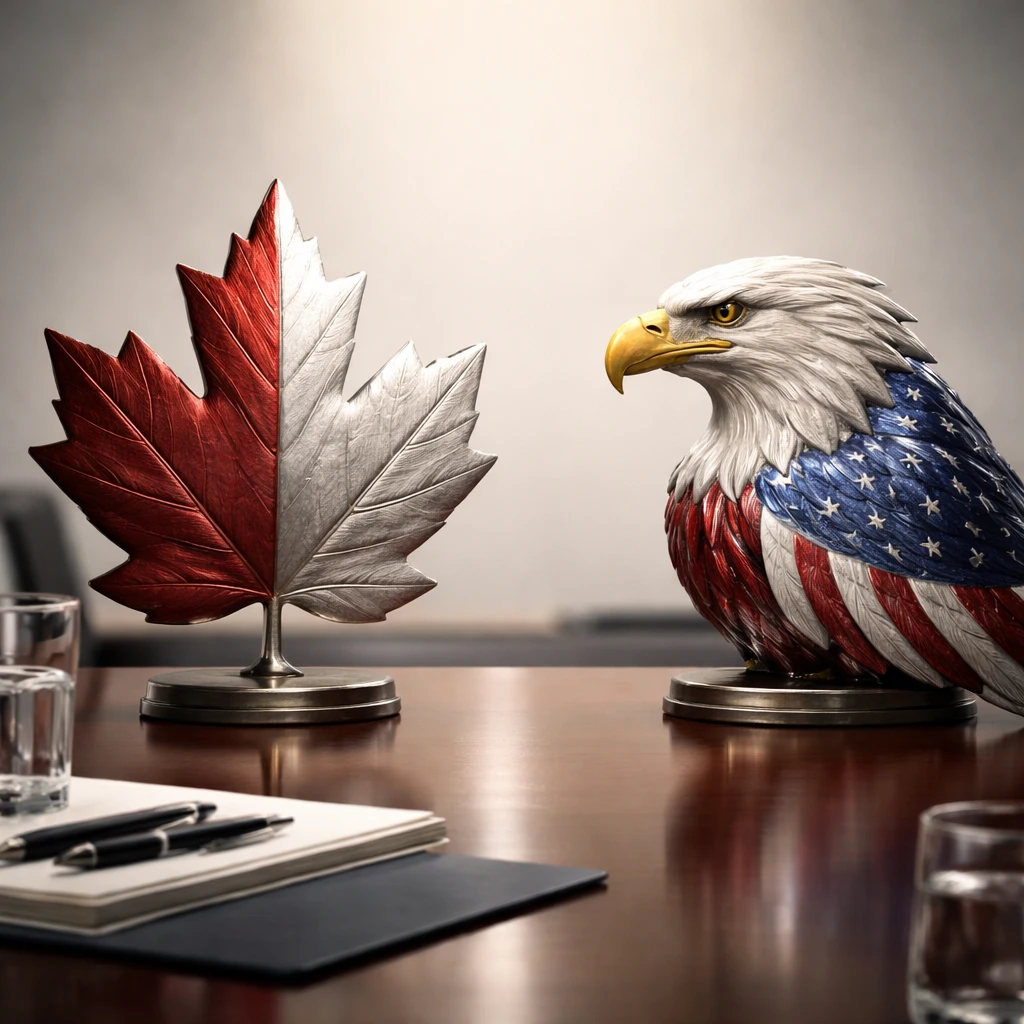
Canadian Prime Minister Mark Carney has publicly rebuffed assertions that he softened or withdrew his earlier statements delivered at the World Economic Forum held in Davos, Switzerland. During a recent telephone conversation with President Donald Trump, some reports suggested Carney retreated from his World Economic Forum remarks; however, Carney clarified these claims unequivocally.
Speaking to CBC on Tuesday, Carney was emphatic, stating, "To be absolutely clear, and I said this to the president, I meant what I said in Davos." This declaration underlines Carney’s steadfastness regarding the speech he gave at the global event, dispelling narratives implying he had altered his stance during talks with the U.S. president.
In further elaboration on the conversation he had with President Trump, the Canadian prime minister described it as "very good," during which the leaders exchanged views on a variety of subjects. These included critical geopolitical topics such as Arctic security to which Canada attaches significant strategic importance. Additionally, the situations in Ukraine and Venezuela were discussed, reflecting the broader scope and global interests informing their dialogue.
Beyond these international matters, Carney conveyed to Trump details about Canada's supportive position on the evolving American trade policies. He highlighted Canada's recent trade achievements, noting a series of agreements finalized over the past six months. Specifically, Canada has secured 12 new trade deals spanning four continents, a fact the prime minister shared to underscore the country’s active efforts in diversifying and expanding its international economic partnerships.
Carney noted that President Trump appeared impressed by these developments, suggesting positive reception despite underlying tensions. Furthermore, their conversation touched upon the upcoming scheduled review of the United States-Mexico-Canada Agreement (USMCA). Carney revealed that Canada intends to use this review period to explore new avenues for bilateral cooperation with U.S. partners, aiming to nurture and strengthen trade relationships further.
The prime minister's firm denials came in direct response to statements made by U.S. Treasury Secretary Scott Bessent. During an interview on Fox News with Sean Hannity, Bessent claimed that Carney had retracted his earlier Davos assertions over the course of the phone call with President Trump, which Bessent reportedly observed firsthand in the Oval Office.
At the Davos forum, Carney had issued a stark warning regarding the current state of the global order. He indicated that the international system led by the U.S. had effectively ended, urging middle powers like Canada to consolidate their positions collaboratively or risk being marginalized by more dominant nations. The tension between this conviction and potential diplomatic consequences forms a complex backdrop to subsequent interactions with the U.S. administration.
This episode unfolds amid heightened trade friction between Canada and the United States. Recently, President Trump threatened to impose a 100% tariff on imports originating from Canada. The rationale offered was that Canada’s trade agreement with China creates a loophole allowing Chinese goods to enter the U.S. market indirectly through Canada, describing Canada as a "Drop Off Port" for Chinese imports.
Earlier developments added to this strain, including Trump's revocation of an invitation extended to Canada to join his "Board of Peace" initiative. This decision followed Carney’s remarks at Davos and occurred while financial arrangements associated with Canada’s potential participation were still under negotiation.
The combination of these events has deepened diplomatic differences between the neighboring countries at a challenging time for trade relations. The situation has drawn critical attention from experts such as China strategist Michael Pillsbury, who warned that Canada's engagement with China through trade agreements and Carney's decision to bypass direct collaboration with Trump might have substantial repercussions for Canada's international trade standing.