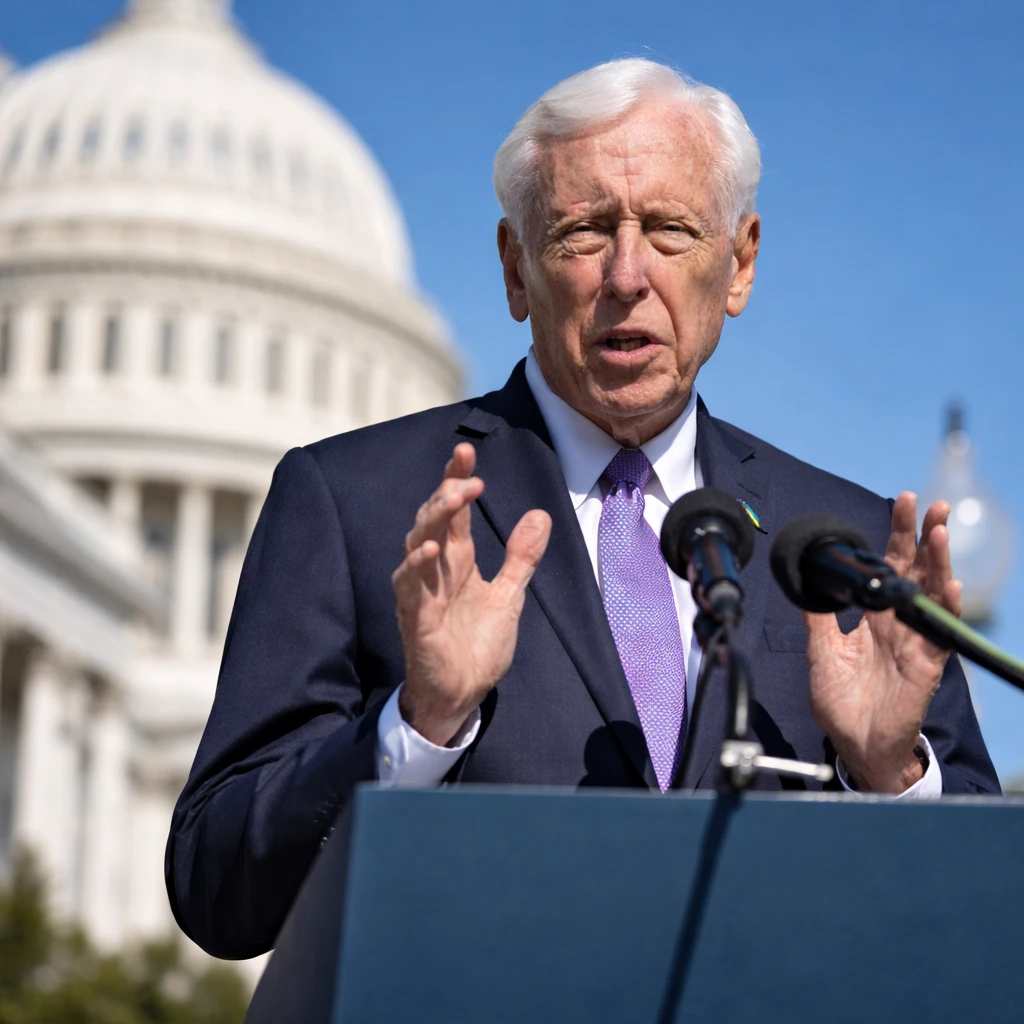

Maryland Congressman Steny Hoyer Plans Retirement After Latest Congressional Term
January 8, 2026
News & Politics

Maryland Congressman Steny Hoyer Plans Retirement After Latest Congressional Term

Veteran Democratic leader to step down amid generational shift in House leadership

Summary

Rep. Steny Hoyer of Maryland, the longest-serving member of the Democratic caucus and a former House majority leader, will retire at the conclusion of his current term. Hoyer, who has played a key role in Democratic leadership and legislative achievements over several decades, announced his departure in a forthcoming speech on the House floor and confirmed plans in an interview. His retirement aligns with a broader transition as senior congressional figures step back ahead of upcoming midterm elections.

Key Points

Steny Hoyer, the longest-serving Democrat in the House, will retire at the end of his current term.
Hoyer has held high-ranking leadership roles including House majority leader during Democratic majorities post-2006 and 2019 elections.
This retirement is part of a larger wave of senior congressional leaders stepping down ahead of the November midterm elections, signaling a generational leadership transition.

Steny Hoyer, the Maryland representative who holds the distinction of being the longest-serving Democrat in Congress and a significant figure in party leadership, is set to retire at the end of his ongoing term. This announcement was scheduled to be made in a speech on the House floor, which was disclosed by an informed source who requested anonymity. Hoyer himself shared the news on social media, urging followers to "tune in," and confirmed his decision during a conversation with The Washington Post.

At 86 years old, Hoyer's retirement marks a notable moment within a trend where some of the most senior congressional leaders are stepping aside. This trend unfolds as new members of Congress prepare to take on governing roles amid a season characterized by widespread retirements on both sides of the aisle in anticipation of November's midterm elections, which will determine congressional control.

Representative Hoyer began his tenure in the House in 1981 after winning a special election and rapidly extended his influence well beyond his Chesapeake Bay-area constituency. Climbing the leadership ranks, he became the Democratic Party's number two leader. Following the Democratic victories in 2006, he served as majority leader and resumed this role again in 2019 when Democrats regained control of the House during President Donald Trump's administration.

Throughout his career, Hoyer worked closely with prominent Democratic figures, including Speaker Emerita Nancy Pelosi and Representative James Clyburn of South Carolina, forming a trio at the top echelons of the party. This period was marked by significant legislative achievements such as the passage of the Affordable Care Act under President Barack Obama's administration.

During the Trump presidency, as Democrats strived to reclaim the House majority, Hoyer engaged in efforts to appeal to blue-collar voters beyond the party's traditional bases. He positioned himself as an alternative leader to Pelosi and promoted his "Make it in America" campaign, aiming to strengthen industry, manufacturing, and employment within the United States. However, despite occasional rivalries, Hoyer and Pelosi often acted in concert. When Pelosi announced her retirement the previous fall, observers closely watched Hoyer's next course of action.

Risks
  • The departure of seasoned Democratic leaders like Hoyer may impact party cohesion and legislative strategy amid a critical election cycle, potentially affecting market perceptions of political stability.
  • High turnover in congressional leadership creates uncertainties around policymaking direction, which can influence sectors sensitive to regulatory and legislative changes, such as manufacturing and industrial jobs tied to the "Make it in America" agenda.
  • Shifts in leadership dynamics may temporarily slow legislative momentum on key economic policies during the transition period, affecting sectors dependent on government initiatives.
Disclosure
The information presented reflects only details provided by insiders and Hoyer's public confirmations; no external data or speculative content has been included.
Search Articles
Category
News & Politics

News & Politics

Related Articles
Maximizing Your 401(k): Understanding the Power of Employer Matching

Overestimating investment returns can jeopardize retirement savings. While it's prudent to plan cons...

Leadership Turmoil Deepens in Elon Musk's Companies Amid Wave of Executive Departures

In the early months of 2026, several key executives have stepped down from leadership roles within E...

Why Retirement Savings Remain Stagnant and How to Address Common Pitfalls

Many individuals find themselves concerned about the insufficient growth of their retirement account...

Coca-Cola Company Delivers Steady Growth Amid Leadership Transition and Market Challenges in Q4 2025

The Coca-Cola Company reported its financial results for the fourth quarter of 2025, highlighting st...

Strategic Stress Testing of a Retirement Tax Plan with $1.8 Million in Savings at Age 58

A 58-year-old nearing retirement with $1.8 million across various accounts assessed the robustness o...

Social Security to Revamp Appointment Scheduling and Claims Processing from March 7, 2026

Starting March 7, 2026, the Social Security Administration (SSA) will implement significant operatio...