
Mattel Launches New Barbie Celebrating Autism with Sensory-Friendly Features
January 12, 2026
Business News

Mattel Launches New Barbie Celebrating Autism with Sensory-Friendly Features

Inclusive Toy Line Expands to Represent Neurodivergent Experiences

Summary

Mattel has introduced an autistic Barbie doll designed with sensory-friendly elements to authentically represent neurodivergent individuals. This addition broadens the company’s commitment to diversity and inclusion, following earlier dolls portraying various disabilities. The autistic Barbie aims to foster understanding and visibility for autistic communities through thoughtful design and representation.

Key Points

Mattel has launched its first Barbie doll designed to represent autism, incorporating sensory-friendly accessories and design elements.
This autistic Barbie complements Mattel's existing portfolio of inclusive dolls, which depict disabilities such as blindness, Down syndrome, and Type 1 diabetes.
The design considerations aim to authentically reflect neurodivergent experiences and support sensory needs.
The initiative aligns with growing societal awareness around neurodiversity and the importance of representation in toys and media.

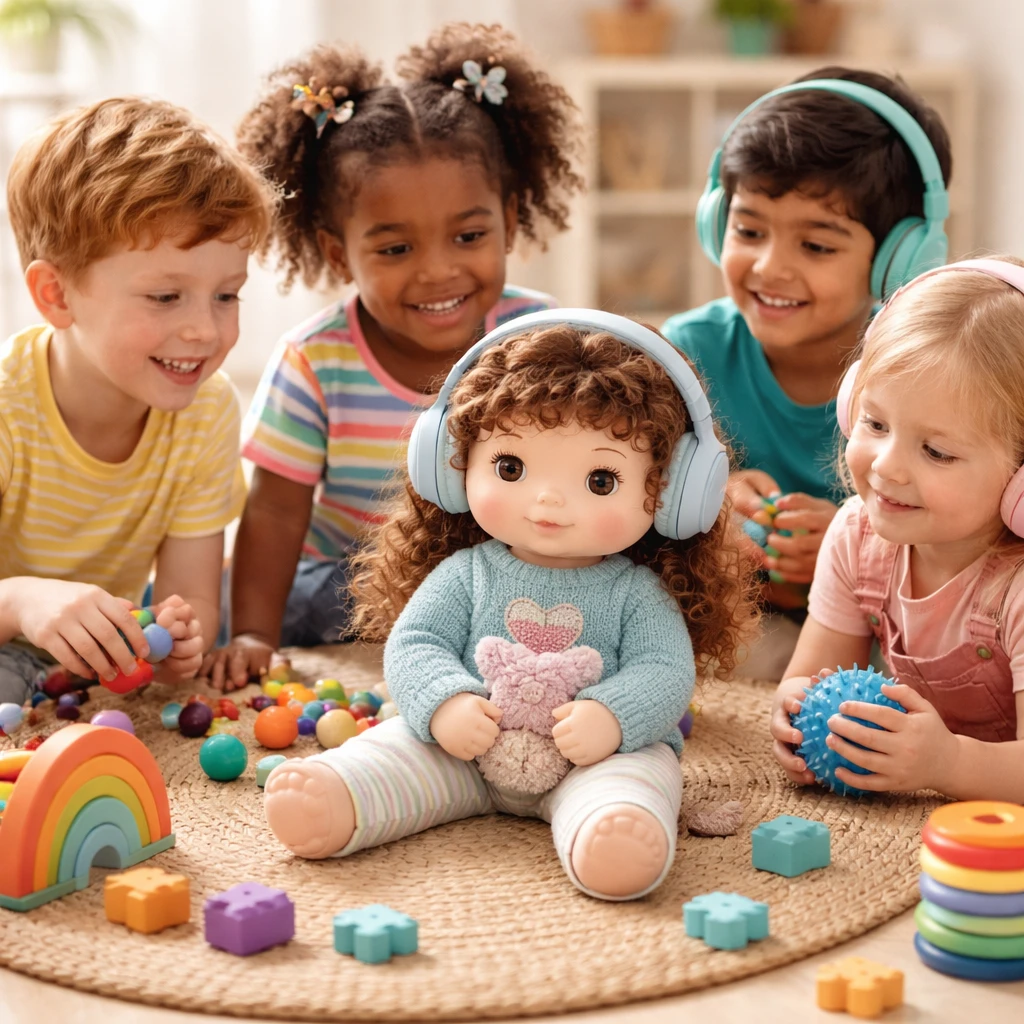
In a development aimed at enhancing diversity in the toy industry, Mattel has revealed its first Barbie doll explicitly designed to represent autism. This new Barbie model features specific sensory-friendly accessories and thoughtful design details that reflect neurodivergent traits and experiences.

This release is part of Mattel’s ongoing initiative to diversify its product portfolio to include dolls that embody a wide spectrum of human conditions and identities. The autistic Barbie joins a growing collection of inclusive dolls, which also includes models that represent individuals living with blindness, Down syndrome, and Type 1 diabetes.

The company’s intent behind this launch is to create educational and empowering toys that resonate with children who are neurodivergent as well as broaden awareness among all children about different ways people experience the world. By incorporating attributes that are sensitive to sensory processing and other autism-related characteristics, Mattel aims to present a more accurate and respectful portrayal of autistic individuals.

The sensory-friendly elements incorporated into the doll’s design have been carefully chosen to reflect common needs and preferences within the autism community. While specific details of the accessories have not been extensively detailed, the overall design approach prioritizes representation that acknowledges the sensory environment in a positive and accessible way.

This development follows Mattel’s prior steps in diversifying Barbie’s representation, addressing physical disabilities and medical conditions previously underrepresented in mainstream dolls. By aligning its products with principles of inclusivity, Mattel is responding to a growing demand for toys that reflect the wide-ranging identities and abilities of children today.

The introduction of an autistic Barbie comes at a time when awareness and acceptance of neurodiversity continue to increase, highlighting the importance of visibility in media and consumer products. For children on the autism spectrum and their families, the availability of toys that reflect their experiences may serve as both a source of self-recognition and a tool for fostering empathy in peers.

Mattel’s release of this doll underscores a marketing and product development strategy that balances social responsibility with expanding market reach through addressing the needs of diverse consumer groups. By bringing inclusivity into an iconic brand like Barbie, the company reinforces a message that differences are valued and recognized.

While the broader market reception and commercial impact of the autistic Barbie remain to be seen, this addition represents a noteworthy advancement in the representation of neurodivergence in popular culture and consumer goods.

Risks
  • Specific sensory-friendly features and their reception among the neurodivergent community are not detailed and may impact acceptance.
  • Market response to inclusive dolls can vary, with potential challenges in balancing broad appeal and authentic representation.
  • Limited information is available about how the autistic Barbie's features address diverse autism spectrum experiences, which could affect its impact.
  • There may be risks associated with societal perceptions of disability representation in commercial products.
Disclosure
Education only / not financial advice
Search Articles
Category
Business News

Business News

Related Articles
Buy the Shock: Tactical Long on JAKKS Pacific After Volatility

JAKKS Pacific posted a jaw-dropping Q3 that looks scary headline-first but reveals durable gross mar...

Maximizing Your 401(k): Understanding the Power of Employer Matching

Overestimating investment returns can jeopardize retirement savings. While it's prudent to plan cons...

Commerce Secretary Lutnick Clarifies Epstein Island Lunch Amid Scrutiny Over Relationship

Commerce Secretary Howard Lutnick acknowledged having a family lunch with convicted sex offender Jef...

Why Retirement Savings Remain Stagnant and How to Address Common Pitfalls

Many individuals find themselves concerned about the insufficient growth of their retirement account...

Paramount Enhances Hostile Proposition to Thwart Netflix-Warner Bros. Discovery Merger

Paramount Pictures has escalated its aggressive pursuit to acquire Warner Bros. Discovery by introdu...

Strategic Stress Testing of a Retirement Tax Plan with $1.8 Million in Savings at Age 58

A 58-year-old nearing retirement with $1.8 million across various accounts assessed the robustness o...