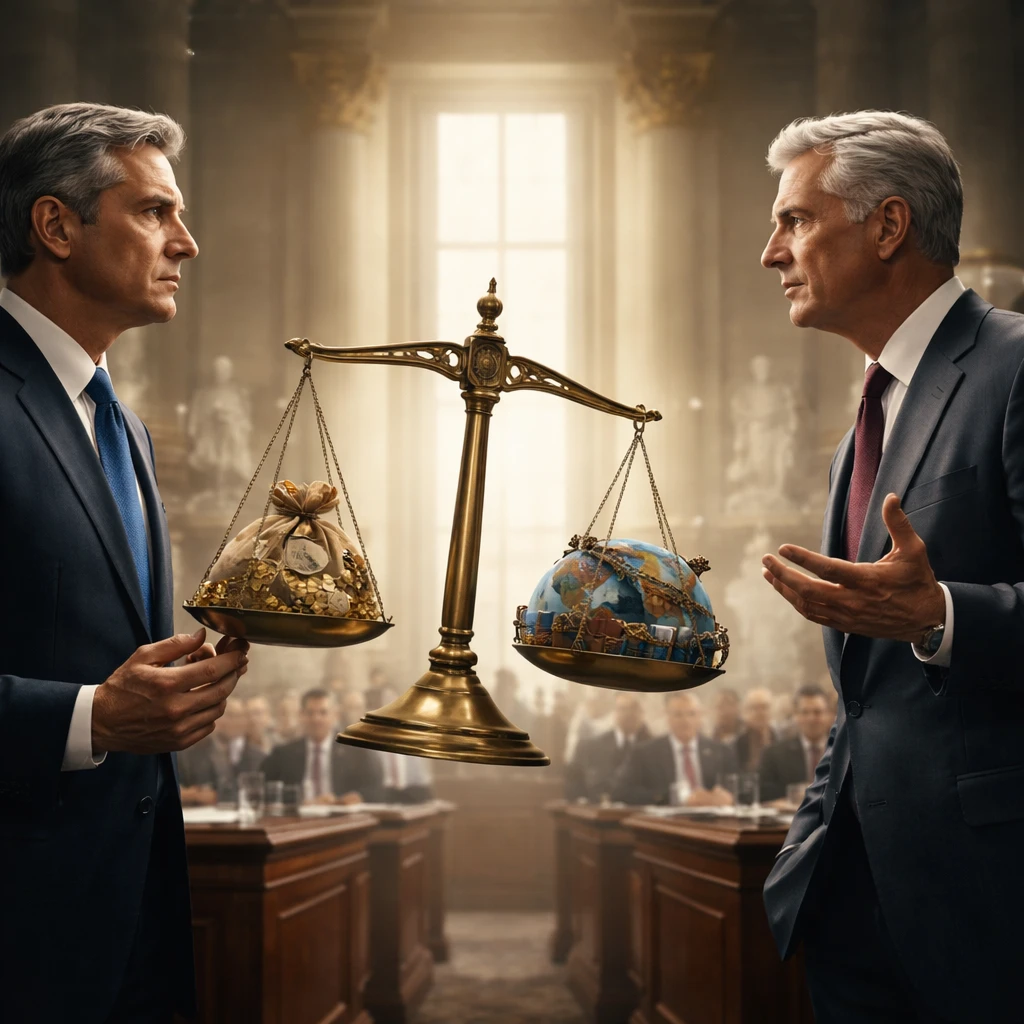

In a confrontational session before the House Financial Services Committee, Representative Maxine Waters, the Democratic ranking member, directly challenged Treasury Secretary Scott Bessent on the economic implications of tariffs and inflation. The exchange, notable for its theatrical moments, including Waters' repeated invocation of "reclaiming my time" and the memorable request, "Can you shut him up?", drew attention not only for its spirited debate but also for the critical policy issues at its core.
Waters initiated the discussion by drawing attention to the rising costs of consumer goods and housing, attributing some of these price increases to tariffs imposed during the previous administration. She pressed Bessent, asking explicitly if tariffs could be considered inflationary. Bessent responded by referencing a San Francisco Federal Reserve report that examined 150 years of economic data and concluded that tariffs do not, in a broad sense, cause inflation.
Disputing this, Waters cited tangible examples where tariffs had seemingly increased prices, including staples like coffee and bananas, and argued that tariffs on key housing production materials such as lumber and steel contributed to worsening housing affordability. Bessent countered by stating that lumber prices were at a five-year low and called for factual accuracy in the discussion.
When Waters demanded a clear affirmation on whether Bessent would serve as a voice for affordability during the Trump administration, Bessent dismissed the premise and redirected the discourse by attributing rising housing prices largely to increased immigration, which he suggested had intensified demand beyond supply. This assertion provoked Waters to request an interruption of his remarks, to which Bessent replied by questioning her decorum.
The debate between Waters and Bessent brings to light the nuanced relationship between tariffs, inflation, and housing prices. Waters' perspective emphasizes the visible price increases segments of the population face, pointing to specific product categories that experienced increases due to tariffs. Her argument extends to the housing market, where she connects tariffs on raw materials to higher construction costs and subsequent price rises in home affordability.
Conversely, Bessent leaned on broader economic analyses which suggest that while tariffs can cause immediate price increases on certain goods (acting as import taxes), these do not generate sustained inflationary pressures. According to the San Francisco Fed report he cited, tariffs often introduce uncertainty that suppresses consumer confidence and can lead businesses to reduce hiring or cut jobs, thereby dampening demand and balancing out initial price spikes. This interplay accounted for a scenario in 2025 when unemployment increased slightly and inflation rates modestly declined.
Furthermore, Bessent highlighted the complexity of the housing affordability crisis, asserting that immigration-induced demand surges in cities outpaced supply, thereby driving prices up. Notably, immigrants contribute significantly to the construction labor force, addressing some structural issues in housing supply.
On the topic of lumber and steel tariffs, Bessent correctly noted that lumber prices, after a sharp decline in the latter half of 2025, approached levels seen prior to recent tariffs. This price fall resulted paradoxically from an anticipatory surge in Canadian lumber imports by American buyers worried about forthcoming tariffs, leading to a glut in supply and lowered costs. However, the temporary nature of this situation remains uncertain, as upcoming congressional measures aim to boost homebuilding to improve housing supply further.
In summary, the confrontation between Waters and Bessent illustrated the divergent views on how tariff policy affects consumer prices, inflation, and housing affordability, reflecting broader debates currently influencing voter concerns about economic wellbeing. The exchange also underscored the challenges in balancing economic data interpretation with political discourse during key policy discussions.