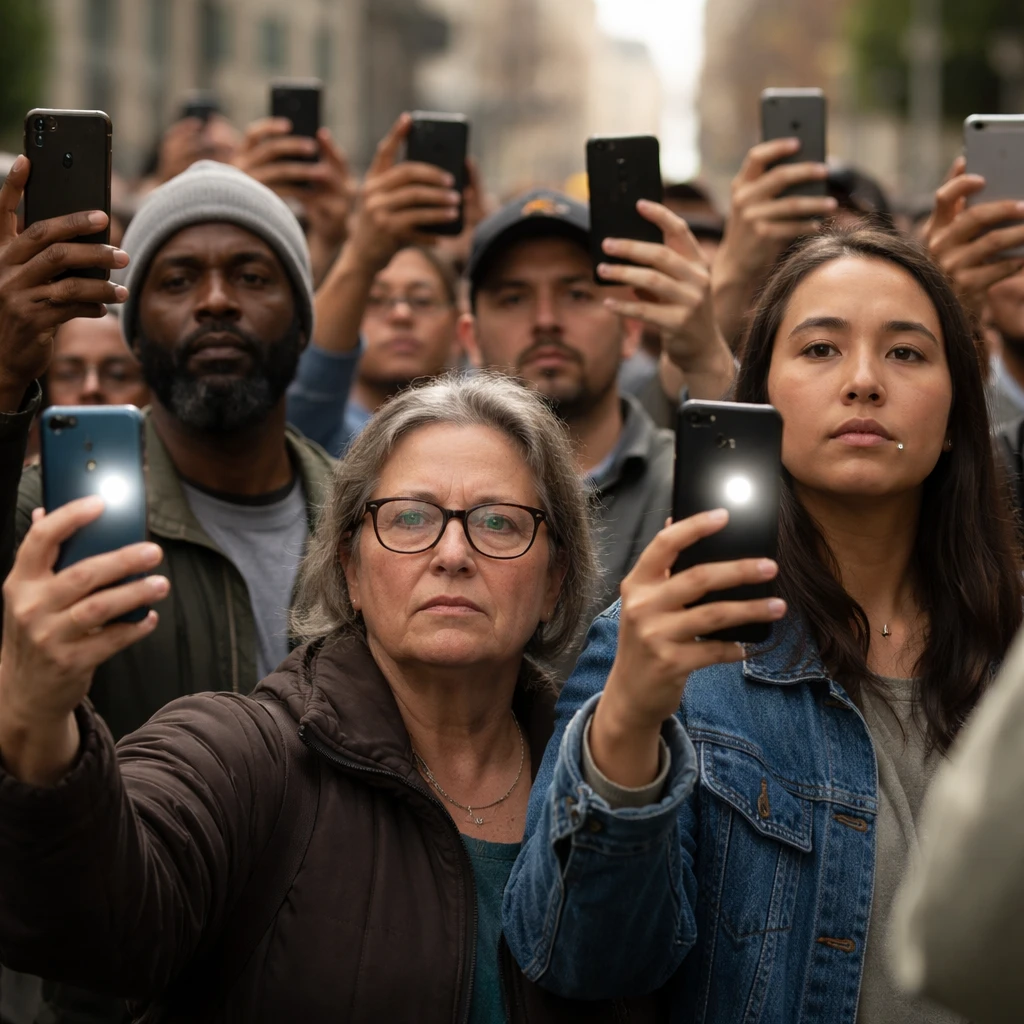

In Minneapolis, the recent fatal shooting of Alex Pretti, a 37-year-old ICU nurse, amid an immigration enforcement operation has ignited intense scrutiny enabled largely by the proliferation of video evidence. Videos recorded by bystanders across various angles documented the encounter before, during, and after the incident on a Saturday morning, bringing substantial public attention and revealing contrasting perspectives to official statements.
Governor Tim Walz responded to initial federal claims that had condemned Pretti immediately, expressing relief that video footage was available amid conflicting accounts. "Thank God, thank God we have video," Walz stated, highlighting the importance of visual records in evaluating such contested events. Indeed, multiple clips obtained by news organizations and investigators show that residents acted in accordance with the governor's prior advice to "hit record" when witnessing interactions involving federal immigration officials.
Chris Gray, a neighbor of Pretti’s, recounted to CNN that the nurse had been recording an abduction when the confrontation erupted. Footage displays Pretti holding a cell phone while observing law enforcement detaining an individual. Following this, agents moved to subdue Pretti himself, during which witnesses in the vicinity captured the scene on their phones.
Subsequent analysis of the videos by CNN revealed that an officer removed a firearm from Pretti during the physical altercation, moments before multiple shots were fired. The sequence shows that only about one second after the weapon was secured by an officer, one gunshot was followed rapidly by at least nine additional shots. In response, the federal administration characterized the shooting as "defensive," positioning Pretti as a threat and labeling him a "domestic terrorist" and alleged assassin of federal personnel.
Videos reveal that agents pepper-sprayed Pretti before wrestling him to the ground and that a particular officer in a gray jacket retrieved the gun from him immediately preceding the fatal discharge. These elements complicate the official narrative portrayed by federal authorities.
The graphic and detailed visual evidence was subjected to rigorous examination by a broad spectrum of observers online, including law enforcement professionals and everyday social media users who dissected the footage frame by frame. Many disputed the federal account, scrutinizing the timing and nature of the shooting and the conduct of the officers involved.
According to the Minnesota Star Tribune, certain elements of the federal government’s description were not corroborated by bystander footage, signaling discrepancies that demand further investigation. This proliferation of eyewitness recordings soon exceeded individual smartphones, moving rapidly into platforms such as Reddit and YouTube, and becoming a primary resource for media organizations attempting to clarify the unfolding events.
Bellingcat, an investigative agency specializing in open-source analysis, quickly synchronized three videos to present a multi-angle chronology to the public. The organization’s founder, Eliot Higgins, emphasized the urgency of timely analysis in the face of what he characterized as deceptive governmental narratives, noting that rapid dissemination of accurate information is essential in such crises.
Local activists reiterated the power of direct observation, with CNN reporting that protestors urged others not to accept official versions but to trust their own direct viewing of the footage. This sentiment reflects a broader trend in Minnesota, where residents have embraced recording as an act of resistance and a means of asserting agency amid contentious federal enforcement actions.
State leaders have actively encouraged citizens to carry phones and document interactions with Immigration and Customs Enforcement (ICE). Governor Walz called on Minnesotans to collect footage not only to preserve historical accounts but also to assemble evidence potentially useful for legal actions. "Carry your phone with you at all times," Walz instructed in a recent public address, highlighting the role of citizen documentation in accountability efforts.
Indeed, myriad videos and photographs have surfaced, captured by a diverse cross-section of the community, including professional photographers, social media content creators, and everyday residents. These grassroots depictions frequently counter the polished, militaristic videos produced by ICE’s own media apparatus, which some commentators have compared to propaganda. Instead, community members produce TikToks and Instagram Reels that show arrests, confrontations, and personal reflections to humanize the experience of living under heightened immigration enforcement in Minneapolis.
New social media accounts and channels have emerged specifically to collect and disseminate these on-the-ground visuals, creating an ecosystem of user-generated content that informs public opinion. Political observers have connected this wave of visual documentation with shifts in public sentiment regarding federal immigration crackdowns, noting that some officials within the Trump administration are concerned about the negative optics produced by real-time streaming of chaotic scenes.
However, the surge in video availability presents both opportunities and challenges for public discourse. In Minnesota and similarly in international conflict zones like Ukraine and Iran, abundant footage enables intricate journalistic reconstructions and counters unilateral narratives. Yet, this multiplicity of angles and images can also fuel contestation over interpretations, leading to divergent conclusions on culpability and meaning.
Media entrepreneur Steven Rosenbaum has observed that the same video evidence can be understood through