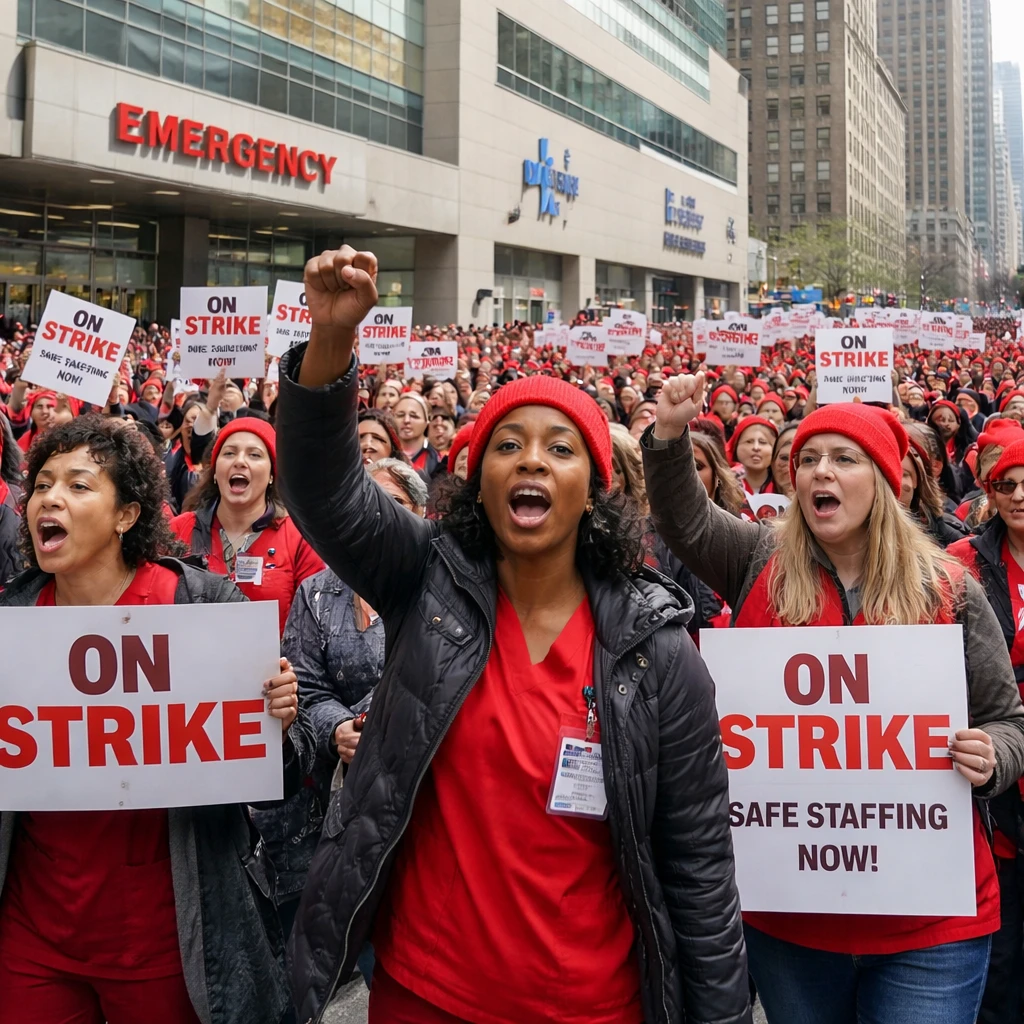

In New York City, nearly 15,000 nurses representing three significant hospital systems began a strike on Monday after contract talks that extended through the weekend failed to produce an agreement. The striking nurses, members of the New York State Nurses Association, gathered to voice their demands for fair contracts, emphasizing staffing adequacy and benefits that they believe are under threat.
Demonstrators assembled prominently outside NewYork-Presbyterian Hospital’s Upper Manhattan campus, chanting slogans demanding equitable contract terms. Similar protests were staged at hospitals within the Mount Sinai and Montefiore systems, institutions that previously experienced a nursing strike in 2023. That earlier strike culminated in agreements aimed at improving staffing and increasing wages.
Tristan Castillo, an emergency department nurse at Mount Sinai West, articulated the frustrations fueling the strike. Castillo cited management's resistance to providing fair contracts and adequate staffing, as well as efforts to roll back existing benefits, as primary grievances prompting the labor action.
Despite the strike, the affected hospitals remain operational by employing a substantial number of temporary nurses to fill staffing shortages caused by the absence of striking personnel. These hospitals are part of the private nonprofit sector and do not include any city-run hospitals.
This labor action emerges as a critical test for New York City's new administration under Mayor Zohran Mamdani, who campaigned on a platform supportive of workers’ rights. Mamdani visited the NewYork-Presbyterian picket line to express solidarity, highlighting the essential role nurses play and advocating for their demands of “dignity, respect and fair pay.” He criticized hospital executives, characterizing them as financially well-off and underscoring the nurses’ calls for just treatment.
In addition to local political support, several Democratic officials from the city and state also showed support by visiting picket lines. Meanwhile, Governor Kathy Hochul mobilized state health officials to monitor patient care at the hospitals and urged both parties to negotiate an agreement that acknowledges the critical functions performed by nurses.
The current strike takes place amid a particularly severe flu season, introducing the possibility of strained healthcare delivery. Potential consequences include the transfer of patients to other institutions, cancellation of some medical procedures, and diversion of ambulances away from affected hospitals. The strike may also increase pressure on city hospitals not directly involved in the dispute due to patient redistribution.
The nurses’ contract demands differ somewhat across the hospitals but uniformly focus on increasing staffing levels and improving workplace safety conditions. The union contends that hospitals have imposed unmanageable workloads on nursing staff. Heightened security concerns are also a topic of dispute, especially following a recent incident in a Brooklyn hospital where a man barricaded himself with a sharp object and was ultimately killed in a police intervention. Additionally, the union is seeking restrictions on hospitals’ use of artificial intelligence technologies.
Hospital administrators assert that they have taken steps to enhance staffing but characterize the union’s broader demands as excessively costly. Following the nurses' January 2 announcement of the impending strike, hospital systems recruited many temporary nurses and emphasized their commitment to maintaining patient care throughout the strike duration. For instance, Mount Sinai disclosed it has secured approximately 1,400 temporary nursing staff to supplement existing personnel during the strike.
The hospitals have criticized the union’s financial requirements, with Mount Sinai describing them as “extreme economic demands,” while a Montefiore representative labeled them “$3.6 billion in reckless demands,” alleging requests for extraordinarily high salary increases. The union has not publicly released specific figures associated with its compensation proposals.
NewYork-Presbyterian accused the union of orchestrating the strike to disturb hospital operations but reaffirmed its readiness to negotiate a fair and reasonable contract that balances respect for nurses with the fiscal realities of contemporary healthcare provision. Each hospital system is independently negotiating with the union. Notably, several other private hospitals in New York City and its vicinity have recently finalized agreements with the union, thereby averting strikes.
The previous strike lasting three days in 2023 resulted in a contractual agreement at Mount Sinai and Montefiore providing a 19% wage increase over three years coupled with staffing enhancements. However, disagreements persist regarding the extent to which those staffing improvements have been implemented or whether hospitals are now attempting to retract previous commitments. There is also contention over alleged attempts by hospitals to reduce health benefit provisions. For example, Mount Sinai maintains that its proposed changes aim to reduce expenses without diminishing coverage.