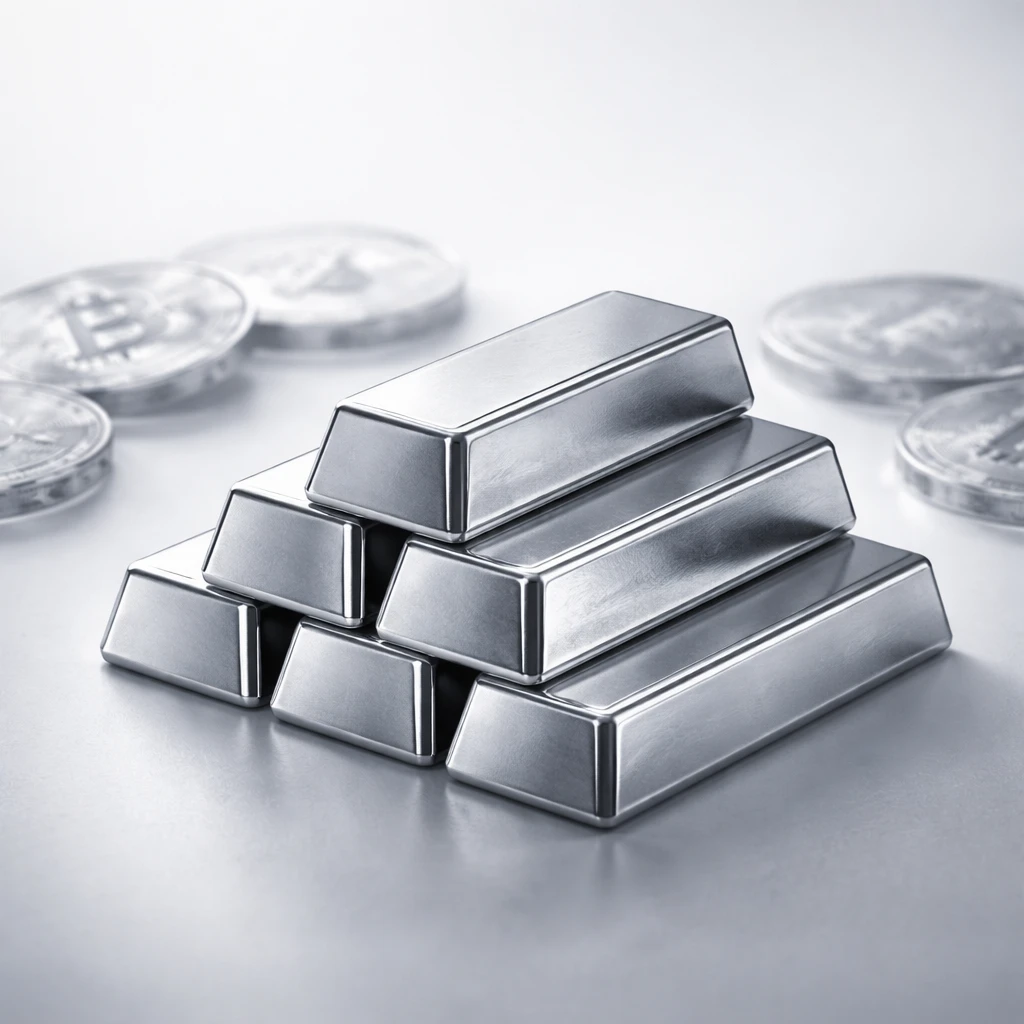
In a striking display of market divergence, the price of XRP, a prominent cryptocurrency, has fallen dramatically in comparison to silver over the last six months. Since July 2025, XRP's value relative to silver has diminished by approximately 80%, reflecting a broader shift in investor preference toward tangible assets during periods of heightened uncertainty.
Silver's ascent to above $110 per ounce on Monday marks an impressive rally, extending its upward trajectory to historic peaks. Over roughly 13 months, the metal’s price has surged around 270%, climbing from approximately $30 per ounce at the start of 2025 to its current elevated levels. This rapid increase demonstrates the strong demand for silver, often regarded as a reliable safe-haven asset.
Conversely, Bitcoin, another major cryptocurrency often labeled as "digital gold," has experienced an 11% decline during the same period. This contrasting performance has resulted in silver's market capitalization surpassing that of Bitcoin by a factor of 3.5, signaling a notable reversal in relative market standings that challenges previous narratives.
Examining the exchange rate between XRP and silver reveals an especially stark story. In July 2025, each XRP token was equivalent to roughly 0.1 ounce of silver, or ten cents in silver value. This ratio has since contracted to nearly 0.02027, indicating an approximately 80% drop in XRP’s silver equivalent over seven months. Such a decrease highlights the pronounced underperformance of XRP against physical commodities.
The underlying reasons behind silver’s robust performance are multifaceted. A primary factor is investor migration toward physical assets amid global uncertainties. Notably, geopolitical developments have intensified these market dynamics. For instance, President Donald Trump's announcement threatening Canada with 100% tariffs if it finalizes a trade agreement with China has fueled concerns about escalating trade conflicts. These developments have prompted investors to seek refuge in tangible assets such as precious metals rather than riskier digital currencies.
In addition to trade tensions, the physical supply-demand conditions for silver contribute to its price strength. The market for physical silver is notably constrained, with significant purchasing activity in countries like China and India. Demand for 1-kilogram silver bars has been particularly robust, driving prices higher. Reports indicate that manufacturers in China are prioritizing silver investment products over traditional jewelry to align with growing investor demand.
Furthermore, anticipations regarding U.S. monetary policy have influenced asset valuations. Market participants expect that President Trump may replace Federal Reserve Chair Jerome Powell with a successor more inclined to reduce interest rates. Since lower interest rates typically reduce the opportunity cost of holding non-yielding assets, precious metals like silver become more attractive investments. This shift in monetary policy expectations can redirect capital from volatile assets such as cryptocurrencies toward safer alternatives.
The challenges facing altcoins extend beyond XRP. Ethereum has declined approximately 70% against silver over the past year, while Solana has seen a reduction exceeding 60% in the same comparison. Such trends emphasize a broader retreat from digital asset classes when benchmarked against precious metals.
Crypto analyst Benjamin Cowen has observed that altcoins are persistently declining to new lows when valued in terms of silver. Similarly, commentary from The Kobeissi Letter points out that silver prices now outperform Bitcoin by some of the widest margins on record, underscoring the significant shifts occurring in the relative valuation landscape.
These developments illustrate a prevailing market environment where physical assets such as silver capture investor interest amid ongoing geopolitical and economic uncertainties, while many digital currencies struggle to maintain value in this context.
Investors and market watchers will continue to monitor these dynamics closely, given their implications for portfolio allocation, risk management, and the evolving role of cryptocurrencies as alternative investment vehicles in the face of macroeconomic pressures.
January 26, 2026
Finance
Precious Metals Surge While XRP and Altcoins Falter: A Closer Look at Market Shifts
Silver's Remarkable Rise Highlights Challenges Facing Cryptocurrency Assets Amid Geopolitical Tensions and Economic Policy Changes

Leila Farooq
Telecom & Media Analyst
Summary
Over the past six months, XRP has sharply declined against silver, which has surged to historic highs. This divergence reflects broader market trends where physical assets like silver are attracting investor interest due to geopolitical concerns and the anticipation of monetary policy adjustments. Other altcoins such as Ethereum and Solana have also experienced significant losses when measured against silver, underscoring the challenges cryptocurrencies face in the current environment.
Key Points
XRP has dropped about 80% against silver in the past six months, signaling significant underperformance relative to the precious metal.
Silver's price has rallied approximately 270% over 13 months, reaching over $110 per ounce due to heightened investor demand amid geopolitical and economic uncertainties.
Bitcoin and other altcoins like Ethereum and Solana have declined against silver, with Bitcoin falling 11%, Ethereum about 70%, and Solana over 60% in silver terms.
Investor preference is shifting toward physical assets such as silver, driven by trade tensions, tight metal supply, strong demand in China and India, and expectations of potential Federal Reserve interest rate cuts.
Risks
- Ongoing geopolitical tensions, including potential trade conflicts between major economies, could sustain market volatility and impact asset valuations.
- Expectations of changes in U.S. monetary policy, particularly interest rate decisions, may influence the attractiveness of non-yielding assets like precious metals and cryptocurrencies.
- Physical silver market constraints and elevated demand create price risks that could impact future performance if supply or demand conditions shift.
- Cryptocurrencies face continued downside risk relative to precious metals amid current market dynamics and investor sentiment trends favoring tangible assets.
Disclosure
Education only / not financial advice