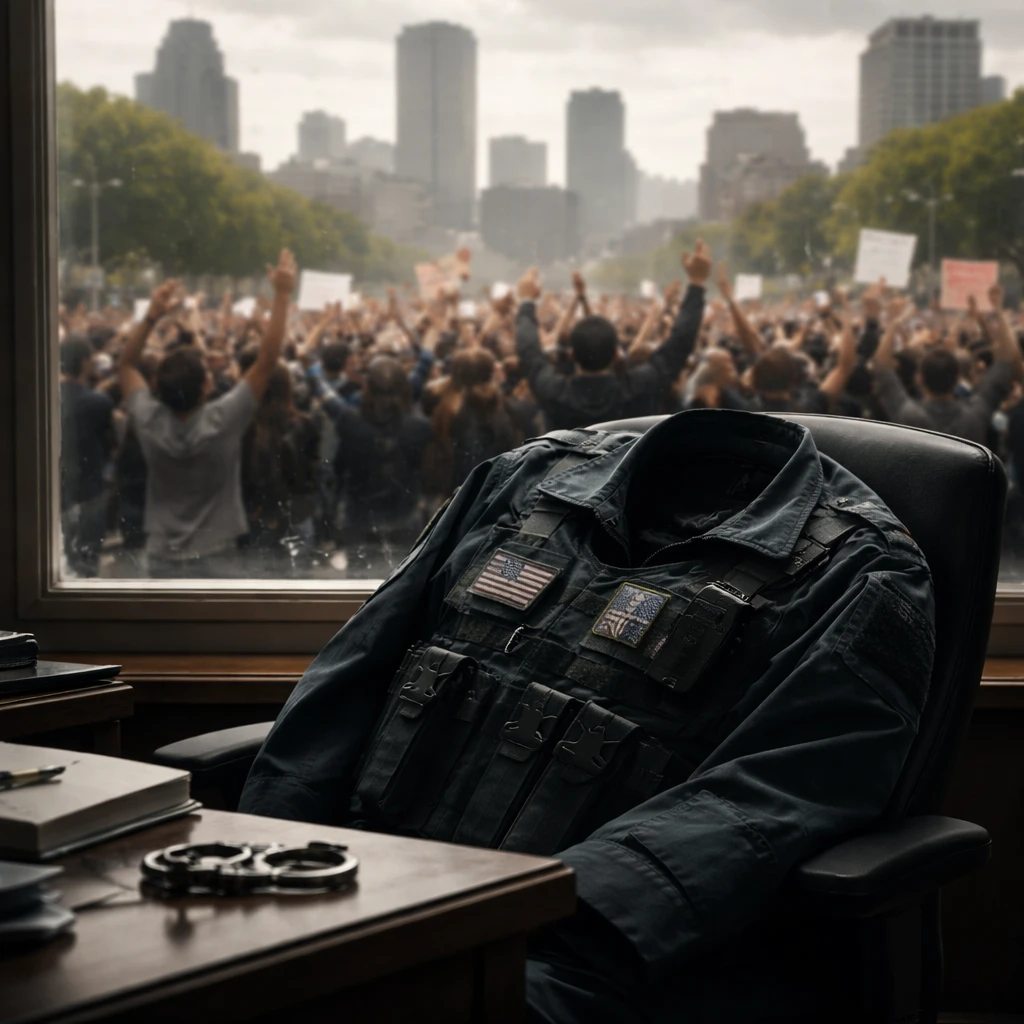

In the wake of mounting protests in Minneapolis, President Donald Trump has suggested the eventual withdrawal of federal immigration enforcement officials from the region. This statement comes amidst a federal review of a recent fatal incident involving a Border Patrol agent and a protester and amid intensified discussions about sanctuary city policies.
During an interview conducted by The Wall Street Journal on Sunday, the president refrained from commenting definitively on the justification of the actions taken by the federal officer responsible for the shooting in Minneapolis. He stated, "We're reviewing everything and will come out with a determination," emphasizing that the investigation into the incident remains ongoing.
The person shot, Alex Pretti, was armed during the protest, a fact the president highlighted with criticism. President Trump said, "I don’t like any shooting... But I don’t like it when somebody goes into a protest and he’s got a very powerful, fully loaded gun..." He framed this aspect as part of the context surrounding the shooting, which has sparked both intense scrutiny and civil unrest across the nation.
While acknowledging the critical role of immigration enforcement agents, the president also foreshadowed their potential departure from Minneapolis at an unspecified future time. He commended their current work yet remarked, "At some point we will leave." Nevertheless, he did not provide a clear timeline or conditions for when this withdrawal might occur. Furthermore, he mentioned that a different group would be deployed subsequently to address financial fraud concerns, stating, "We’ll leave a different group of people there for the financial fraud."
On his social media platform, Truth Social, President Trump expanded on his administration’s call for enhanced cooperation from local Democratic leaders concerning immigration enforcement. He urged Democratic governors and mayors to actively collaborate with federal authorities, advocating for the transfer of incarcerated undocumented criminals to federal custody, mandatory local police cooperation with federal immigration agents, and joint efforts to apprehend undocumented individuals wanted for criminal offenses.
Additionally, the president pressed Congress to enact legislation aimed at ending sanctuary cities. He argued that better enforcement and partnership between federal and local agencies are essential components in bolstering public safety and curbing crime rates.
The incident that has precipitated the current political tensions occurred in Minneapolis and has drawn sharp attention to immigration enforcement procedures and gun rights. The shooting has reverberated on a national scale and amplified concerns about civil unrest. Notably, former Representative Marjorie Taylor Greene (R-Ga.) has warned of the potential for escalated conflict, suggesting the incident could contribute to civil war conditions.
In response to the unfolding developments, Senate Democrats, led by Minority Leader Chuck Schumer (D-N.Y.), have threatened to provoke a partial government shutdown by blocking funding for the Department of Homeland Security. This move signals deep partisan divisions over immigration policy and the federal response to unrest in Minneapolis.
Earlier in the month, the U.S. Justice Department initiated a criminal investigation into Minnesota state officials, including Governor Tim Walz and Minneapolis Mayor Jacob Frey. The inquiry centers on allegations that these officials obstructed immigration agents’ operations. This investigation draws from public statements made by the governor and mayor regarding the deployment of thousands of Immigration and Customs Enforcement (ICE) officers and Border Patrol agents to the Minneapolis area, an order issued under the Trump administration.
The ongoing tensions in Minneapolis embody the complexities of managing immigration enforcement amid local resistance, civil unrest, and political contention. The federal government’s scrutiny of local officials and the president’s call for legislative action underscore the continuing struggle to balance law enforcement priorities with community relations and safety.