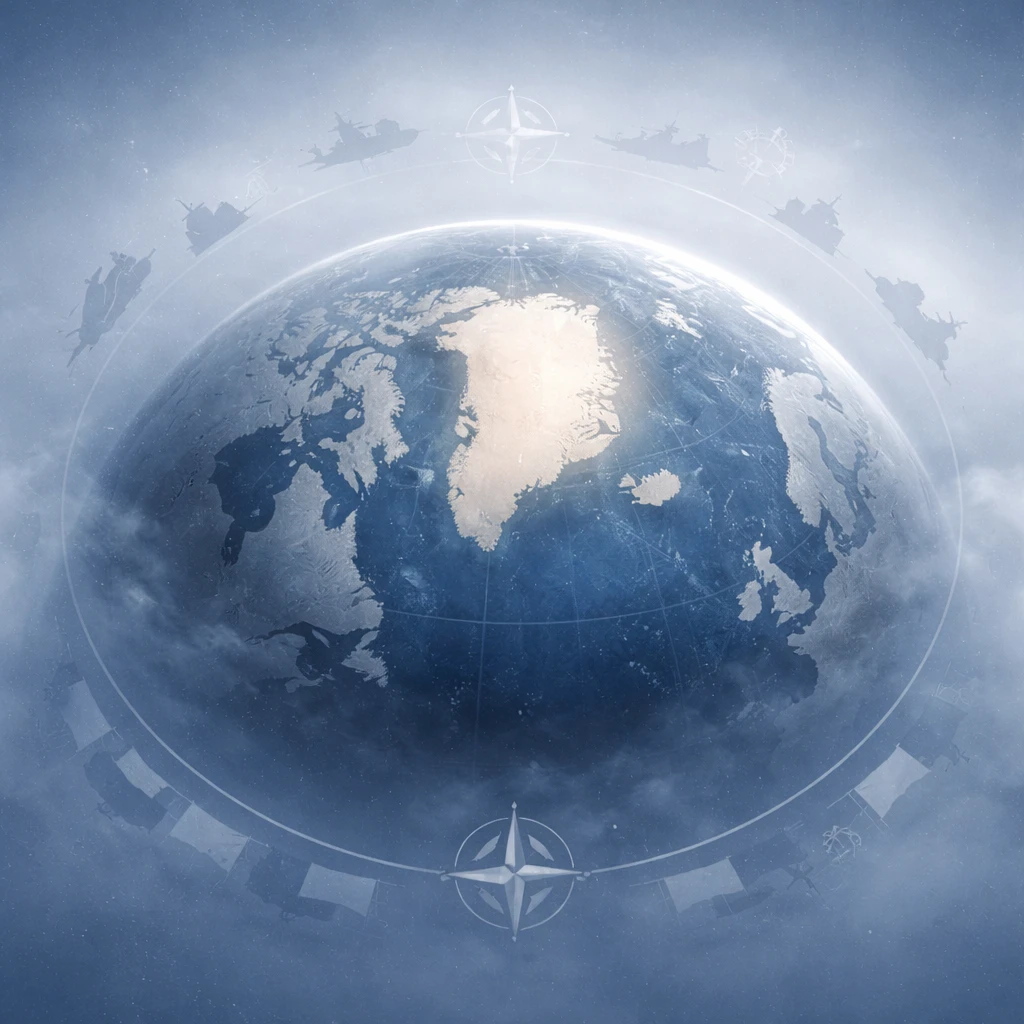

In recent developments, President Donald Trump conveyed that he engaged in a constructive conversation with Mark Rutte, the Secretary General of NATO, regarding Greenland's strategic value. This dialogue underscores plans for a pivotal meeting scheduled in Davos, Switzerland, where the future of the Arctic island will be a key topic of discussion.
Addressing the matter publicly on early Tuesday via his social media platform, Trump emphasized broad consensus about Greenland’s critical role, referring to the island as "Imperative" for both national and global security concerns. His statement further asserted that reverting on the issue is not an option, suggesting a firm commitment to maintaining focus on Greenland’s strategic integration.
Earlier in the week, Mark Rutte had shared insights into his communication with Trump, affirming a mutual dedication to ongoing collaboration concerning Greenland. This signals a cooperative intent between the U.S. administration and NATO on matters linked to the Arctic region's security significance.
Parallel to these developments, Ursula von der Leyen, President of the European Union Commission, expressed readiness to engage in diplomatic dialogue with the United States on Greenland-related issues during the Davos meeting. She highlighted that addressing Greenland holds "utmost importance" for the transatlantic alliance, underscoring the geopolitical sensitivity of the Arctic island within broader international relations.
These diplomatic movements coincide with escalating trade frictions marked by President Trump’s recent tariff threats directed at Europe. The announcement of a high-level discussion on Greenland thus takes place amid a broader context of strained economic relations between the United States and continent-wide European stakeholders.
The trade tensions have precipitated notable consequences in global financial markets. On the recent Monday, a widespread stock sell-off was recorded, with investors turning towards precious metals such as gold and silver, which experienced price surges fueled by defensive demand and momentum dynamics.
Within Europe, key stock indices including the Euro STOXX 50, Germany’s DAX, France’s CAC 40, and the United Kingdom’s FTSE 100 experienced steep declines. Meanwhile, U.S. equity index futures registered significant falls during European trading hours. It’s important to note this activity occurred while the U.S. stock markets remained closed in observance of the Martin Luther King Jr. Day holiday.
In light of the tariff threats, the European Union is reportedly evaluating various countermeasures to respond to the U.S. policies. Sources suggest potential initiatives such as trade retaliation and the implementation of a novel “bazooka” trade tool. This unprecedented instrument would equip the EU with extensive powers, including the application of export controls and the imposition of tariffs on services.
The European Union’s contemplated measures are anticipated to be enacted following the introduction of new U.S. tariffs set for February 1, indicating that the trade conflict could intensify in the near term.
In sum, the intersection of Arctic security interests centered on Greenland and the escalating trade disputes between the United States and Europe presents a complex diplomatic and economic scenario. The forthcoming discussions in Davos, featuring U.S., NATO, and EU leadership, are poised to address these intertwined challenges directly.
Key Points
- President Trump confirmed a substantive conversation with NATO Secretary General Mark Rutte about Greenland, acknowledging its strategic importance.
- A critical meeting focused on Greenland is planned to take place in Davos, Switzerland, involving U.S. and European leadership.
- EU Commission President Ursula von der Leyen emphasized the essential nature of this issue within transatlantic relations.
- The announcement occurs amid heightened trade tensions triggered by U.S. tariff threats against Europe, impacting global markets and prompting EU countermeasure considerations.
Risks and Uncertainties
- The progression and outcomes of the Greenland meeting in Davos remain uncertain, potentially influencing geopolitical dynamics in the Arctic.
- Trade tensions between the U.S. and Europe could escalate further following planned tariff implementations and possible EU retaliatory measures.
- Global market volatility is heightened due to the intersecting geopolitical and economic developments, as evidenced by stock sell-offs and increased demand for precious metals.
- The scope and specifics of the EU’s “bazooka” trade tool have not been fully detailed, representing an unknown factor in future trade negotiations and enforcement.