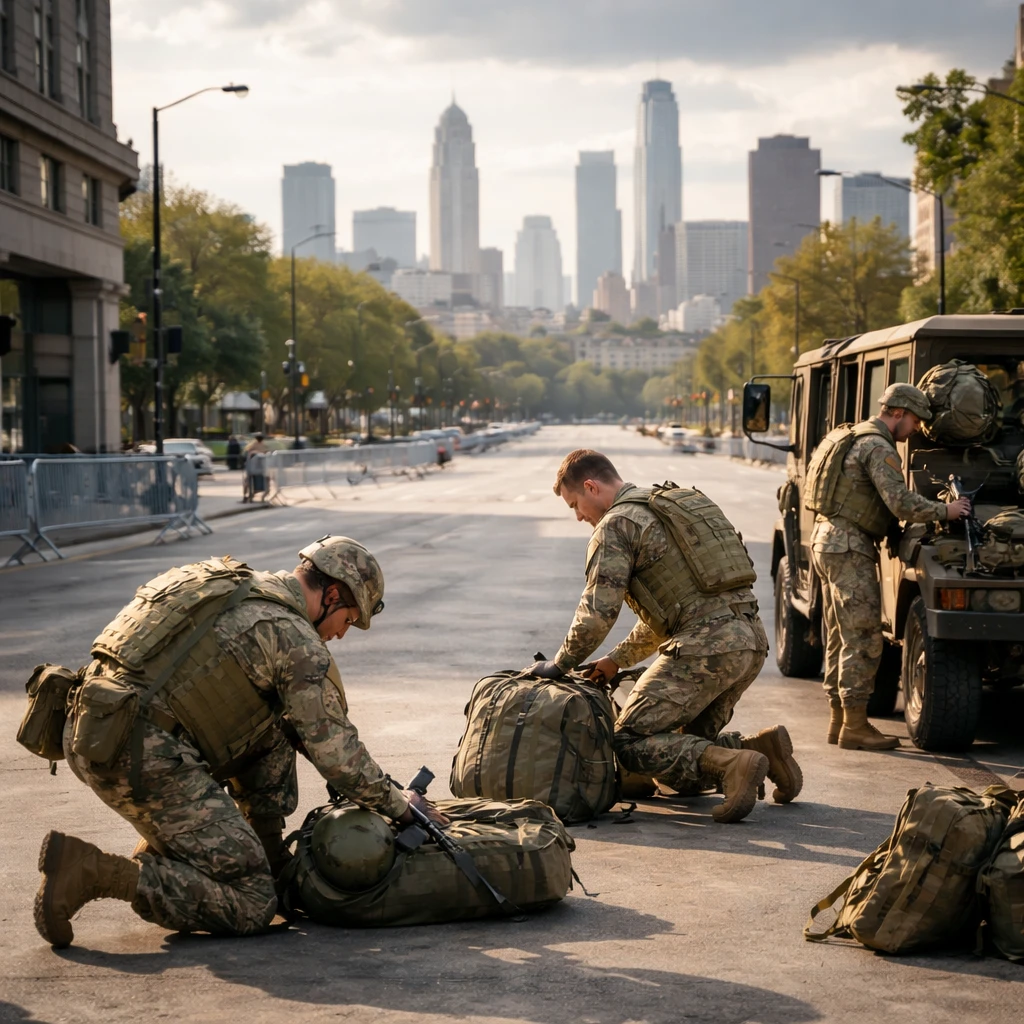

In a notable policy shift, President Donald Trump declared the forthcoming withdrawal of National Guard troops from three major urban centers: Chicago, Los Angeles, and Portland. The announcement emerged on Wednesday via a post on the social platform Truth Social, wherein the president highlighted the impact of the troops in curtailing criminal activity during their deployment.
Trump's decision arrives amid legal hurdles that have challenged the federal administration's authority to maintain National Guard units in these cities. These difficulties include a recent ruling by a federal appellate court instructing the return of California National Guard personnel to state Governor Gavin Newsom's command, effectively a setback to the administration’s federal oversight. This judicial development aligns with an earlier United States Supreme Court injunction that blocked Trump's initiative to assign troops in Illinois, reinforcing the legal view that federal control over state National Guard forces is generally permissible only under extraordinary conditions.
The president underscored that despite the decision to withdraw troops, their presence had tangibly reduced crime rates. "We are removing the National Guard from Chicago, Los Angeles, and Portland, despite the fact that CRIME has been greatly reduced by having these great Patriots in those cities," Trump wrote. This statement reaffirms the administration's position that the deployments played a critical role in bolstering law enforcement and safeguarding federal interests.
Nevertheless, the pullback has attracted criticism from local leaders and Democratic officials. They contended the federal deployments were unwarranted, characterizing them as instances of governmental overreach predicated on exaggerations of sporadic violent incidents. According to reports, opponents argued that these interventions undermined local jurisdiction and disrupted community affairs without a substantive crime problem justifying such measures.
In response to backlash and to contextualize the situation further, Chicago Mayor Brandon Johnson released data signaling a significant decline in violent crime during 2025, an improvement noted as the lowest in over a decade. This statistical insight contributes to the ongoing discourse on the National Guard's role, with military authorities simultaneously conducting phased drawdowns of their personnel amid persistent litigation.
Significantly, President Trump also indicated a provisional nature to the withdrawal, cautioning that federal forces could re-enter these jurisdictions if crime escalates in the future. His message included a warning that a return might occur "perhaps in a much different and stronger form, when crime begins to soar again – Only a question of time!" This conditional approach suggests continued federal monitoring and a readiness to act should public safety conditions deteriorate.
Adding to the complexity of the situation, the federal appellate court ordered the retraction of National Guard troops from Los Angeles, amplifying the legal contest between state authorities and the federal government. The rulings collectively signify judicial skepticism toward extended federal command of state military resources, particularly in non-exceptional contexts.
This sequence of events underscores the tension between federal crime-fighting initiatives and state sovereignty, alongside evolving interpretations of National Guard governance. The administration's persistence in leveraging these forces for crime control contrasts with local and judicial resistance, reflecting broader debates on law enforcement strategies and intergovernmental relations.