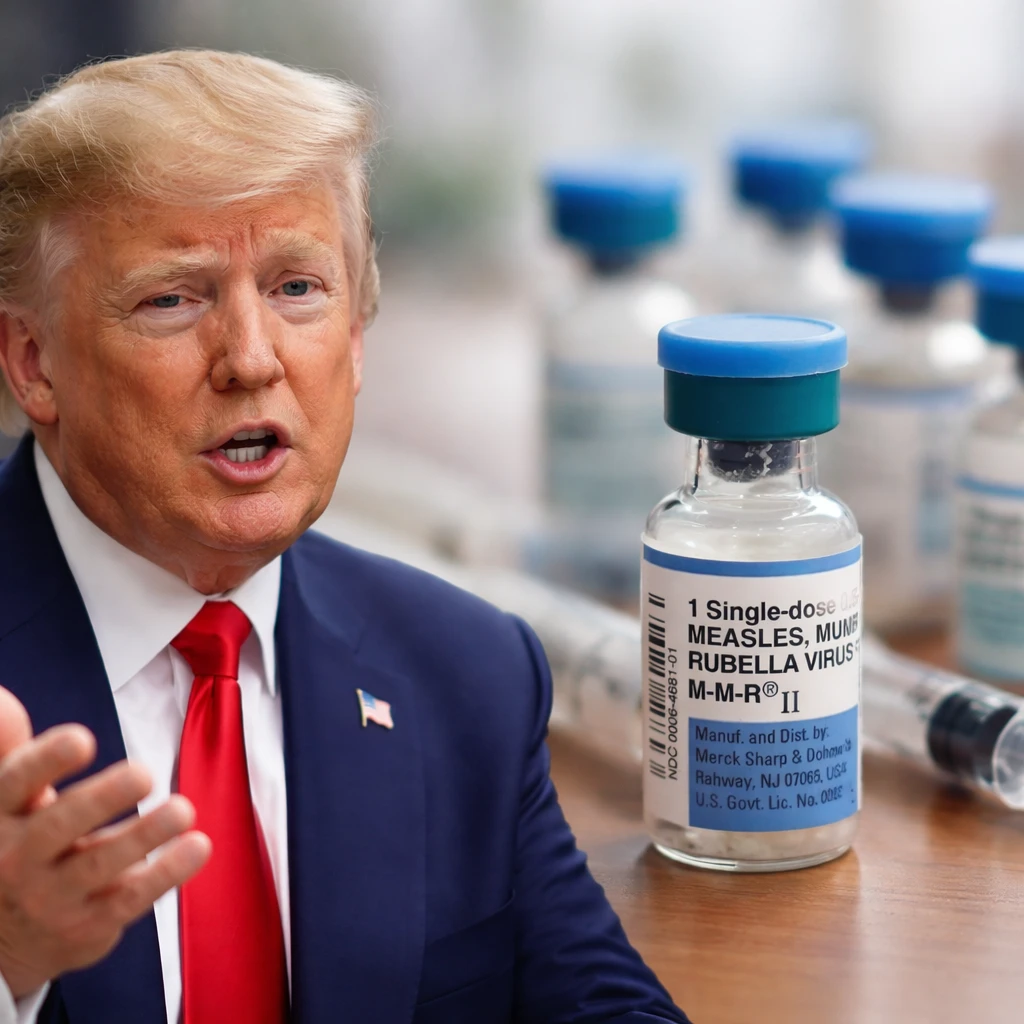

President Donald Trump has recently made social media statements that introduced confusion concerning the number of vaccines recommended for children in the United States. This discussion follows an unprecedented update by the federal government that has altered the longstanding childhood vaccination schedule.
On Monday, the administration announced a revision to the national immunization recommendations, cutting down the number of vaccines routinely advised for all children. The updated schedule includes vaccines that protect against 11 different diseases. Meanwhile, other vaccines that were previously widely recommended are now categorized differently—as directed for children at heightened risk or based on a "shared decision-making" process between patient and healthcare provider.
Despite these changes, major medical organizations have continued to endorse previous vaccination schedules. Their position rests on the assertion that there is no new scientific evidence to justify modifying existing recommendations. They also expressed concerns that conflicting information might lead to more children becoming vulnerable to diseases that are otherwise preventable, potentially resulting in illness or fatalities.
President Trump further contributed to the confusion through social media posts where he claimed that "America will no longer require 72 'jabs'" for children. He also circulated a graphic juxtaposing the U.S. vaccination situation with that of a "European country" purportedly administering 11 injections. This graphic has been criticized as misleading.
Clarifying the Facts
Analyzing these claims requires understanding the official vaccination schedule prior to the recent changes. One year ago, the U.S. government recommended routine vaccinations to protect children against 18 distinct diseases. These vaccinations were administered in doses spaced across childhood and adolescence, following scientific research that carefully assessed both disease risks and vaccine effectiveness.
The total number of injections a child received by age 18 varied notably. Factors influencing this included the specific brands of vaccines used, whether combination shots were available, and the age at which vaccination commenced. Excluding annual influenza vaccines—which some children receive as nasal sprays—and COVID-19 vaccinations, the total injections were generally close to three dozen.
Under the newly implemented administration schedule, this number decreases to approximately 23 injections, involving only the vaccinations now recommended for all children. These continue to cover diseases such as measles, whooping cough, polio, chickenpox, and human papillomavirus (HPV).
Contrary to the claim made by President Trump, 72 injections were never a mandated requirement. Families have historically had the option to decline vaccinations. State laws typically require certain vaccines for school enrollment, but these lists are narrower than the previous national vaccine schedule and frequently include exemptions for varying circumstances.
Implications for Public Health and Policy
The public health community stresses the importance of consistent and evidence-based vaccine recommendations. Alterations to the vaccine schedule, especially those perceived as politically motivated or insufficiently substantiated by scientific data, risk undermining public confidence in vaccination programs. This hesitancy could lead to a resurgence of preventable diseases, thereby affecting healthcare systems and necessitating greater resource allocation to address outbreaks.